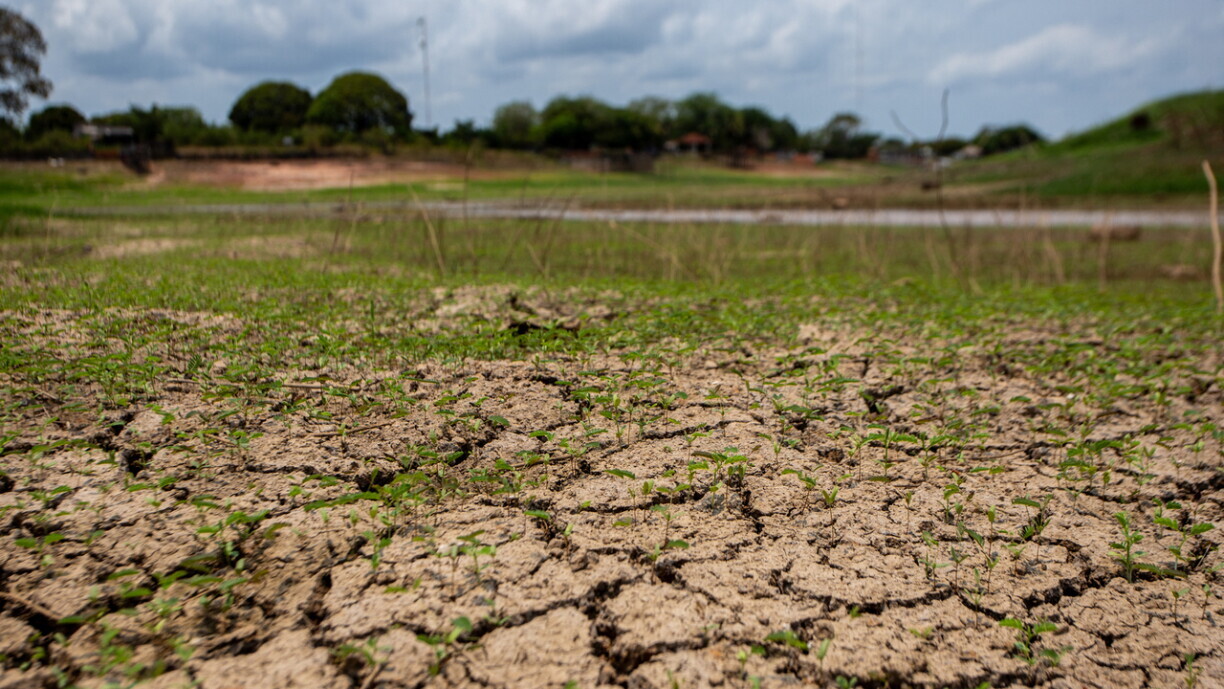
One of Luxembourg's pilot projects for agricultural water retention basins entered the official approval stage about two weeks ago, said Christian Hahn, president of the Chamber of Agriculture. Work on the project has already lasted seven years, involving numerous studies and feasibility assessments, which Hahn considers excessively long.
"It is a drawn-out process", he told RTL. "I also spoke to the person who just submitted the application, and he said he is curious to see how long it will take to get approval. The problem is also when to enter the approval procedure. If you do not have a green light in principle, it is difficult to justify investing money in all those studies up front."
Hahn hopes and expects the approval to take only a few more months, since the Ministry of the Environment and other authorities were closely involved in the studies and know the dossier.
Tom Schaul, who leads the Water Group at the ministry, says he understands the farmers' perspective but stresses the need to consider the bigger picture.
"I understand why people say this takes a long time", Schaul told RTL. "In agriculture, there is a certain production pressure, which becomes acute during extreme weather, like we saw this summer, and which is likely to occur more frequently in the future. But it is also important to examine the long-term impact of these basins."
If water is drawn from streams to fill basins, Schaul explains, care must be taken not to overstress those watercourses, especially in summer when levels are often very low. Water quality is another key factor.
"Water quality is crucial, not just for irrigation, but also depending on whether you are watering trees, vineyards, or food crops. The required quality depends on the intended use and the origin of the rainwater. For example, rainwater collected in industrial zones must be treated before use. Each situation requires careful assessment of what is available and where it comes from", he said.
The Chamber of Agriculture says it understands the ministry's concerns about water quality. It is more sceptical about the sometimes strict requirements on how basins fit into the natural landscape, arguing that such details can needlessly slow projects.
"These are the kinds of debates that always come up, like whether the embankment around a basin fits with the natural environment. But if you look, for instance, at the new prison in Sanem, where a six-metre embankment was constructed, there was no issue. I think there are cases where we also need to be prepared to make pragmatic political decisions,", Hahn said.
Asked whether there is general frustration with Environment Minister Serge Wilmes and the Christian Social People's Party (CSV) over the slow progress, Hahn said it is a difficult question. It is not always clear that the ministry is responsible for delays, he noted, since several parties, such as municipalities and local syndicates, are often involved and can affect how quickly dossiers move.


