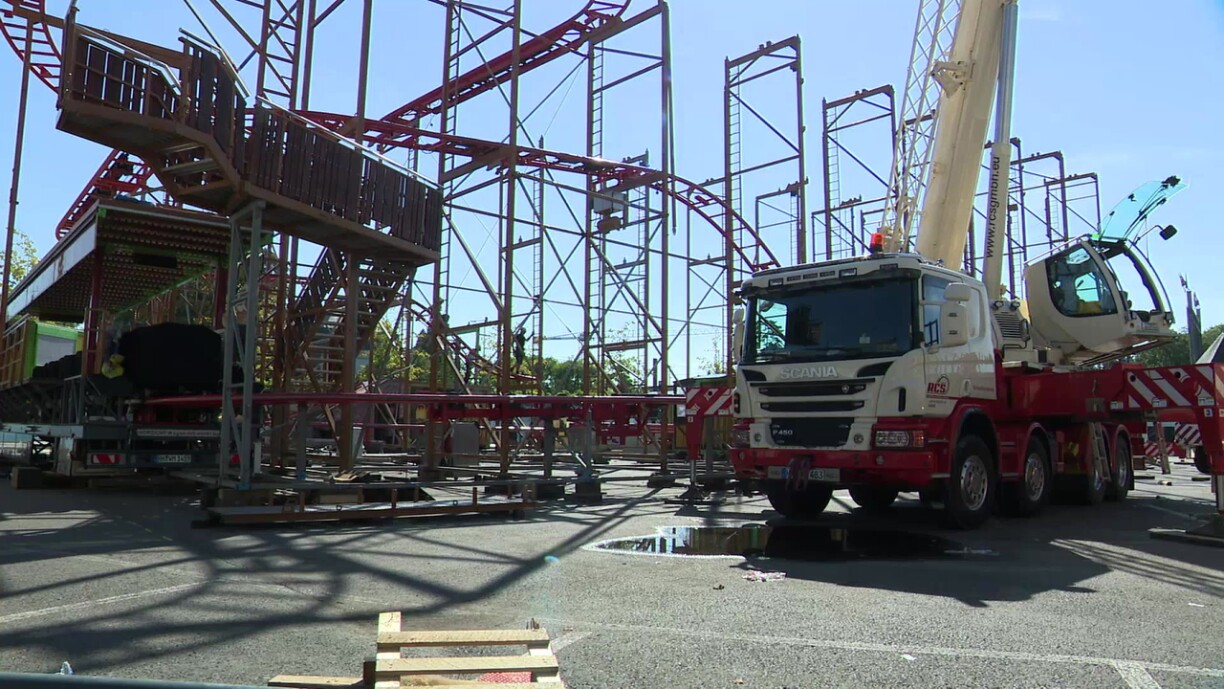
In order to register as a ride for the popular annual fair, proprietors must supply a number of safety certificates as part of the procedure. Safety checks are also carried out during set-up at the Glacis.
Laurent Schwaller, who manages the organisation of the fair, explained: "We visit every single ride on-site to ensure they match the paperwork. We also check certificates again, while an approved control team is also on site to perform more detailed inspections."
European standards are high - however, checks will differ from country to country. The safety checks at the Glacis can take days, with 211 rides and over 200 stalls.
Health and safety checks start with the food stalls, as inspectors ensure there are sufficient entrances and emergency exits and that there is nothing blocking the exits. The rides are checked a first time upon delivery by lorry, then again after they have been assembled.
Inspectors look for cracked materials or power fuses requiring adaptation. Thereafter, the ride owner is responsible for ensuring the ride's security.
Rudolf Schütze owns the ghost train, which is making its second appearance in Luxembourg this year. He explained to RTL: "Ghost trains, or rides such as a carousel on rails, are subjected to technical maintenance. The wheels, chains, and other parts should be checked daily and owners should always check if they are in good condition."
Schütze's team spent around two hours checking the installations and individual wagons before starting on the ghost railway.
With the Schueberfouer attracting up to 100,000 visitors per day, the safety checks are without a doubt the most important routine.
Video report in Luxembourgish:





