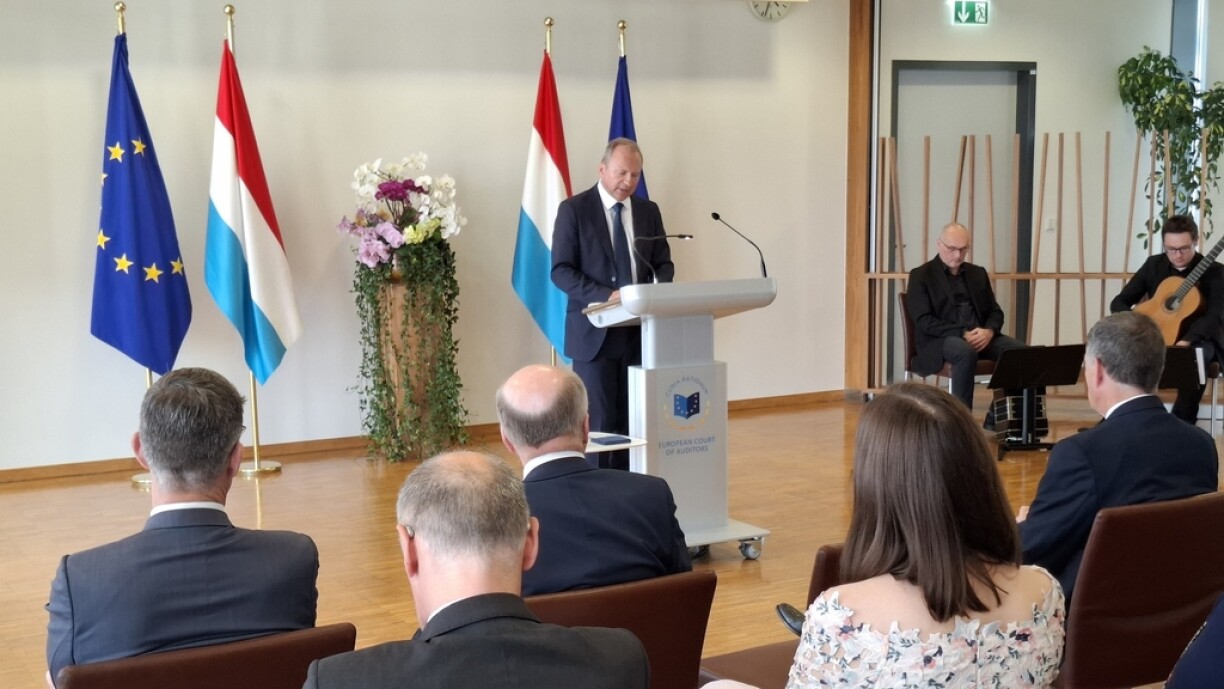
Tasked with auditing the EU's finances, the Court plays a vital role in ensuring that taxpayer money is spent responsibly and efficiently. With the EU budget for 2025 set to reach nearly €200 billion, its work is more important than ever.
Founded in July 1975 and operational since 1977, the Court of Auditors has grown in tandem with the EU itself. Starting with just 120 employees, the institution now counts 950 staff members dedicated to scrutinising how EU funds are managed.
For Joëlle Elvinger, Luxembourg’s representative at the Court, the institution's mission is particularly relevant today. "As the purchasing power of EU citizens declines, it's critical that public funds are used wisely", she noted. "Our work helps maintain trust in the European project."
The anniversary celebration brought together high-profile guests, including Grand Duke Henri, Chamber of Deputies President Claude Wiseler, Finance Minister Gilles Roth, Luxembourg City Mayor Lydie Polfer, and numerous representatives from across the EU political landscape.


In his speech, Court President Tony Murphy underlined how the institution's role has evolved over the decades. "We've gone from publishing two reports in 1977 to more than 35 special reports annually", he said, highlighting the growing demand for transparency and accountability.
These reports now go far beyond balance sheets. Recent investigations have questioned whether the EU is on track to meet its climate goals or whether the European Commission is doing enough to strengthen microchip production within Europe.
According to Elvinger, the Court's mandate has expanded significantly. "We no longer just audit the books. We assess whether the Commission can actually deliver on its political objectives – and whether it has the tools to do so."
One recent report that sparked debate focused on EU humanitarian aid. It criticised the Commission for insufficient oversight of NGOs receiving EU funds and a lack of transparency in how subsidies are awarded.
While the findings were controversial, especially among NGOs, the Court stands by its conclusions.





