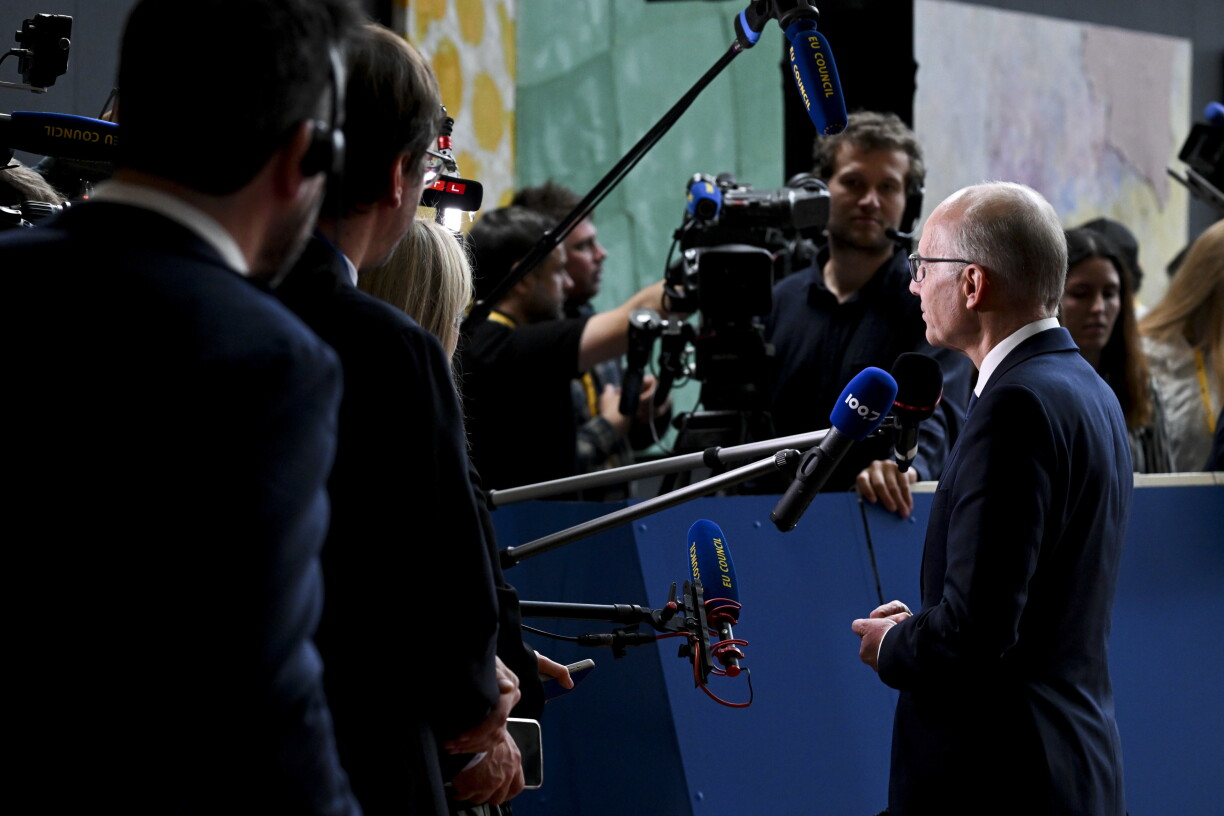
It came as little surprise that EU budget talks on Thursday ended without any breakthrough.
According to Luxembourg Prime Minister Luc Frieden, the positions taken by member states remain deeply entrenched, leaving the Luxembourg government squarely between those demanding spending cuts and those pushing for an EU budget that is larger than ever before.
Traditionally, the divide runs between the major economic powers such as Germany, which pay more into the EU budget than they receive in return, and southern and eastern member states, which rely on cohesion mechanisms to help bridge economic disparities.
This makes compromise particularly difficult, Frieden explained. Wealthier nations like the Netherlands want to see existing funds directed more towards innovation, while other members prioritise traditional EU programmes such as agriculture.
Prime Minister Luc Frieden explained that it is very difficult among 27 countries to favour one side over the other.
As for Luxembourg's position, the Prime Minister explained that the Grand Duchy is situated in the middle and seeking a balance between having enough funds to finance ambitious policies and keeping the budget contributions financially viable for member states.
Frieden wants the budget to roughly match the level of the current seven-year period, which is drawing to a close. The current Irish presidency shares this idea.
To date, Luxembourg has contributed around €570 million per year to the EU budget, a fraction of the overall medium-term financial framework, which currently stands at around €1,200 billion.
The European Commission had initially called for an increase to €2,000 billion, but this proposal was quickly rejected. Council President Antonio Costa now faces the challenge of finding a delicate compromise.
Frieden said that there is still plenty of time until December, even though he doubts whether President Costa will manage to find consensus by the end of the year.
Frieden emphasises that Luxembourg will continue to participate constructively in these discussions, adding that he has noticed that everyone is willing to make another step forward.
Nonetheless, it is too early to predict what a possible outcome might look like.
Pro-European leaders are under added time pressure: It would be considerably easier to adopt a new EU budget this year, with French President Emmanuel Macron at the table, than to attempt it next year, should Marine Le Pen of the far-right Rassemblement National come to power.
This political factor weighs heavily in the talks, especially as the budget officially called the Multiannual Financial Framework (MFF) requires unanimous approval.
A budget consists of both revenues and expenditures, a point repeatedly emphasised by Prime Minister Frieden, who is generally reluctant to introduce new taxes at the European level, as they could undermine Luxembourg's recent attempts to lower domestic taxation.
In other words, Frieden does not want Luxembourg’s recent reduction in corporate tax to be undone by a new EU-wide levy.





