These stickers, bearing the inscription Keng Reklamme w.e.g. ("No advertising please"), have been a fixture for over three decades, serving as a signal to postal workers that the recipient prefers not to receive unsolicited advertising materials. Ideally, this means the mail should only consist of items specifically addressed to the recipient.
The legal framework for this practice is laid out in the Law of 26 December 2012 governing postal services. According to Article 13, the letterbox is considered the resident's property, and they possess the right to block access for all non-addressed mail. However, to enforce this preference, residents must display the "No advertising" sticker.
By and large, this system works well, as noted by the Ecological Movement. A new law was drafted a year ago, scheduled for implementation on 1 January 2024, which will prohibit the distribution of paper advertising materials in letterboxes unless formal consent is obtained from the recipient.
The specifics of how this formal consent will be obtained remain undefined, leaving the practical application of the law to be seen.
If you have the yellow/white sticker on your letterbox, you will generally no longer receive any advertising, but free information leaflets such as municipal newsletters or election leaflets will still be posted. This is because these materials are categorised as free information leaflets rather than advertising, even though municipal newsletters often contain advertisements.
Consequently, election leaflets will continue to be delivered to letterboxes regardless of the presence of a "No advertising" sticker.
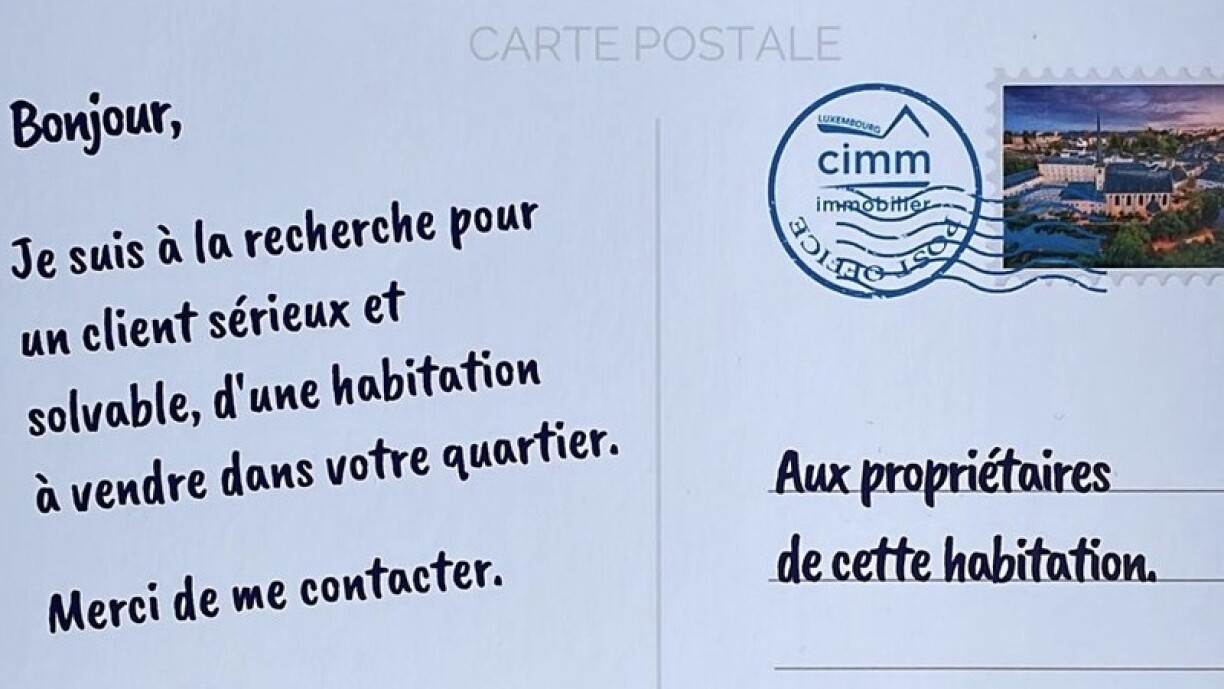
As mentioned above, the "no advertising" stickers generally seem to work well. However, from time to time, an advertisement may still end up in the letterbox, as illustrated by the case of an RTL.lu reader. These are usually advertisements from real estate agencies, as the Ecological Movement also confirms.
For recipients vexed by advertising materials slipping through despite their clear preferences, there are steps to take. In such cases, contacting the company or agency directly to request removal from their distribution list is the first recourse. If this proves ineffective, you may want to consider threatening legal action or filing a formal complaint.





