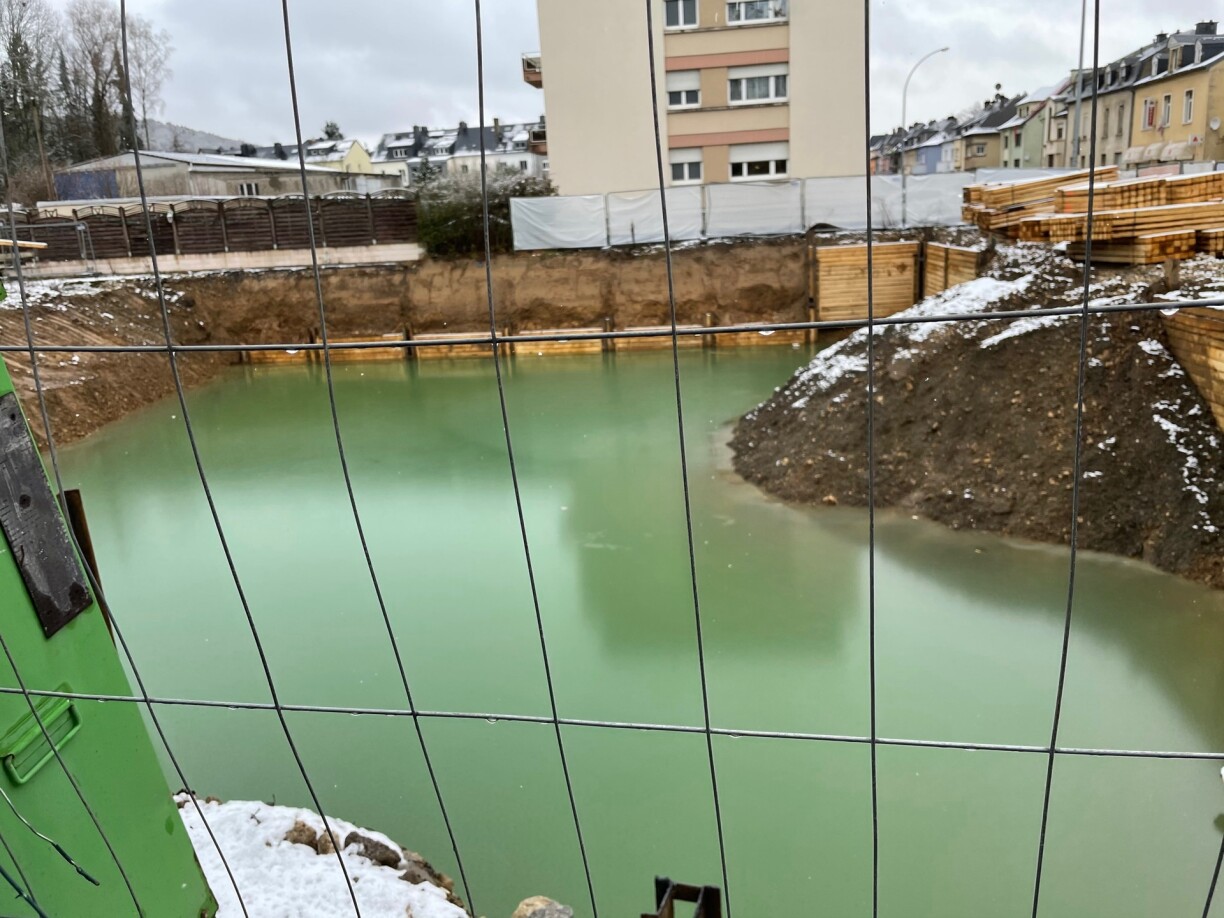
The terrain was home to Continental Alloys, known as CASA, which produced refined steel up until the 1980s. The production process resulted in heavy metal contamination and radioactive material leaking into the environment. Even today the number of heavy metal particles in the air is much higher than usual, says Guy Foetz of the city council.
Until recently, the property besides the terrain housed two houses, which were torn down to make way for an apartment complex of 18 homes. The problem with the construction is that the plans envision a parking garage below the property, requiring deep digging into contaminated soil. According to Foetz, the PAG (general development plan) should have been amended.


The PAG indicates that the property is a normal housing area, whereas neighbouring buildings are classified as risk areas with dangerous substances in the soil.
The mayor had drawn the attention of the environment administration to the fact that a new building is being built next to the CASA landfill. The environment administration contacted the developer, who are now both in discussion. According to Robert Schmit, Director of the Department for Environment, there is currently no legislation that would allow the department to impose restrictions on this site.
In general, the environmental administration has no competence if, as in this case, it is built next to sites that are classified as dangerous. That would be a legal loophole, says Schmit. But a bill on soil protection would be on the way. This text would also deal with the problem of old building sites.
The developer is aware that this is a very sensitive site, and therefore all possible soil analyses would be done in advance. The legal limits would be complied with, said the builder.





