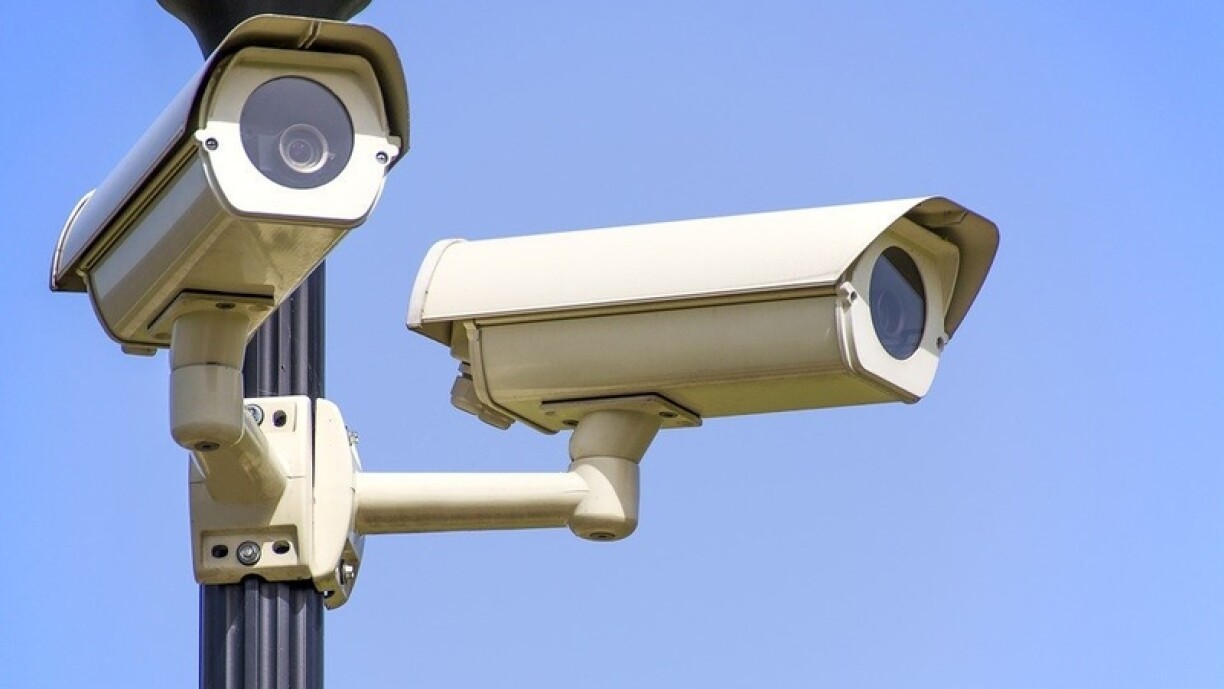
The argument for the increased CCTV network, which has introduced more than 100 cameras around the Central station, in Kirchberg, and near the football stadium, is that it is an investment into public safety. But to what extent do CCTV cameras increase safety in the capital?
Stephen Lowe: Say cheese - why is CCTV a dirt word in Luxembourg?Surveillance cameras belong to everyday life and can be found everywhere - on roads, around buildings, at petrol stations, on the bus, or on the tram. Surveillance brought about by technology is omnipresent and we have become used to the sight, to the extent where we might not even notice how many surveillance cameras accompany us on our commute.
Surveillance footage can be used in very different ways in Luxembourg. Some of the cameras in operation in the capital belong to the police's Visupol system, which means footage is watched by police officers live. The purpose of this system is to provide further monitoring of areas with a weak police presence.
It is precisely these Visupol cameras that come under fire from critics. Some critics maintain the cameras will simply cause a shift in crime to areas that are not under CCTV surveillance. In turn, this means the authorities would have to install more and more surveillance cameras.
Former Minister for Internal Security Etienne Schneider consequently made the decision to expand the Visupol network. By October 2019, more than 100 cameras were active. Schneider's successor in that mandate, incumbent minister François Bausch, has nevertheless confirmed there are no plans to further expand the system. Instead, Bausch's emphasis is on creating a stronger police presence in the capital, as he views this as a more efficient solution.
Bausch does not plan to dismantle CCTV cameras, as the Visupol system is only one of many police systems that is active in fighting crime. Private firms or state entities are also welcome to install their own surveillance systems, but these are only permitted to record the outer walls of buildings rather than public routes.
Private CCTV cameras also require the permission of the commission for data protection before being switched on. Users must adhere to specific rules to receive permission, which are defined by matters such as how long recorded material is kept and who has access to the footage.
Surveillance footage contributed to solving more than 146 cases in 2019, but this does not necessarily mean that the footage was crucial for sentencing. The ministry has no durable figures on the matter, but an English study reveals that CCTV footage has only contributed to 1% of sentencing decisions. For that reason, the entire system should be regulated.
One thing that has been proven, however, is that crime has spiked and moved to areas without CCTV networks. Added to the issue is the question of violating private spheres, a point the Pirate Party's Sven Clement has been very vocal on. According to Clement, the authorities must consider whether CCTV surveillance is compatible with data protection. Cameras film everyone, regardless of whether they've committed a crime or not.
A permanent surveillance network is mostly justified as a means to give people a sense of security. Authorities have used this as evidence, but there has not been any proof. 98% of London, the CCTV example par excellence, is monitored by a CCTV network. But figures are no better than prior to the CCTV network's installation, with official figures even demonstrating that crime has increased despite footage.
The question remains open as to how much security CCTV cameras give society. But in Luxembourg, there is no way to come up with evidence-based assertions, as there are neither investigations into the effectiveness, nor figures.





