Artificial intelligence is growing ever more powerful and is being deployed in more and more areas, including medicine, where it is already part of everyday life in hospitals and across various specialities. Its role, however, is a clearly defined one, as a tool to support doctors.
A study by Harvard University, published this year in the journal Science and also covered by The Guardian, illustrates just how powerful AI in medicine has already become. A large language model, OpenAI's o1 series, was pitted against hundreds of doctors, with the task of correctly diagnosing emergency patients and naming the appropriate treatments. Both fictional case studies and descriptions of real emergency cases were used. The result was that the AI made better diagnoses and recommended better treatments than the doctors, regardless of how much professional experience the medical staff had.
It looks as if AI will take on an increasingly important role in medicine, and it is sure to be a development that will not stop at Luxembourg's hospital doors. This is reason enough to ask local hospitals whether and where they are already using artificial intelligence, where it is heading next, what the medical staff in charge of overseeing AI think of it, and what the future relationship between the human intelligence of doctors and artificial intelligence might look like.
RTL took a deep dive and two radiologists from the Hôpitaux Robert Schuman (HRS) and one from the Centre Hospitalier Émile Mayrisch (CHEM) responded in writing.
When it comes to using AI in hospitals, Dr Yves Lasar of CHEM said it is important to draw a clear line between the headline-grabbing results of studies and the daily reality inside hospitals. Today, AI is above all a tool to support healthcare professionals, not to replace them.
Both Lasar and his HRS colleagues, Dr Alexandre Cordebar and Dr Jean-Baptiste Niedercorn, insisted in this context that medicine is not just about reaching a diagnosis. The doctor's job is not confined to analysing a single number or image. They must also factor in a patient's medical history, the wider context, other symptoms and the way the illness is developing. To treat a patient as well as possible, the psychological dimension must also be taken into account, which is something an AI cannot do.
Artificial intelligence is already being used regularly in the HRS and CHEM hospitals. At CHEM, this mainly happens in various areas of medical imaging, such as mammography, lung radiography, bone radiology or even MRIs of the prostate. When analysing the images, AI is used to help improve the detection of various anomalies, standardise tasks and shorten the time needed to make a diagnosis.
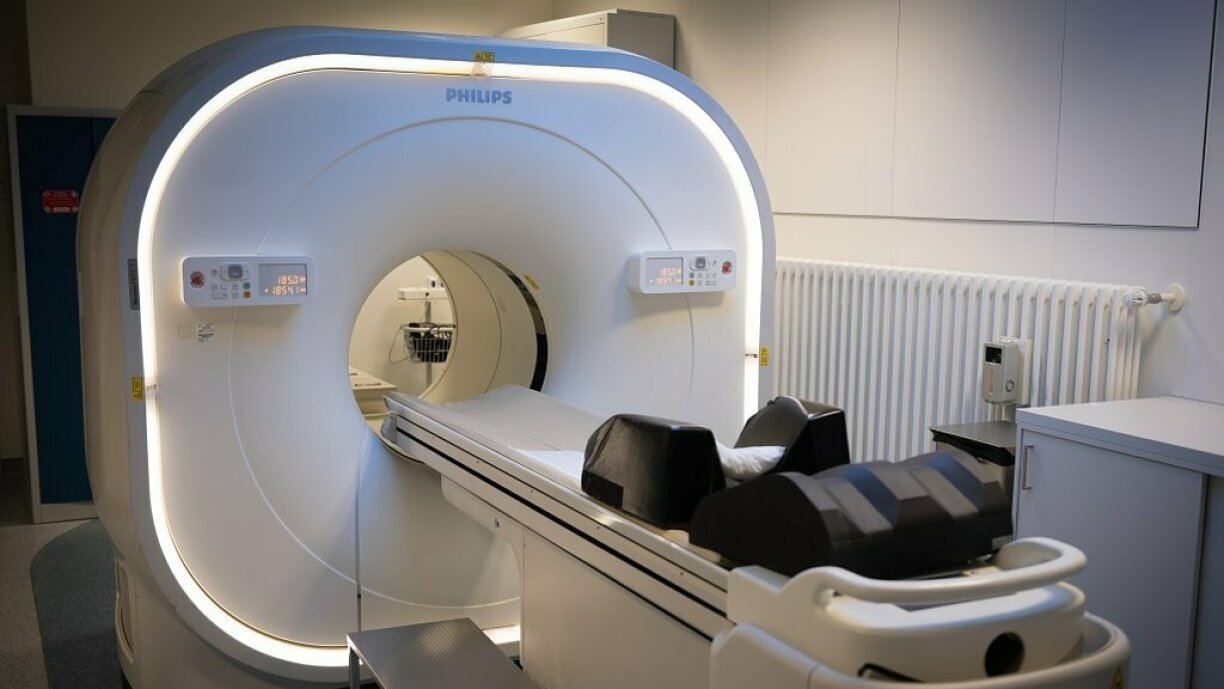
AI has been used in HRS since 2019. Today, it is used daily in various medical fields, particularly dermatology and radiology. Scanners and MRI machines used to generate medical images already work with AI. The algorithms integrated into these machines make it possible to improve the quality of the images and at the same time shorten the duration of medical examinations. Radiologists also use AI when analysing the images, as it allows them to carry out complex calculations. This makes it possible to detect various anomalies more quickly, especially those which are often difficult to spot at first glance.
More specifically, the HRS hospital uses AI to identify particular fractures, suspicious changes in the lungs or the prostate, as well following the development of multiple sclerosis.
The three doctors underlined that AI cannot replace a doctor's expertise, nor could it remove responsibility from medical professionals. The doctor is always the one in charge of their own decision and must therefore take full responsibility. AI is more like a co-pilot in this sense. Drs Cordebar and Niedercorn compared their responsibility to border controls: in the past, customs officials checked every person individually. Now, the checks take place with the help of automated gates and IT systems, but an official is always posted at every machine, to take responsibility. The development in healthcare follows a similar logic: some tasks are automated, or used to support a doctor's work, but ultimately responsibility must lie with a human.
At HRS, patients can find out from their medical report or a conversation with their doctor if AI has been used for their diagnosis or treatment. But there is no systematic way of informing patients yet. The big challenge with AI, however, is seen as the question of whether its use would bring real, concrete and guaranteed benefits to the patient.
At CHEM, patients are informed on the website that the hospital's doctors may use AI in their treatment. The hospital is working on further options to make patients aware.
Both hospitals agree that guidelines are needed for the use of AI in the hospital sector. As Julien Sassella, the data protection legal counsel at HRS, explains, the Robert Schuman Hospitals have drawn up a charter on how to deal with generative AI, reminding doctors and hospital staff of their responsibilities in dealing with, and the limits of, the use of this technology. At the same time, staff would be regularly communicated with on this point to increase awareness.
In his response, Dr Lasar also addresses the point that when using artificial intelligence, hospitals must combine technical innovation, respect for data protection, IT security and medical control of decisions made with the support of AI. This means they are cautious when it comes to expanding the use of AI in other medical areas. The regulations at EU level, particularly within the framework of the AI Act, further strengthen the regulatory requirements.
The Hospital Federation has also created a working group called "Compliance IA", in which CHEM will actively participate. The aim of the work in this group is to draw up common guidelines for the hospital sector. These should ensure safe and uniform handling of the regulatory requirements for dealing with AI, which are set at national and European level.
Currently, there is no systematic overview of the use of AI systems in Luxembourg hospitals, explains Dr Lasar. A number of initiatives for digital modernisation are underway at hospitals and at national level, focusing on the digitalisation of infrastructure and the further development of medical support systems.
As for the wider use of artificial intelligence in Luxembourg hospitals, there is currently no common timetable. Before hospitals can integrate AI on a large scale, they must clarify a number of technical, organisational and regulatory issues.
Another key point is that of budget. In their response, Doctors Cordebar and Niedercorn from the HRS also go into more detail on the financing aspect. In radiology, there are a number of AI tools on the market today that have proven themselves medically and could be integrated into medical devices. The costs of this integration could either be covered by innovation budgets, such as that of the Robert Schuman Hospital Foundation, or the doctors or services that want to use the tools could bear the costs themselves.
Currently, there is no clearly structured financing model for the integration of new AI tools in hospitals, and there is no nomenclature at the social security level that allows for the billing of the use of AI in daily medical practice in hospitals.
In order for AI to be used in everyday hospital practice, it must also meet a number of practical requirements, such as the ability to be integrated into the technical and IT systems that are already in use. AI must not impose additional constraints or slow down medical work. Rather, it must be integrated into the devices that are already being used in such a way that its use represents an increase in the efficiency, safety and quality of patient treatment. An AI that would force doctors to use more computers than before or that would make daily work more complicated would have little chance of being used.
Ultimately, it should be ensured that everyone has equal access to AI-based technologies in medicine, to avoid the long-term emergence of class-based medicine in which some hospitals have the technical means and others do not.





