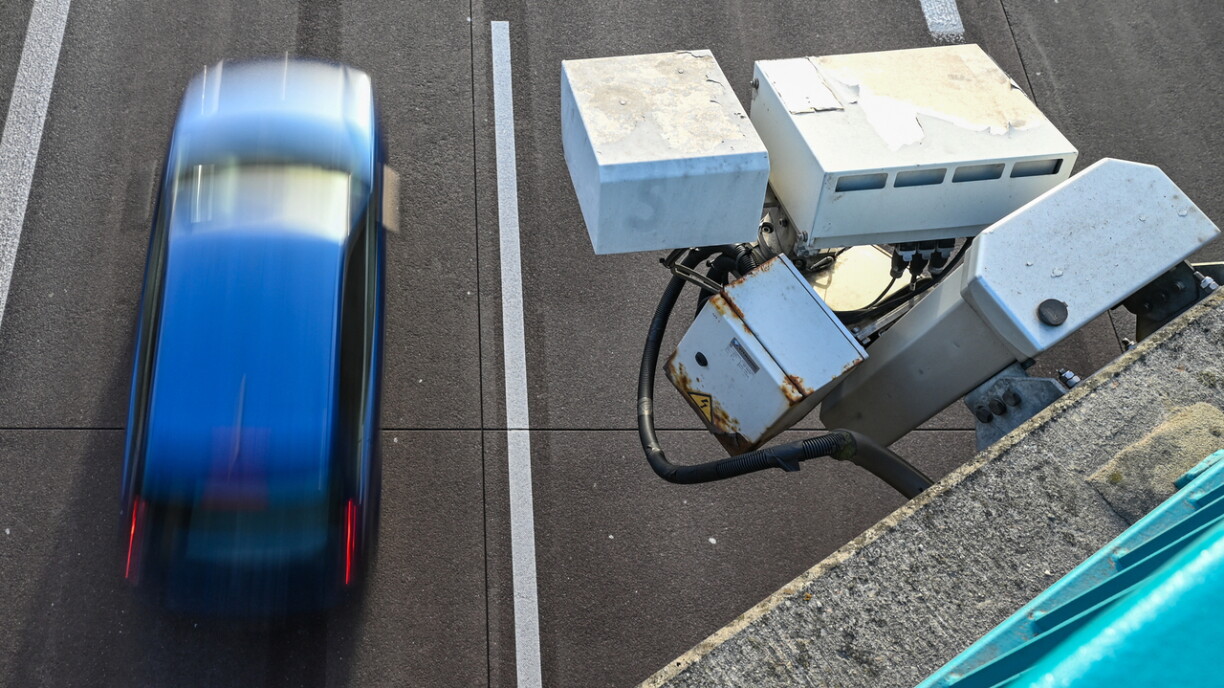
A new automated number plate recognition (ANPR) system is set to be introduced in Luxembourg. The system, which would scan vehicle number plates on roads and cross-check them with police and customs databases, is intended to help authorities locate stolen vehicles and wanted persons more quickly.
Draft law 8584 outlines the use of this technology to combat terrorism and serious crime, trace refugees and missing persons, and assist in securing major events.
However, the Council of State has recently issued a formal objection to the draft legislation. Its principal concerns centre on the lack of clarity regarding where and how many cameras can be installed, and who is authorised to make these decisions.
The Council warns that, as currently written, the law could enable permanent surveillance across the entire country.
The Council further criticises the proposal for insufficient restrictions on data access and use. It is unclear which police and customs databases may be used for comparison, and the boundaries of intelligence agency access are not defined.
Additionally, the Council takes issue with the government’s plan to store data for 28 days even in cases where no matches are found, arguing that the rationale for this retention period is inadequately explained.
Minister of Home Affairs Léon Gloden has expressed surprise at what he considers to be an unusually harsh assessment from the Council of State.
He maintains that, in the government’s view, the draft law respects the constitution in many areas. While open to minor suggestions such as specifying the databases to be used, Gloden considers the bulk of the Council’s criticism to be excessive.
He points out that recent security-related draft laws from the Ministry of Home Affairs have consistently faced close scrutiny from the Council of State.
Gloden also refers to recent changes in French law, where, as of August 2026, the retention period for such data will be extended to one year.
In practice, however, police access is usually limited to one month unless a magistrate authorises a longer period in the context of a judicial investigation.
The minister says the draft law will now be reviewed internally and adapted as needed.
The Luxembourg Socialist Workers' Party (LSAP), in opposition, shares the concerns about protecting fundamental rights and data privacy.
LSAP MP Mars Di Bartolomeo acknowledges the importance of tackling serious crime but insists that any measures must be proportionate.
He warns of the potential for innocent members of the public to be caught up in sweeping surveillance, in which context he underlines the need to guard against unintended consequences.
Di Bartolomeo is calling for the parliamentary Institutions Commission to examine the draft law, to ensure that the proposed rules are consistent with the constitution and fundamental rights protections.
The Council of State’s critical position follows earlier concerns expressed by the National Data Protection Commission (CNPD).
The CNPD had previously objected to the possibility that the new system could collect images of drivers and passengers who have no link to any crime, and has therefore called for stricter access rules and a shorter retention period for data.
Prosecutors have also raised several issues. The public prosecutor general, for example, criticised the broad possibility of deploying the system at major events without requiring evidence of a specific threat.
The Luxembourg public prosecutor’s office has requested more precise rules for targeted searches and clearer guidance on data retention, while the Diekirch prosecutor’s office has welcomed the system in principle but recommended expanding its use and giving prosecutors direct access to the data.


