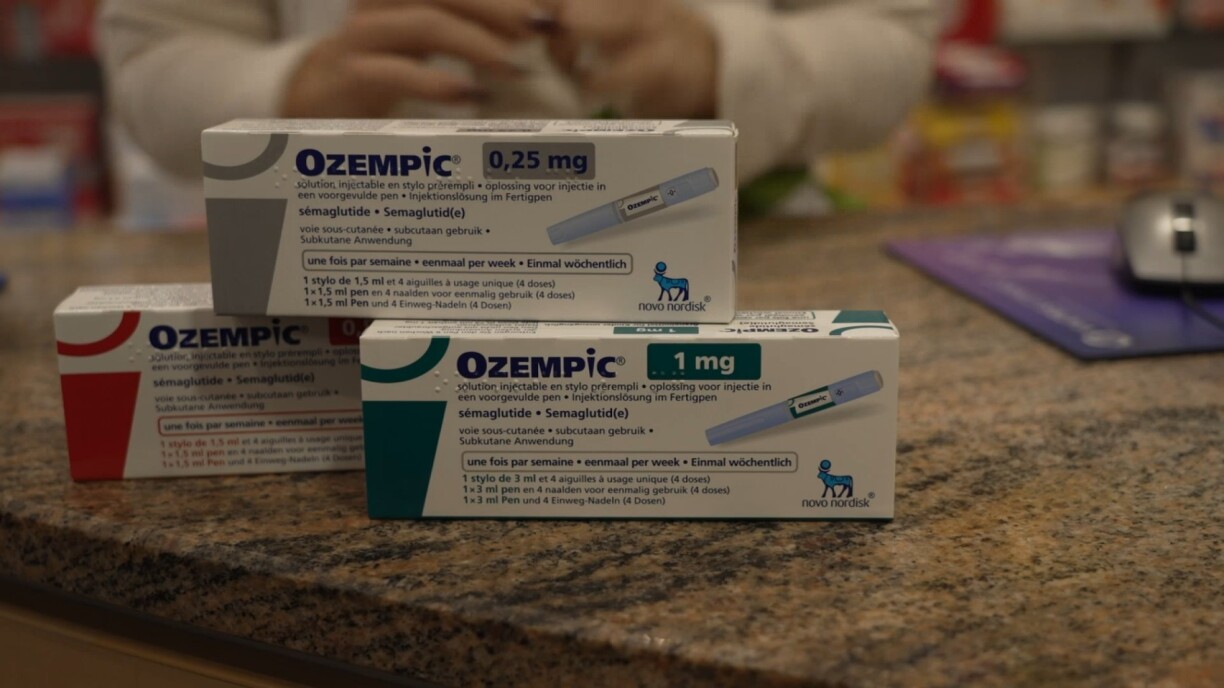
RTL recently ran a report on a woman suffering from insulin resistance, which makes it difficult to lose weight. She found success through using popular weight-loss injection Ozempic, although she had to pay for the jabs out of her own pocket, as the National Health Fund (CNS) only compensates the use of the drug for patients with type-2 diabetes.
In early December, however, the World Health Organisation issued recommendations to treat patients suffering from obesity with Ozempic and similar medications. RTL asked the Luxembourg Ministry of Health if it would consider covering the weight-loss injections for overweight patients in future.
"First it must be stated that there are currently three semaglutide medications on the Luxembourg market. These are the Ozempic® injections, Rybelsus® tablets, and Wegovy® injections. These products are all manufactured by the same pharmaceutical company.
"According to official European approval guidelines, which also apply to Luxembourg, Ozempic® and Rybelsus® are only approved for the treatment of patients with type-2 diabetes. For some time it was hard to get hold of Ozempic® as it was frequently being prescribed to obese patients, despite the lack of approval. For this reason, the Ministry of Health stepped in to ensure the medication was prioritised for diabetics so they would not be left without treatment.
"Although this regulation has been lifted, it continues to be the case that Ozempic® and Rybelsus® will only be covered by the National Health Fund if the doctor specifies on the prescription that the patient has type-2 diabetes.
"Wegovy®, which is specially approved to treat overweight patients, is currently not covered by the National Health Fund compensation, as the company has not submitted an application for this.
"Starting 1 February there will be an additional medication in this group of treatments, which will be covered by insurance, namely Mounjaro® (tirzepatid). For a first phase this will only be compensated for diabetic patients with long-term poor blood sugar levels despite optimal treatment with another GLP1 medication such as Ozempic®. The Mounjaro® reimbursement is on the basis of an attestation of coverage, which was agreed by the CNS in conjunction with the social security medical control service."
"This table shows the requested information for Ozempic and Rybelsus.
"These figures relate to the CNS data for patients visiting a public pharmacy in Luxembourg with a prescription for semaglutides (ATC A10BJ06), purchasing these items and requesting compensation. The data does not include prescribed medications that were not covered by the National Health Fund. If a patient visited a pharmacy multiple times with the same prescription, this is considered a single prescription.
"Each insured person is counted once per subdivision, so that a person who fills a prescription for Ozempic and Rybelsus can be found in both categories, but only once in total. Wegovy is not one of the medicines covered by health insurance and is therefore not included in these figures.
"The data does not allow us to indicate over what period of time the respective medications were prescribed, and data for the year 2025 is not yet definitive."
| Number of insured patients | |||||||
| Year | 2019 | 2020 | 2021 | 2022 | 2023 | 2024 | 2025 |
| Ozempic | 2,175 | 3,418 | 4,879 | 6,484 | 7,702 | 7,216 | 8,918 |
| Rybelsus | 678 | 1,547 | 2,727 | 5,867 | 5,489 | ||
| Total | 2,175 | 3,418 | 5,456 | 7,706 | 9,626 | 11,254 | 13,084 |
| Number of prescriptions | |||||||
| Year | 2019 | 2020 | 2021 | 2022 | 2023 | 2024 | 2025 |
| Ozempic | 4,113 | 11,018 | 15,089 | 20,155 | 23,330 | 22,174 | 26,233 |
| Rybelsus | 1,233 | 3,263 | 5,865 | 13,031 | 13,702 | ||
| Total | 4,113 | 11,018 | 16,320 | 23,362 | 29,016 | 34,651 | 39,636 |
Editors' note: Some of the total figures do not add up correctly as people with multiple prescriptions were only taken into account once by the Ministry.
"The WHO recently issued a 'conditional' recommendation with moderate evidence to support the use of GLP-1 therapies, including semaglutide, for obesity treatment. These recommendations only apply for the products which have official approval for this purpose. The document clearly states that the medications must be prescribed as part of a comprehensive treatment plan, which should also include physical activity and changes in eating habits. Each country must analyse whether they can and will integrate these medications within its health system in relation to the medical, organisational, and economical means available. It is also reminded that the risks and side effects over long-term periods have not been sufficiently researched. One must consider that, based on current knowledge, these medicines must be taken for life as they do not have a lasting effect.
"Luxembourg authorities will continue to monitor the development of research in this area and analyse whether health insurance could cover these medications in future."
"In Europe, and to some degree in Luxembourg, the GLP-1 shortage appears behind us. The joint efforts of the authorities and the manufacturers helped to increase production capacity. At the same time, other treatments for GLP-1 medication have gradually become more available and increased treatment options. However we cannot exclude the possibility of individual supply issues or local difficulties in obtaining the medicine from time to time."





