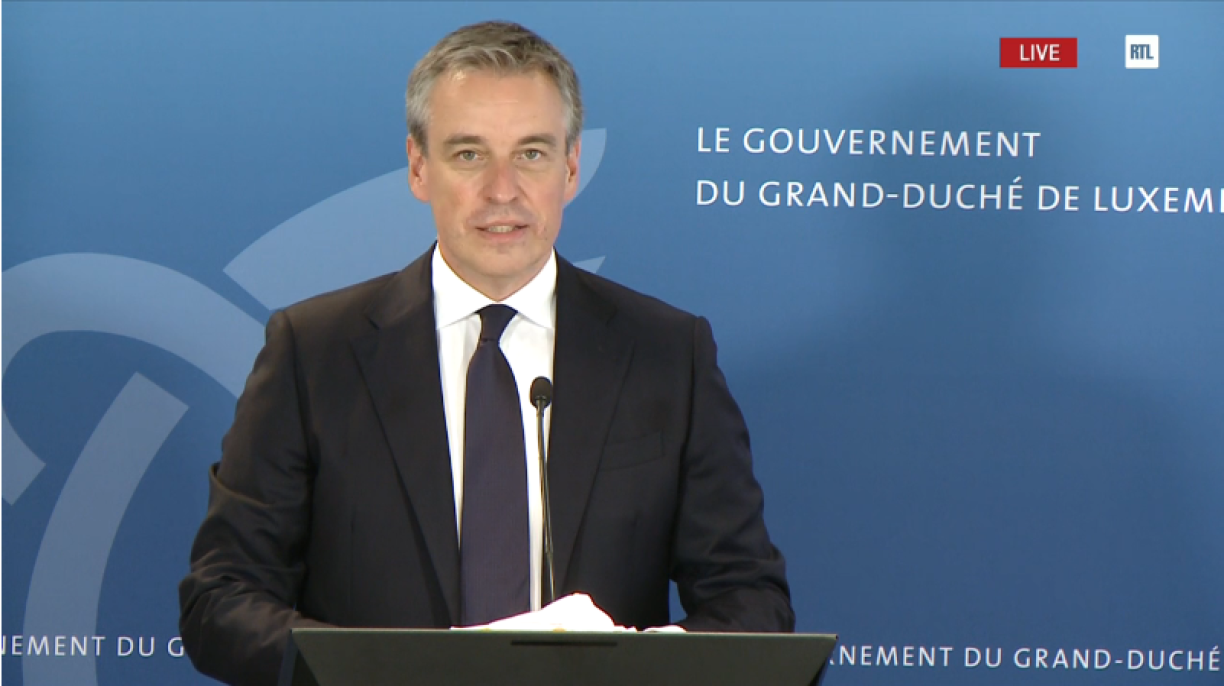
Meisch explained that all parties involved in the organisation of schools, be that parents, teachers, or unions, had been consulted ahead of the return to schools in September. The minister underlined that everyone agreed that the proposed plan was the best way to move forward, since it is based on the desire to facilitate a normalisation of school life while simultaneously respecting Covid-19 safety measures. The strategy is based on the research undertaken by the Ministry of Health and the Luxembourg Institute of Health, which found that pupils are more likely to get the virus from family members than from class mates.
Meisch acknowledged that quarantine measures would most likely still be necessary in some locations at some points, but emphasised that isolation procedures would be more targeted to allow non-concerned classes and institutions to maintain their regular schedule. The curriculum would meanwhile only be adapted if the spread of the virus started increasing drastically again, meaning that both music and physical education will be taught. Home learning will therefore be avoided as much as possible.
The minister also elaborated on location-specific measures, noting that schools and childcare centres would receive more autonomy to adapt their handling of the situation in the future. However, if certain classrooms or schools become in danger of turning into infection hotspots, the government may still raise safety regulations themselves.
Furthermore, a team of experts has been created to support schools over the course of the year. Mobile testing units will be used to accelerate testing procedures. Meisch underlined the importance of transparency and announced that regular updates about the developments in the Grand Duchy's schools would be made public.
When it comes to sanitary measures in general, Meisch made a series of suggestions. Children and teaching staff are advised to continue regularly washing their hands and wear a mask while not seated at their desks. A 2m distance should be kept in school buildings and playgrounds, both of which will be cleaned and sanitised on a regular basis. Meisch further noted that studies have proven the importance of properly ventilating rooms and buildings to avoid infection hotspots, which is why all schools are advised to keep windows and doors open once class is over. Outdoor activities thus continue to be recommended, while field trips to enclosed spaces, for instance museums, will require the wearing of masks.
As the pending flu season will make it more difficult for parents to correctly identify a case of Covid-19, it is recommended that children remain at home when displaying symptoms.
Maisons Relais and other childcare centres will be able to operate with groups of up to 30 children, Meisch noting that this strategy had proven itself useful in summer activities over the holidays. School cafeterias will also reopen, while applying similar measures as restaurants have across the country: no self-service, and masks have to be worn until seated. A maximum of 10 children can sit at one table. Furthermore, pupils who prefer to not stay inside the canteen may order a pre-packed lunch.
The Minister of Education underlined that above all, children needed to feel safe at schools and be able to focus on learning. Masks therefore never have to be worn during exams. High schools will also be able to provide online classes for higher grades, since this method had proven to work well during the end of last academic year. The government decided to provide a total of 15,500 new tablets and laptops in support of that initiative.
Three emergency scenarios and responses were formulated to prepare for possible outbreaks inside schools and enable contact tracing:
1. If a single positive case is discovered at a school, the student will be isolated at home, while their class will be isolated within the school. This means they would not be allowed to attend the school canteen and other communal areas until they have produced a negative test.
2. If a small cluster of infections breaks out in a class, the affected students and teachers will be taken out of school and will only be allowed to return if they test negative.
3. If a vast number of cases develops at a school, pupils and staff affected will be placed in quarantine and additional measures will be implemented with the help of the expert team.
The separation of classes into groups will no longer be carried out. Meisch did however not rule out the possibility of closing down an entire school for a limited time, but emphasised that such a measure would always be considered a last resort. He reiterated his confidence in the preparation his team and all contributors had done in anticipation of September and the potential to overcome unforeseen obstacles.
Questions by the press surrounded several issues, such as the logistical aspects of testing, the ongoing possibility of parental leave in case of a child's sickness, or a mandatory requirement of tests. Meisch explained that parental leave remained an option and that sick children should be kept at home. Tests would strictly remain on voluntary basis, even following the isolation of 60 pupils from the International School of Luxembourg. In case somebody refused a government-instructed test, that person would be required to quarantine for two weeks. Teachers are still able to have meetings, but should respect safety distances when doing so. Parents are still not allowed to accompany their children onto the school premisses.
You can find our full live ticker coverage of the minister's conference here.





