The ensuing emissions associated with importing fresh produce is one of the major negative consequences for the environment. Consequently, the Ministry of the Environment has been considering alternatives, one of which is the concept of urban farming. On Thursday, the Minister for the Environment, Carole Dieschbourg, presented her strategy for the cultivation of fresh produce in an urban context.
Historically, cultivating fresh produce in cities has emerged from necessity, with notable examples being the Depressien era and the state of poverty in industrialised cities. The practice has become a worldwide trend in the meantime with promising consequences, including improved air quality in cities, shorter distances throughout the life cycle of the produce in question, and an improved understanding of where our food comes from.
Luxembourg hopes to follow in Brussels' footsteps, although not in terms of setting targets based on exact figures. The Belgian capital aims to produce 30% of its consumed fresh produce locally by 2030. Instead, Dieschbourg explained that the Grand Duchy's policy is to become more autonomous and provide its residents with local produce to the best of its ability.
This aspiration is echoed by the population as well, as follows a survey commissioned by the Ministry of Agriculture. The survey revealed that 71% of Luxembourgers would be willing to pay more for local produce. Dieschbourg specified that urban farming would be complementary to conventional agriculture rather than a complete alternative.
The minister cited examples of how to achieve the goal of consuming local produce, such as constructing greenhouses on top of buildings to grow produce and to potentially produce solar energy. A further suggestion would be to bring people together to allow them to form stronger connections to the food they eat.
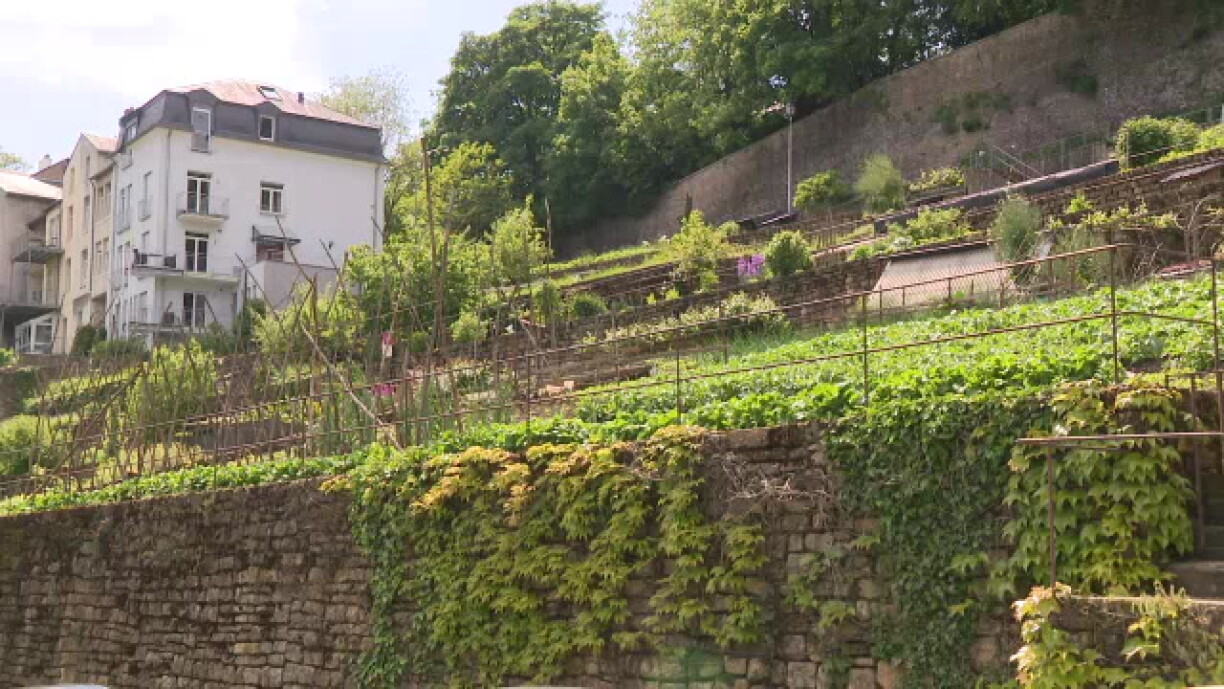
Over the course of the next few years, the government will work towards providing legal grounding and funding opportunities. At the current time, mainly urban farming exists through local projects involving community gardens and cooperatives.
Dieschbourg explained that the ministry is examining methods on expanding urban farming, notably considering economic niches which individuals could benefit from. She suggested making it appealing to certain professions, such as architects, so that they could create additional floors used to foster green spaces, protecting biodiversity in the process.
Finally, the minister was adamant that urban farming must be pesticide-free, as well as use rain water for watering needs.
Video in Luxembourgish.





