Luxembourg Police have issued a warning following a series of fraud cases in which victims have been financially duped through an increasingly common social media scam.
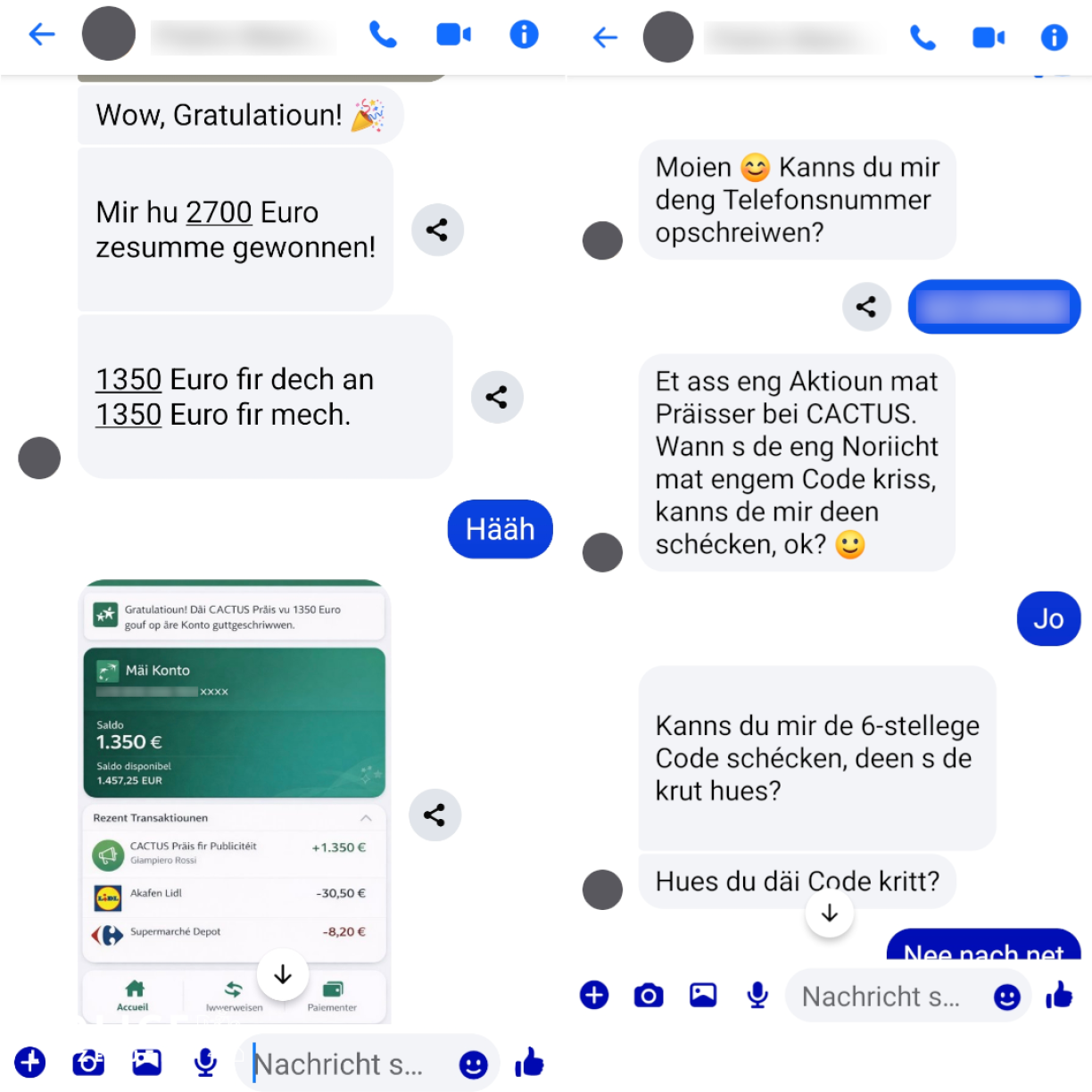
The scheme follows a consistent pattern. It begins with a message on Facebook Messenger, seemingly from a friend's account. In reality, however, the account has been compromised by fraudsters.
Once the victim engages and provides their phone number, the conversation typically shifts to another messaging platform like WhatsApp. There, the scammer sends a link inviting the victim to participate in a "lucrative" game with the promise of a shared cash prize.
To enter, victims are directed to an online form requiring personal details. Shortly after submission, they receive a six-digit code, purportedly to verify their potential winnings. The fraudster instructs the victim to send this code back. In reality, this code grants the criminals access to the victim's phone and online banking services.
To maintain the ruse and prevent suspicion, victims are often placated with fake gift vouchers or doctored bank statements. The criminals employ pressure tactics, urging targets to act quickly and spontaneously – a hallmark of online scams.
Police note that a high number of reports involve fake competitions falsely branded under well-known supermarket chains like Cactus or Delhaize. These companies are not associated with the fraudulent schemes.
To fight this scam, Luxembourg police are urging the public to exercise caution and follow key guidelines:
Authorities are also calling on the public to help raise awareness about this scam, particularly among older family members and friends who may be more vulnerable to such schemes.





