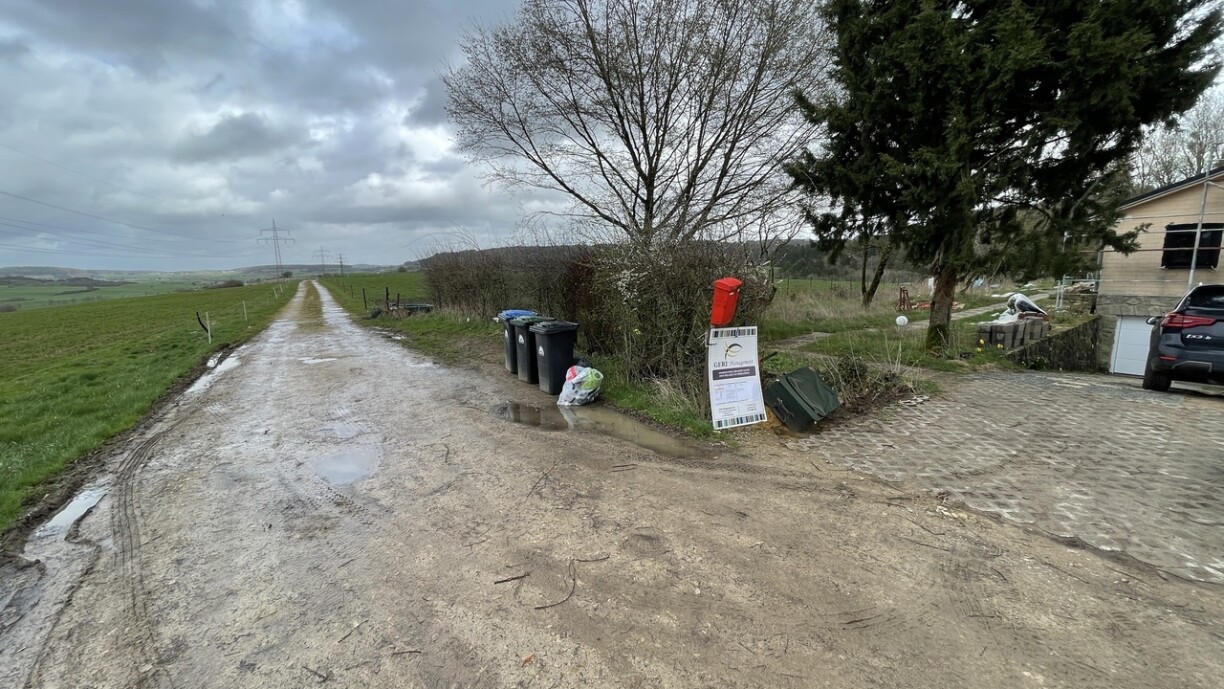
The woman, a Dutch expat who wishes to remain anonymous, moved into her home in Asselscheuer in October 2021. Since January 2022, she has had an ongoing dispute with the municipal council over difficulties collecting her rubbish bins.
The issue lies in the state of the access road to the woman's house. The address, 20 Rue de Blaschette in Asselscheuer, is frequently confused with an address of the same name in Lorentzweiler. The Asselscheuer house is located down a remote dirt track which is in extremely poor condition and does not have the necessary space for bin lorries to turn around. Instead, trucks have to either reverse back up the road to the CR124, or carry on down the track to Imbringen.
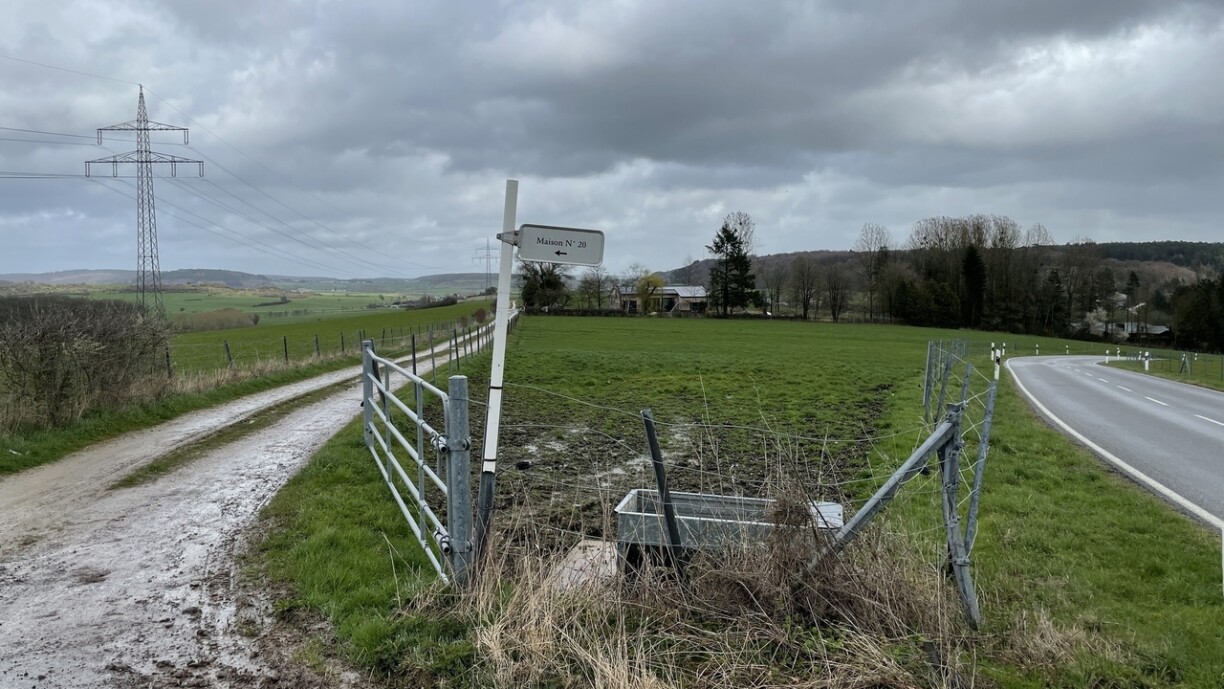
In order to facilitate curbside collection, the municipal council suggested the woman place her dustbins some distance from the property, on land close to the CR124. The woman told RTL she had done so to start with, but experienced issues with wildlife getting into the bins and scattering the rubbish, or knocking the bins over. She added that passersby often threw their own rubbish into the bins if they were left out of sight of the property.
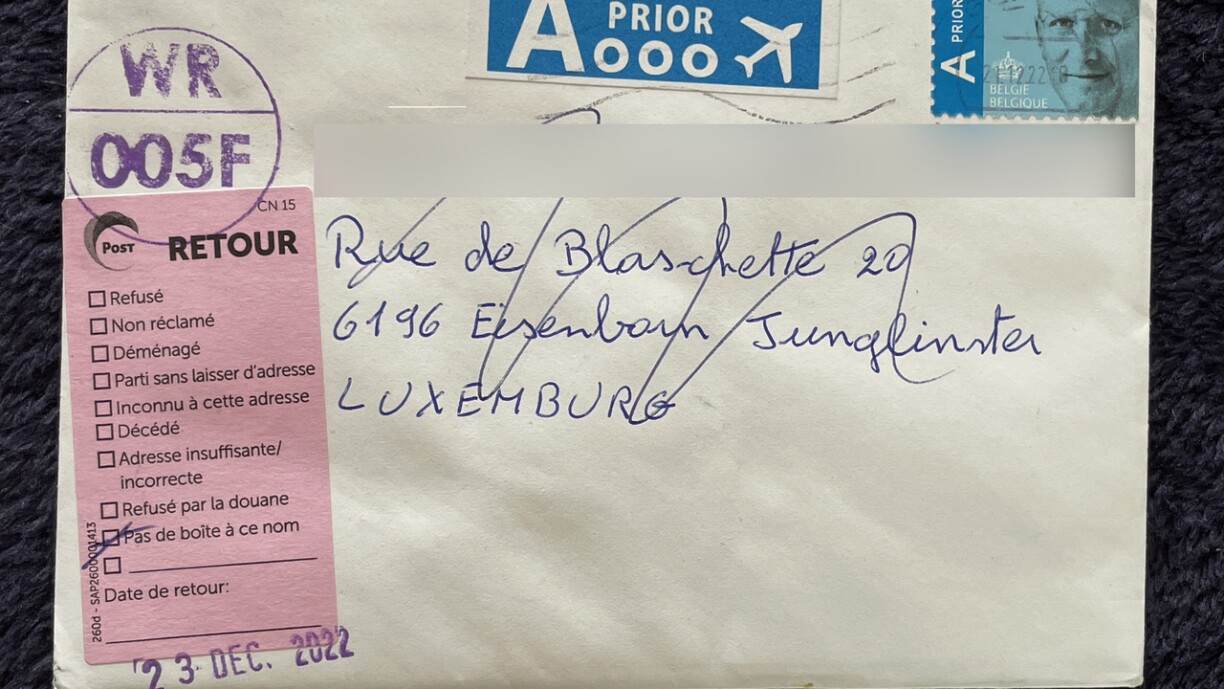
It is not just refuse collection posing an issue, however, as post is also rarely delivered to the property.
In addition to the above, the house is not properly connected to the sewer system and has a septic tank instead. The municipal syndicate SIDERO is usually responsible for emptying septic tanks. However, the woman said she had been sent a bill despite the tank not being emptied.
When asked, SIDERO said maintenance was carried out yearly in the member municipalities, and claimed this had been done at the Rue de Blaschette house in June 2022.
The woman said she had asked the municipal council to arrange paving of the road to her property, and asked for bins to be emptied near her front door. As there had been no developments on this in over a year, she said she now refused to pay corresponding fees, as with the SIDERO invoice. She explained she had contacted the authorities many times on the matter.
Citizens' initiative opposes road expansion
The municipal council confirmed that they were aware of the resident's problems and had been dealing with them for some time, including the solution of placing her bins on council-owned land near the road. The council said the house's previous owners had done the same and also placed their postbox at the entrance to the dirt track.
According to the council, the issue likely lies in a previous error made by the Ministry of the Environment, as much of the surrounding area falls into a green zone, with the exception of the woman's house and another building nearby. The dirt track leading to the property is included in the green zone, which means it cannot be paved over as the Ministry is unlikely to authorise this. In addition, a citizens' initiative in Imbringen - which forms part of the municipality of Junglinster - has already registered a formal opposition to expanding the road. The members of the initiative, which was originally founded to oppose the route of a power line, fear that more people could use the route as a shortcut.
In a recent letter from Lorentzweiler mayor Marguy Kirsch-Hirtt to the frustrated resident, Kirsch-Hirtt says there are plans to improve the road as soon as possible - however, this would be done with chippings, rather than paving. The mayor also addressed the issues with the waste collection and the septic tank, saying the inter-municipal syndicate SIDEC was responsible for emptying the bins. SIDEC maintains the woman's bins were emptied, and SIDERO's records show the septic tank was dealt with last summer. The mayor therefore advised the woman to settle any unpaid bills.
The woman shared a written response to the mayor, saying she was pleased the municipality had plans to sort out the road, but added the road itself should be in an agriculture zone, rather than a green zone. She went on to detail how her green bin was not emptied on 24 March, and the Valorlux bin was not collected on 31 March. A visit to the woman's property on 31 March proved this, but it should be added that SIDEC are not responsible for collecting blue Valorlux bags.
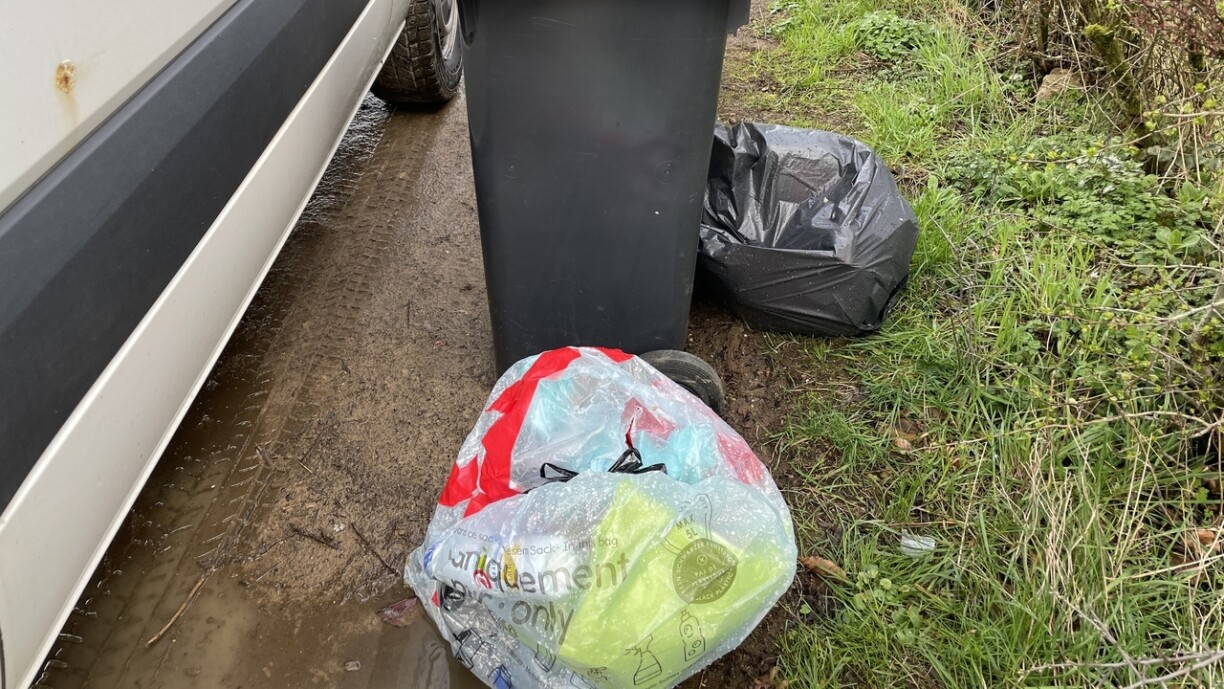
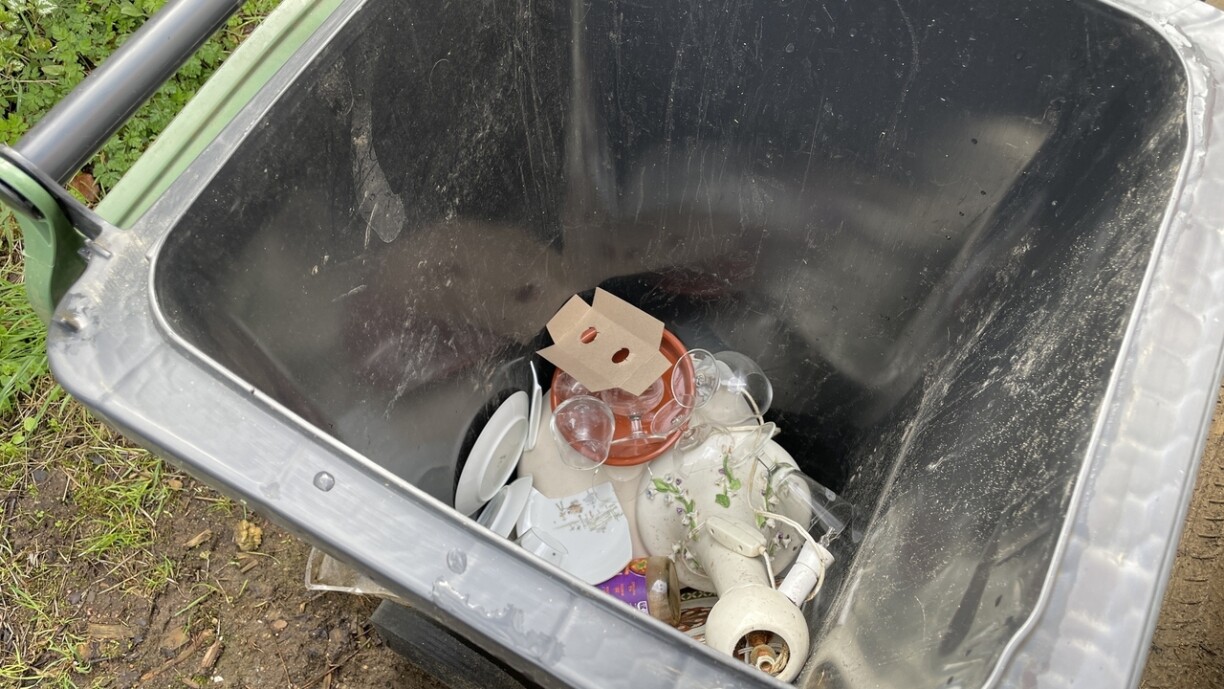
The resident asked a rubbish truck driver on 16 March if her bins would always be emptied in future, to which he replied that it would depend on which staff were working. The woman said this was an unacceptable situation and criticised the fact that Kirsch-Hirtt had been easily satisfied with the response from SIDEC.
Other members of the community have also registered complaints over SIDEC's handling of their waste collection, with several residents saying their bins were not collected regularly.
No waste collection from May 2022 to February 2023
SIDEC director Peggy Zeimes told RTL that the Lamesch waste collection company was responsible for collecting rubbish in the municipality of Lorentzweiler. It is stipulated that any forgotten bins must be collected no later than 48 hours after the error. Bins also contain a tracking chip with data on when and where they were emptied. Zeimes checked the data for the woman's bins and said they were collected five times in 2022, from January through to April, but that no further emptying had been recorded from May 2022 until February 2023. Zeimes expressed surprise at the findings and wondered if the bins had not been put out properly.
The case of the Rue de Blaschette bins clearly requires further discussion, with so many uncertainties over the process. While clear that the bins are not systematically emptied, it remains to be seen whether the municipal council will intervene once again with SIDEC.
Reaction from Ministry of Environment
In a response, the Ministry of Environment said it was not entirely true that they would not authorise the asphalting of the road. A road in a green zone may be asphalted, however it may have to consist of natural materials, which still creates a strong road surface.





