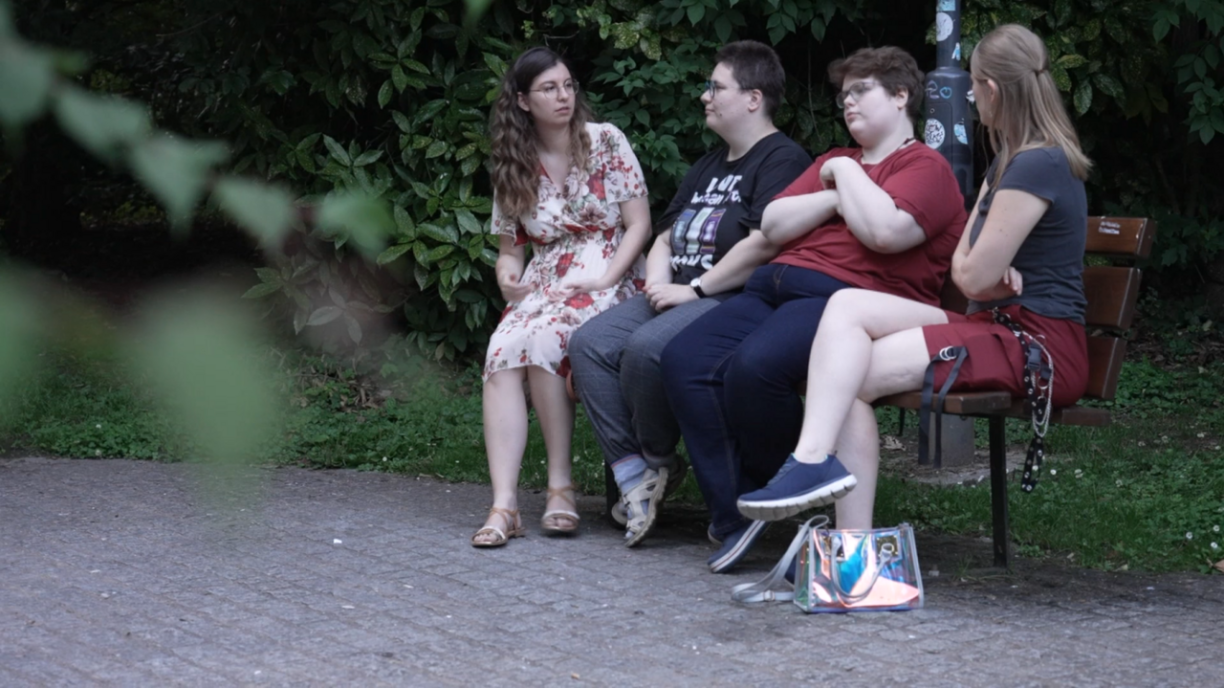
Asexuality remains widely misunderstood, even within inclusive spaces – including in Luxembourg. Our colleagues from RTL Télé recently spoke with four individuals on the asexuality spectrum, none of whom experience sexual attraction or do so only rarely.
The LGBTQIA+ community encompasses identities outside the heterosexual cisgender norm, with the "A" representing asexuality and aromanticism – related but distinct experiences. At Luxembourg City's Cigale centre, a support space for queer individuals, Tania, Amandine, Orion, and Beáta found community among others on the asexual spectrum.
Yet even within LGBTQIA+ spaces, asexual individuals often face dismissal or discrimination. Reactions to their coming out can mirror those experienced by gay individuals decades ago.
"As a lesbian, it was striking to hear queer people repeat the same things that I heard when I was a teenager and came out as gay", Amandine shared. Common misconceptions – like it being "just a phase" or about finding the "right" partner – persist, despite being categorically false.
Asexuality, a recognised part of the LGBTQIA+ spectrum, refers to the absence of sexual attraction. However, it exists on a spectrum.
Some individuals never experience sexual attraction (absolute asexuality), while others, like demisexual people, may only develop it after forming deep emotional bonds. These are just two examples of a diverse range of experiences.
Critically, like all LGBTQIA+ identities, asexuality is not a choice.
Aromanticism, while often discussed alongside asexuality, represents a distinct identity. Where asexuality describes a lack of sexual attraction, aromanticism refers to the absence of romantic attraction.
These identities may intersect – individuals who identify as both are commonly called "aro-ace" – but they can also exist separately. Some aromantic people experience sexual attraction, just as some asexual people experience romantic attraction.
Beyond general misunderstanding, asexual individuals frequently face systemic challenges in everyday life. Tania described experiencing subtle but persistent obstacles, particularly when searching for housing as a single person.
While not facing overt discrimination, she noted how societal structures often complicate her aspirations, including her desire to start a family.
There appears to be a notable correlation between asexuality and neurodivergence, particularly autism. Maud Théobald, deputy director of Cigale, observes that many autistic individuals in their support group identify as asexual or aromantic.
"Autistic people often naturally challenge social norms", Théobald explained, "which may lead them to recognise and embrace asexual or aromantic identities more readily."
However, it is important to emphasise that this represents a correlation rather than causation – not all asexual individuals are neurodivergent, and not all neurodivergent people are asexual.





