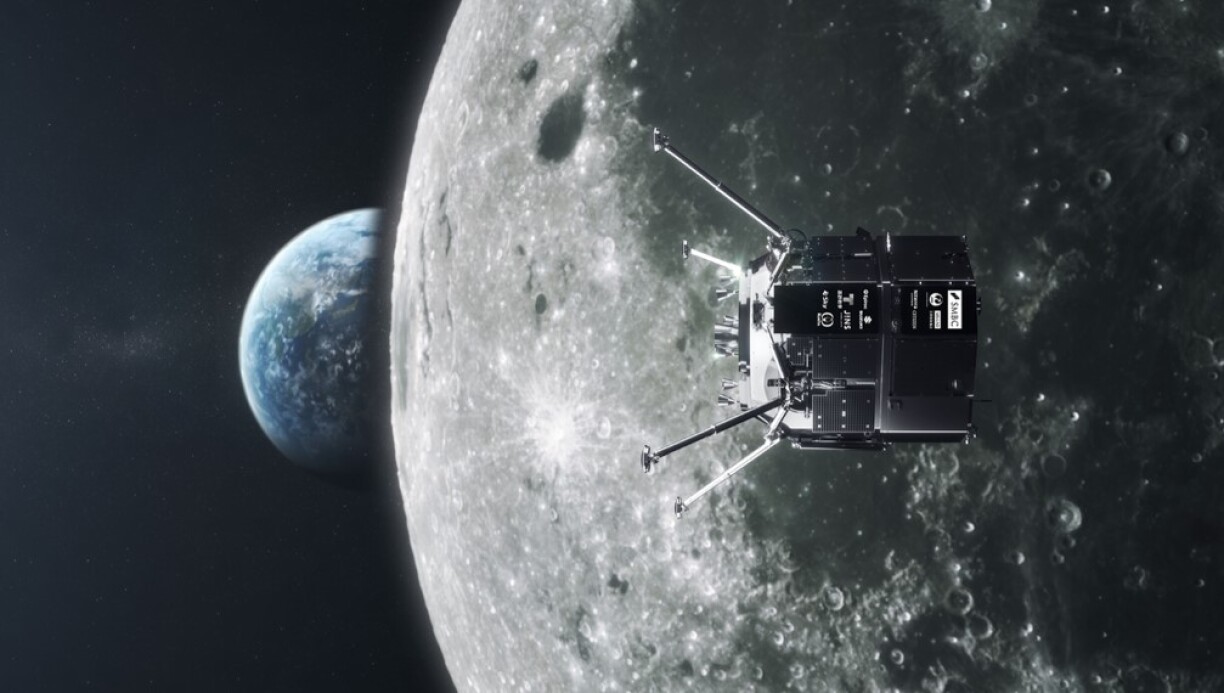
The mission to land a Luxembourg-built rover on the Moon has ended in failure after the Japanese space company ispace lost contact with its spacecraft during the final descent.
The lander, named Resilience, was scheduled to touch down on the Moon at around 8.17pm on Thursday. However, contact was lost during the critical landing phase, and on Friday, the company confirmed that the mission had been terminated.
At a press conference, ispace CEO Takeshi Hakamada announced that the spacecraft had exited lunar orbit and begun its descent. It had successfully lowered its altitude from 100km to around 20km before firing its engines to slow down. He explained that engineers had confirmed the lander was in a near-vertical position just before communication was lost. No telemetry data was received after the scheduled landing time, and attempts to re-establish contact were unsuccessful.
Mr Hakamada said that the most likely scenario was that the lander had suffered a “hard landing” on the Moon’s surface. Due to the loss of signal and the unsuccessful restart attempts, the company has officially ended the mission.
This marks the second failed attempt by ispace to land on the Moon, following a previous mission that ended in a crash two years ago.
Moon landing manoeuvres are extremely complex, particularly due to the absence of an atmosphere, which renders parachutes ineffective. The spacecraft must descend using thrusters, all with extreme precision
So far, only two American private companies – Intuitive Machines and Firefly Aerospace – have successfully landed spacecraft on the Moon without experiencing catastrophic failure. Even then, two of the three landers ended up in unstable positions, which limited their performance after touchdown.
Prior to this, successful lunar landings had only been achieved by a few countries, beginning with the Soviet Union in 1966. Japan joined this exclusive group in January 2024 when its space agency, JAXA, landed a spacecraft on the Moon.
ispace's mission, one of several private initiatives in this field, reflects the broader trend of expanding space exploration through smaller, more frequent and more cost-efficient missions than those traditionally undertaken by governments.
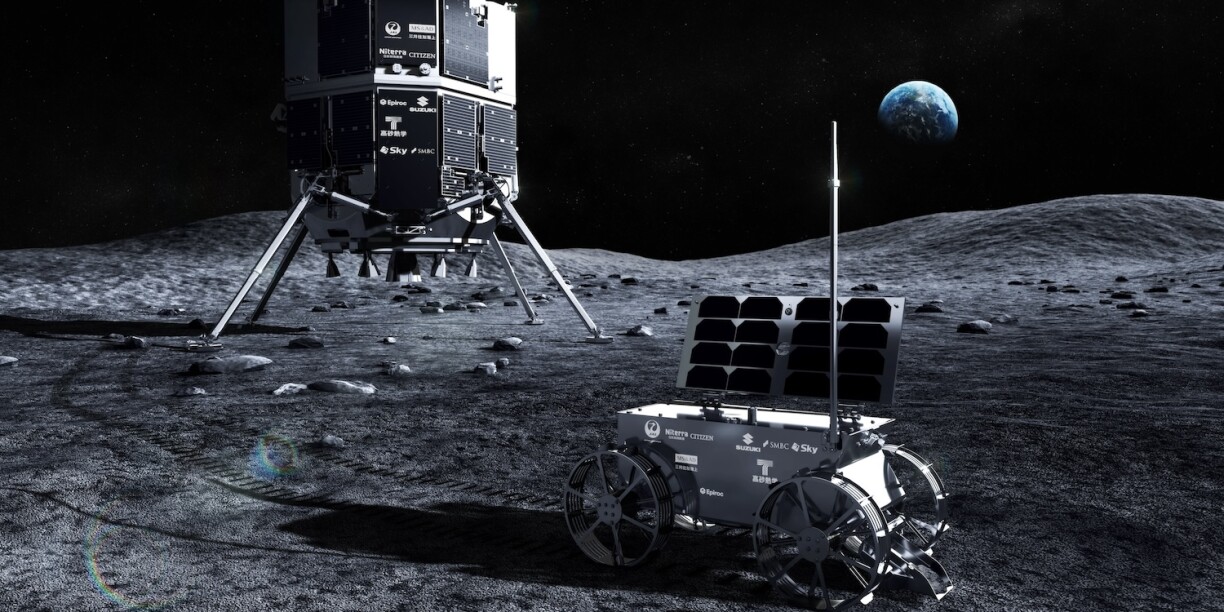
Launched in January aboard a SpaceX Falcon 9 rocket, the Resilience lander took nearly five months to reach the Moon, using gravitational forces to adjust its trajectory along the way. After travelling more than a million kilometres, it successfully entered lunar orbit on 7 May.
Plans were in place for it to land in Mare Frigoris (the 'Sea of Cold'), a volcanic plain in the Moon’s northern hemisphere. In addition to Luxembourg’s lightweight rover, the lander was carrying other scientific instruments, as well as a model house designed by the Swedish artist Mikael Genberg.
The Luxembourg rover, which weighed just five kilos, was designed to carry out several key tasks: filming the lunar surface, collecting regolith (lunar soil), and analysing the potential presence of water.
The failed landing is a blow to Luxembourg’s growing space ambitions, but does not undermine the technological progress made in developing the rover.
Despite this failure, the commercial space sector has been gaining momentum. In 2023, Intuitive Machines became the first private company to land on the Moon. Although its lander touched down at an awkward angle, it was still able to conduct tests and transmit images.
Then, in March 2025, Firefly Aerospace's Blue Ghost lander, launched aboard the same rocket as Resilience, successfully reached the lunar surface.
These developments highlight the technical difficulty of successful lunar landings, particularly for private companies seeking to establish themselves in space missions.





