Here are five things you should know at the end of this week:

Pointing fingers – Dr Chris Roller, president of the AMMD, accused the government and National Health Fund (CNS) of imposing rigid controls on doctors, dictating fees and procedures without reflecting real costs. He argued that repeated promises of reform have not materialised, leading the AMMD to terminate the existing convention. Roller claims that the government favours hospitals over private practices, resulting in long waiting times and higher costs for patients.
What's up, docs? – Members of the Chamber of Deputies' health committee responded to AMMD’s criticisms, with Health Minister Martine Deprez insisting the convention-based system is not in question. While acknowledging gaps in the system, she said the government remains open to dialogue. Some MPs criticised the AMMD for abandoning negotiations and questioned how representative the association is of all doctors, while others called for more discussion on structural issues and tariff autonomy.
Uncertain future – As the government transposes the expired convention into a Grand Ducal regulation, both sides remain far apart. Deprez assured patients that nothing changes for them, with reimbursements and care continuing as before. However, the AMMD warns that without meaningful reform and compromise, a new convention is unlikely. Despite ongoing working groups and calls for dialogue, the path to a negotiated solution remains unclear.

Pardon my french – At its back-to-school press conference, the SNE/CGFP teachers' union called for a gradual introduction of French-language literacy, rather than an immediate, universal rollout. The union also advocates for greater school autonomy, particularly in decisions regarding class composition and teaching methods. Other key issues raised include staffing levels in early education and the need for a substitute teacher pool in pre-vocational education.
Ready for some schoolin' – Luxembourg's secondary schools welcomed back 55,926 pupils this week, marking an increase of about one thousand compared to last year. The academic year began with the 7e intake of around 6,000 pupils on Wednesday, followed by the rest of the student body. The teaching staff comprises 6,175 educators, with two thirds being civil servants and the remainder state employees.
Human error – The start of term was also marked by a data breach at the National Institute of Education (IFEN), where personal data of 1,800 staff members was mistakenly emailed to 26 recipients. The Ministry of Education confirmed that affected individuals were notified and relevant authorities informed. The Ministry clarified that sending personal data by email is not standard practice and steps were taken to address the error.
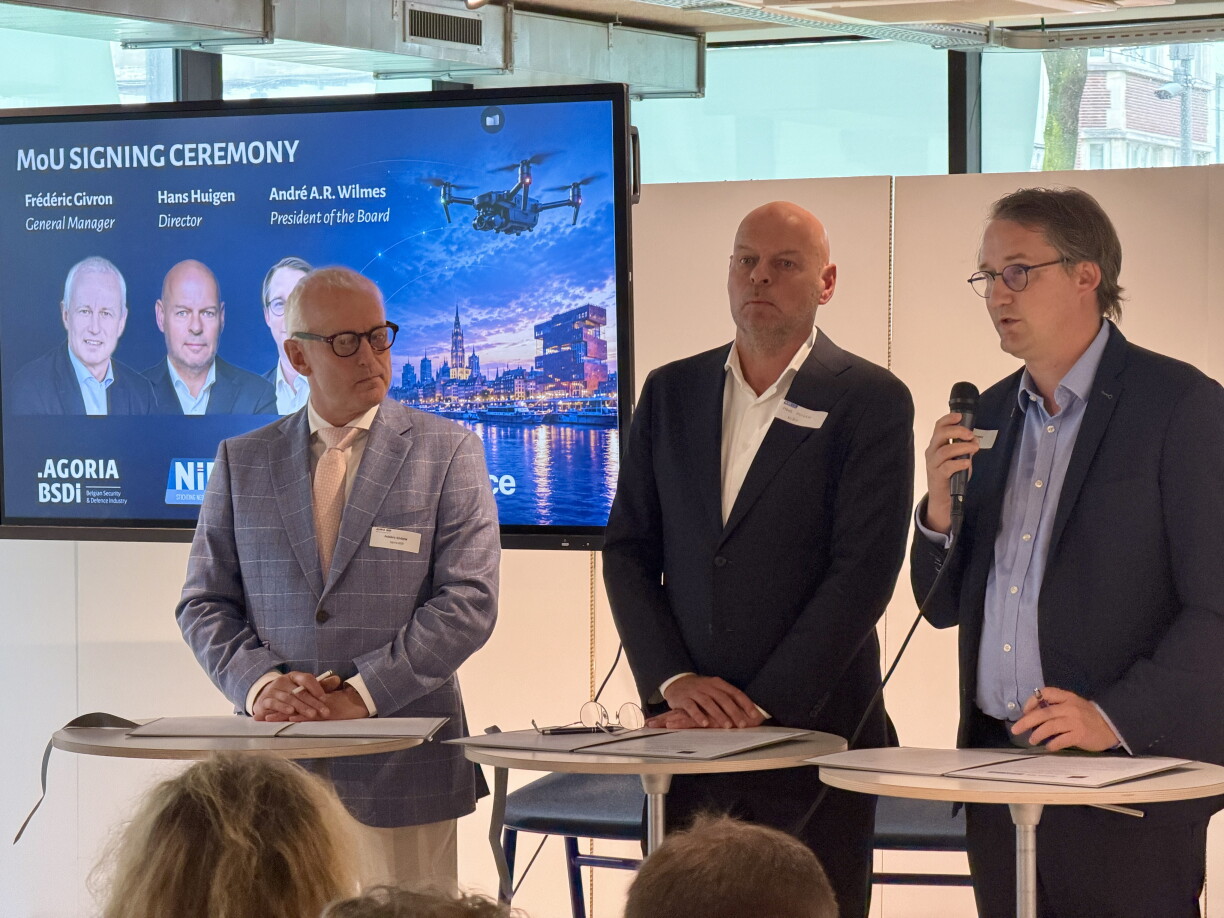
Joining hands – Faced with mounting security challenges, including Russia’s invasion of Ukraine and provocative actions near NATO territory, the Benelux countries are stepping up their defence collaboration. The new agreement seeks to make Belgium, the Netherlands, and Luxembourg more agile and influential in the sector, with a focus on sharing expertise and responding quickly to hybrid threats.
Droning on – Defence firms in the Benelux region are already adapting, with some rapidly expanding production and workforce to meet growing demand. Luxembourg’s LUXUAV, for example, has doubled its drone output and plans further increases, while also partnering with Ukrainian manufacturers. The region’s companies are leveraging their technological strengths, particularly in drones and connectivity, to address the urgent needs of modern warfare.
Calls for unified legislation – Despite progress, industry leaders stress that political backing is vital to overcome regulatory barriers and harmonise rules, especially for cross-border drone operations. The Benelux Union’s Secretary-General has called for unified European legislation, noting that while police cooperation is well established, common standards for defence technology and airspace use still lag behind the pace of security developments.

Social media ban – Von der Leyen announced the upcoming 'EU KIDS Act', which would ban social media for children under 13 and restrict access for those aged 13 to 15 to parent-supervised 'mini accounts', with limited features and a one-hour daily cap. The proposal responds to mounting evidence of online harms to children's well-being and follows pressure from several EU member states for bloc-wide action.
State of EUnion – Addressing the impact of recent extreme weather, von der Leyen committed to presenting a European Heatwave Plan. The plan aims to improve early warning systems, health preparedness, and urban adaptation, with a focus on the 100 most vulnerable regions. Last summer's heatwaves led to over 30,000 excess deaths and widespread wildfires, highlighting the urgency of climate adaptation.
I am your friend, buddy – Von der Leyen proposed making Canada the EU’s first 'associate member', seeking closer cooperation on technology, defence, and energy. This move would build on the existing free-trade agreement and recent defence collaboration. While EU treaties do not currently provide for associate membership, the idea signals a push for stronger alliances with like-minded democracies amid rising global tensions.

Might need to slow down – OpenAI, Anthropic, and Google are collaborating on a proposal to establish an industry-funded organisation that would set safety standards and test powerful AI systems before their public release. The idea, modelled after financial regulatory bodies, aims to address public fears that competition could override safety concerns. OpenAI’s CEO Sam Altman voiced support for industry-wide coordination, emphasising the need for transparent reporting and learning from technological accidents.
We're speedrunning Skynet – Prominent voices, including UN Secretary General candidate Ivonne A-Baki and AI pioneer Yoshua Bengio – and King Charles, too – have called for international regulation of AI, comparing its risks to those of nuclear weapons. They argue that only global cooperation and binding rules can effectively manage the technology’s potential dangers. Recent resignations from major AI companies have highlighted growing unease about the pace and direction of AI development.
Divided opinions – While some tech leaders and politicians support voluntary industry standards, others, such as US Senator Bernie Sanders, insist that only binding international agreements can safeguard humanity. Meanwhile, political will varies, with some leaders dismissing AI risks as exaggerated. Tech giant Meta is at the vanguard of the "hands off our AI" movement.
The debate is set to continue at high-level meetings, as governments and industry grapple with how best to balance innovation, competition, and public safety.
Your Weekly Recap is published every Friday at noon.
Read earlier versions here.





