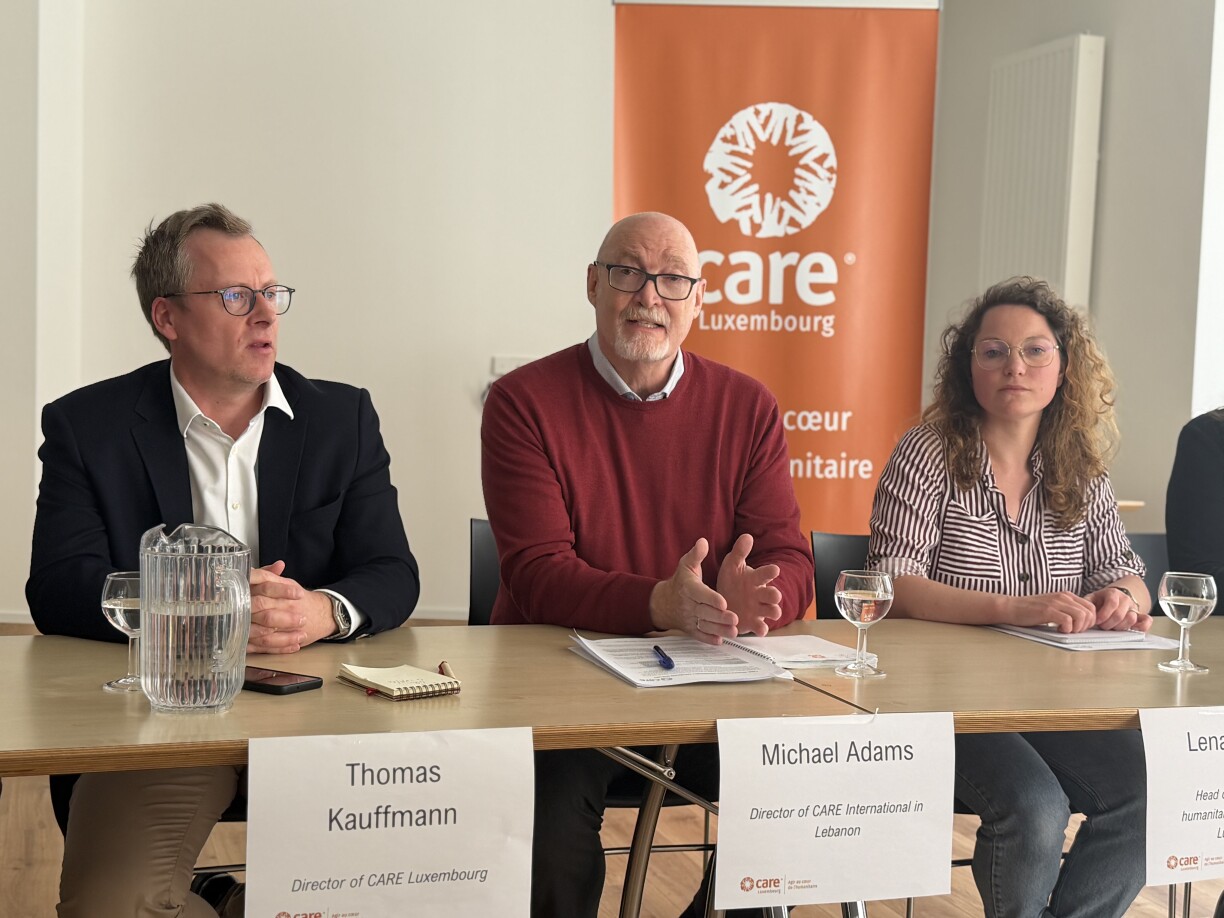
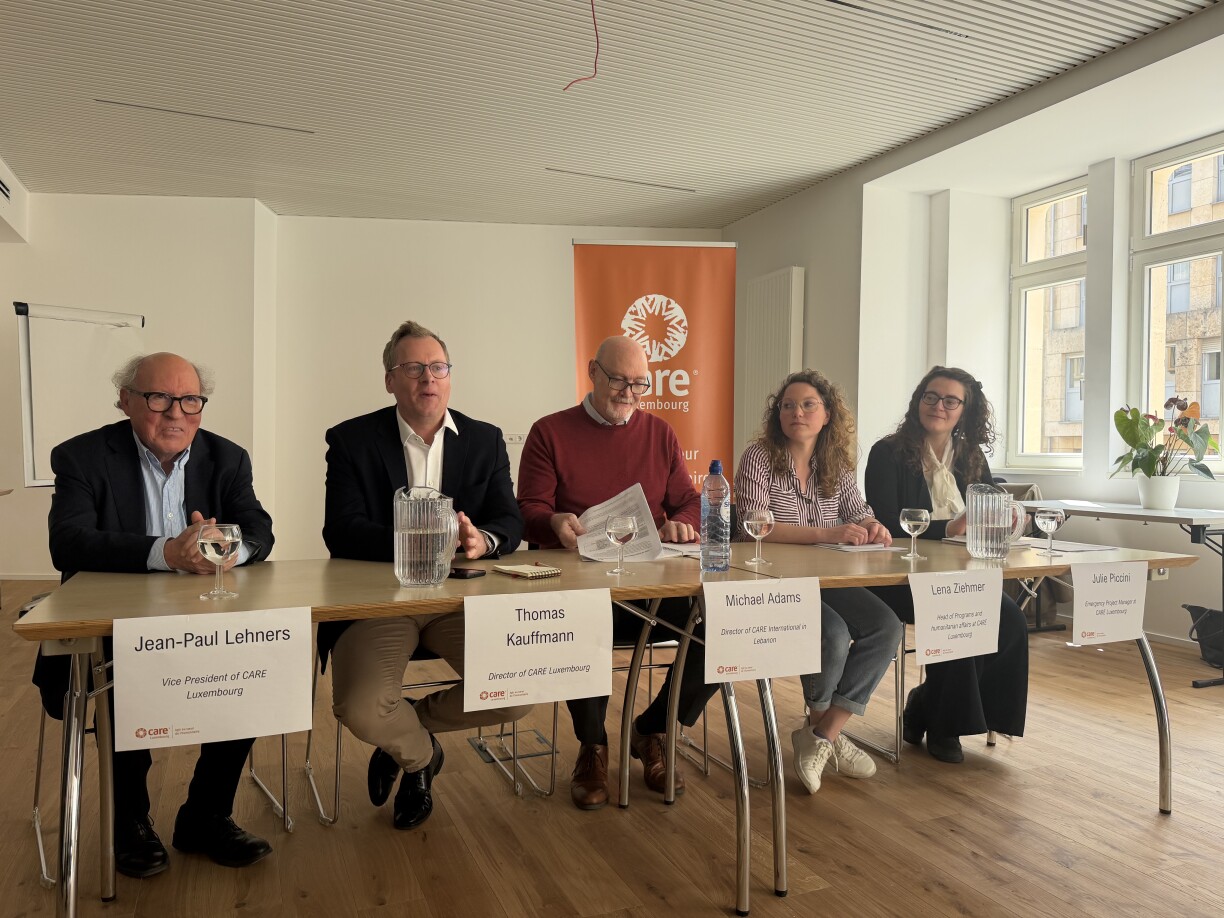
Amid ongoing cross-border hostilities between Israel and Hezbollah in southern Lebanon, the international humanitarian organisation CARE warned at a press conference held by CARE Luxembourg that the situation for civilians is rapidly deteriorating, with around 1.2 million people, including nearly 400,000 children, forced from their homes.
According to Michael Adams, director of CARE in Lebanon, the impact of the crisis is far greater than many realise. While international attention is focused on other conflict zones, the humanitarian crisis in Lebanon is steadily worsening.
Despite a ceasefire that has been extended by three weeks, the situation remains highly unstable. According to Adams, many people are attempting to return briefly to their homes, if they have not been destroyed, to retrieve essential belongings before fleeing again to safer areas.
More than one million people have been forced to leave their homes due to Israeli bombardments and are seeking shelter, but facilities are already overwhelmed, with shortages of space, food and other essential resources. Adams explained that many families are living in extremely difficult conditions and are fortunate if they can secure just one warm meal a day.
With families often receiving only one meal a day, children are particularly affected and increasingly have to contribute to supporting their households, Adams said, adding that this has led to a growing number of children on the streets asking for money to help their families survive.
CARE currently has 73 staff, around 100 volunteers, and works with eight local NGOs on the ground to provide humanitarian assistance. However, delivering aid remains extremely difficult.
Limited access to affected areas, a lack of resources, and the sheer number of people in need are major obstacles. In addition, humanitarian workers themselves face serious risks, as they cannot operate safely and have no guaranteed protection, exposing them daily to the danger of becoming victims of attacks.
The psychosocial situation is particularly alarming. Stress, fear, and trauma dominate daily life, according to Adams.
He explained further that the psychological impact of bombings, with jets and drones constantly overhead, affects the entire population in those regions. Adams stated that while trauma is difficult to measure, it is clearly visible in the faces of children, women, and men.
CARE Luxembourg has been supporting its partner organisation in Lebanon since the start of the conflict. Its director, Thomas Kauffmann, explained that assistance includes food distribution and the provision of essential items.
However, he said that access remains difficult due to ongoing exchanges of fire despite the ceasefire, and the safety of humanitarian workers cannot be guaranteed, making operations too dangerous in some areas.
Even if the conflict were to end, Adams stressed that recovery would take time. Beyond the widespread destruction of infrastructure, the psychological impact will take years to heal before people can return to a normal life, he said.
CARE also works closely with Lebanon's Ministry of Interior to help coordinate humanitarian aid, support displaced people, and organise emergency structures on the ground.





