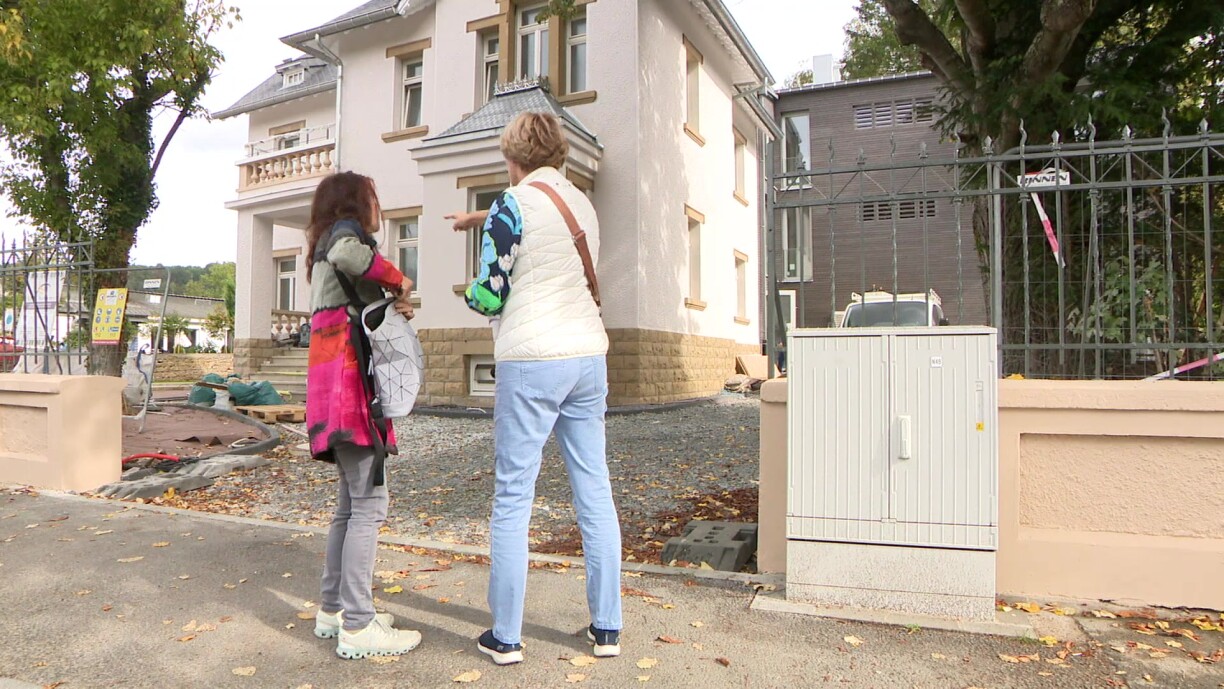
RTL interviewed several pensioners about some of the more unconventional ways they have sought out company.
Retired teacher Jeanny Groebig is moving from her home after spending the last 15 years alone. Her next home will be a retirement community - the Villa Lorenz in Lorentzweiler - which offers independent living within a close-knit community, with plentiful support. Geared towards those over 50, the community brings together individuals who are willing to watch out for each other and participate in group activities.
Members of this community have been planning their residence for the past two years, during which time the Villa underwent restoration and extension work. It now boasts a brand-new annexe, which aims to provide tenants with their own apartment and plentiful community rooms. In addition, a group of future tenants founded a non-profit organisation, with Groebig as the president, with the primary goal of preventing one another from living alone while staying mentally fit. "People ask me, what happens if you get into an argument?" Groebig says. "Of course things can go wrong, that's always a possibility, but I plan to do everything within my power to make this coexistence succeed."
Frédérique and Marcel Feidt's children have long since left home, married, and had their own children. To combat their empty-nest syndrome and to address the issue of loneliness, the couple have turned to the Cohabit’Age charity to provide rooms and board for young people or students from abroad who are struggling to afford accommodation in Luxembourg.
"We received a number of applications before we met with Pierre. It wasn't an easy choice at all. And then Pierre's friend contacted us as he was struggling to find a place to stay and was running out of time. He asked if he could stay as well, and we said, go on then! We'd definitely do this again."
Having company is particularly important for Marcel, who has struggled with physical health issues after suffering a heart attack.Pierre, who hails from Bordeaux, is carrying out an internship in the financial sector, along with his friend.
The rent for his room amounts to €380 a month, which is considered affordable by Luxembourg standards. He values the intergenerational coexistence with his landlords. Naturally, lodgers have to abide by the couple's rules - they are expected to clean up after themselves and pay for their own food, and permanent partying or bringing lots of guests over are discouraged.
The charity regulates all lodging agreements with a contract and acts as a mediator in the event that the cohabitation does not work out as planned.
Jeanny Groebig and Marie-Therese de Martines will soon be neighbours in the Villa Lorenz community — one as a tenant, the other as an owner. The project was sold by a property developer, but Groebig believes there is a long-term need for other types of residential cooperatives. As an example: private individuals pooling their capital to build a residence.
In such a cooperative, the land would be owned by the government and made available via emphyteusis (extended-term property lease or rental agreement) to make the housing more affordable. Each resident would be granted shares of the cooperative, with tenant status, and would have a lifelong right to reside there as a member of the cooperative.
In Lorentzweiler, Groebig currently pays over €2,000 a month in rent. The only cooperative initiative in Luxembourg failed after a number of years, and the former teacher says she would not want to get involved with such a project only to have to start again from scratch if it failed, particularly as a pensioner.
Groebig believes Luxembourg needs to improve the legal framework around cooperatives: "Now it's clear that owners and developers can do whatever they like with these residences, and sell them to whoever they want."
Video report in Luxembourgish:





