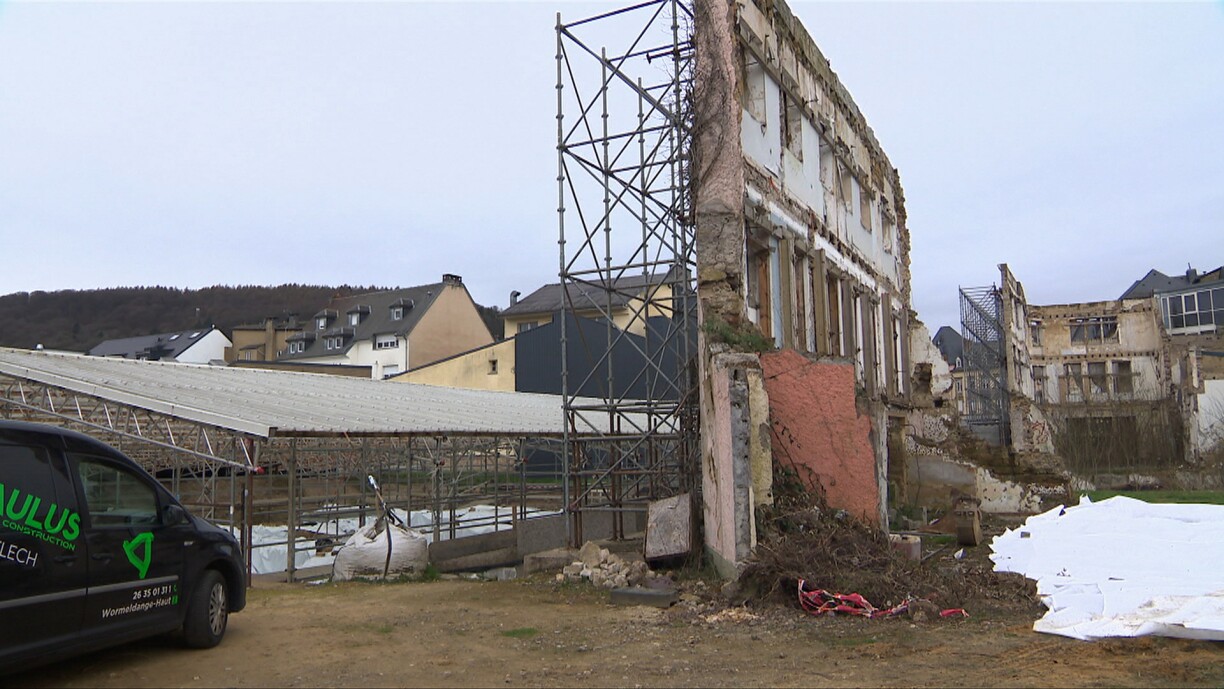
The former Hôtel du Commerce was initially earmarked for a residential complex with shopping facilities, while a museum was planned in front of the former Petite Marquise. Both projects stalled following archaeological finds, but a breakthrough in the way forward has now been made.
The Hôtel du Commerce is set to be converted into 23 residential units with space for restaurants and shops at ground level. The private developer behind the project had found himself in an increasingly difficult position, but Democratic Party (DP) Mayor Carole Hartmann confirmed that a solution had been reached. The state has agreed to purchase the housing element of the project through its VEFA programme, allowing the scheme to proceed.


Work is already under way for the first project, with an excavator on site and the rear facade due to be demolished within the coming days. Additional archaeological work at the former hotel must be completed within six months.
Progress on the second site, at the Petite Marquise, is less advanced. Hartmann said that concrete plans are still being worked out, though the Ministry of Culture has proposed a two-level museum. The municipality is also keen to incorporate a tourist information centre into the building, so that visitors to Echternach can engage directly with the town's history and help breathe life into the museum itself. A new project proposal for the museum is expected before the end of the year.
The political opposition in Echternach has long expressed frustration over what it sees as a lack of transparency surrounding the projects. Local Green Party councillor Carole Zeimetz argues that residents should have been consulted from the outset, pointing out that public conferences on Echternach's history had drawn full houses, with passionate local historians and engaged citizens who could have shaped the direction of the project from the very beginning.
Mayor Hartmann said she understood those concerns. She noted that the municipal council had already held one working session on the matter, with a second scheduled for April. Looking beyond the council, she added that an agreement had been reached with the Minister of Culture to hold a large public information meeting on European Heritage Day, on 12th June, at the Trifolion in Echternach.
However, opposition councillor Zeimetz cautioned that information meetings alone would not be enough to bring citizens on board with the project.





