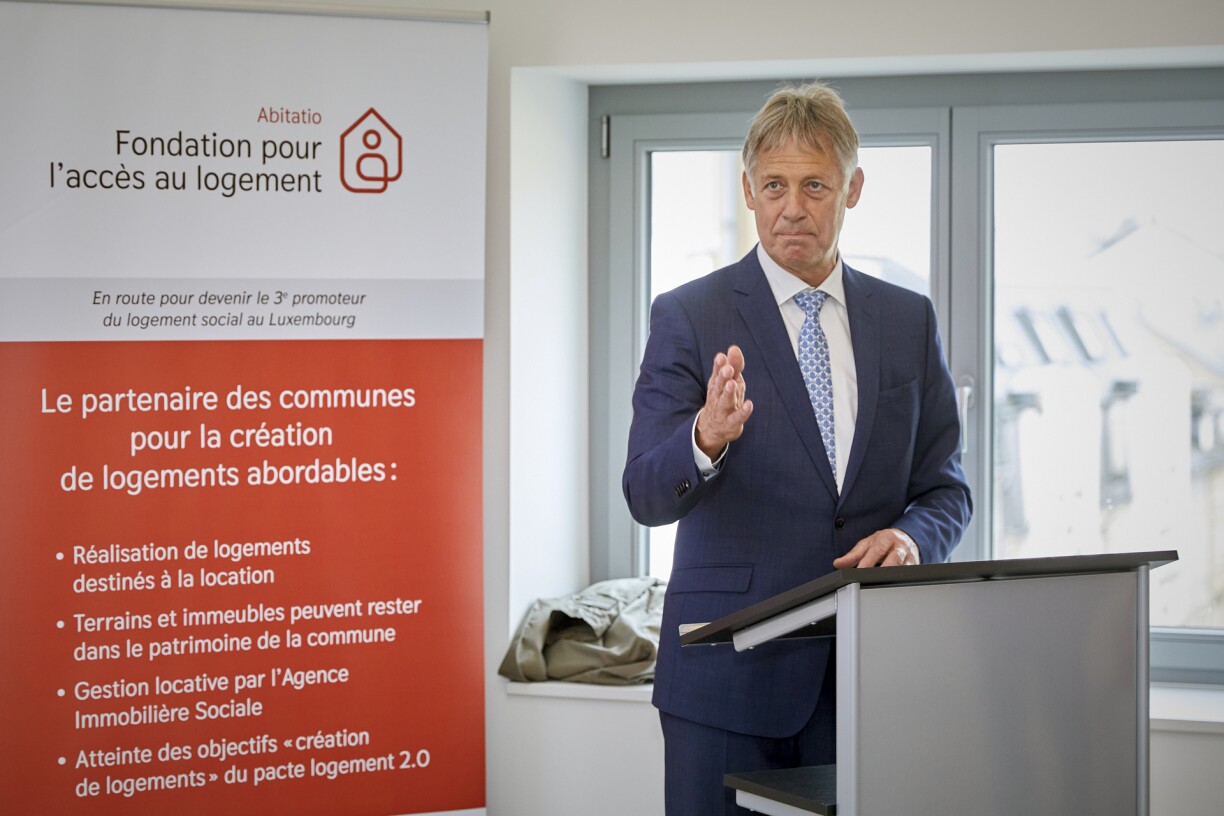
The real estate sector in the Grand Duchy is currently experiencing "a cyclical crisis"; nevertheless, Kox refuses to let the crisis divert him from his priorities of providing affordable housing and supervising the private market.
Soufiane Saadi, CEO of the atHome group, recently demanded a clear vision in response to the crisis. On Wednesday, speaking on the podcast, Kox said he believed he had succeeded in putting in place a housing strategy that will address affordable housing, so far as his jurisdiction will allow.
The Green Party minister said the difficulties faced by the housing and construction sectors are linked to a combination of unfortunate circumstances; namely, the war in Ukraine, rising inflation and falling wages. The "cyclical crisis", as he terms it, extends to all of Europe, while the Grand Duchy is suffering an "unprecedented" rise in interest rates.
The fact that investment has been able to take place in Luxembourg's real estate in recent years is attributed to the policy of maintaining interest rates at zero. Kox said the government wanted to encourage investment, which led to an enormous increase in land and property prices. He now believes the Grand Duchy will return to an "equilibrium" in the market.
The construction sector in particular has suffered this year, with 104 companies declaring bankruptcy in the first six months of 2023, while this week it was reported that over 100 jobs were under threat at residential construction company Manuel Cardoso for financial reasons. Is it the role of the government to rescue a sector which has enjoyed years of prosperity? Kox believes the government should instead focus on better supervision of the private market, but above all, the State has a duty to make up for the lack of available public housing.
"We have a huge deficit [in public housing]," he admits. "The State must do more, and whatever it builds must remain under public ownership." To re-establish a balance between the private market and public housing, he estimates the State must obtain around 20% of all housing stock. Currently, the government's share of affordable housing sits between 2-3%, which Kox blames on outdated legislation and a "taboo" that is prevalent in property and land discussions.
"Anything concerning property, land or real estate is a taboo (in Luxembourg)," the minister said. For this reason, he believes it is vital to tackle legislation in order to move forward. The Chamber of Deputies' approval of two new laws to regulate affordable housing and simplify individual aid for access to housing is something Kox says he is particularly proud of.
Despite this recent victory, however, he is disappointed the much-maligned rent reform bill did not pass last week. "I didn't have support," he admits. Kox believes this law could limit potential damage to the rental market, as rents have exploded across the Grand Duchy in recent months.
Kox will continue to develop his philosophy until the October elections. When questioned whether the State had halted the purchase of real estate projects over lack of demand, he says two major projects are progressing slowly. "We are in the process of finalising reservation contracts," he explains, as the projects are estimated to create 180 housing units, requiring multiple construction companies to participate in the build.
To date, around 60 projects have been considered, including a number that were rejected because they did not meet the criteria for affordable housing. Kox says several other real estate projects are likely to be purchased before the end of the year. The government has dedicated a budget of 110 million euros to the initiative so far, but Kox does not believe this will be sufficient.
In order to successfully establish a solid affordable housing stock, Kox estimates that Luxembourg needs an annual budget of half a billion euros. But money is not everything, he adds. "The government does need to speed up its projects, municipalities need to get involved, the same applies to public developers and non-profits in construction."
Le ministre du Logement, Henri Kox, revient sur la crise que traverse le secteur de la construction et les défis à venir pour le logement abordable
The full podcast is available in French on RTL Play, Apple Podcast and Spotify.





