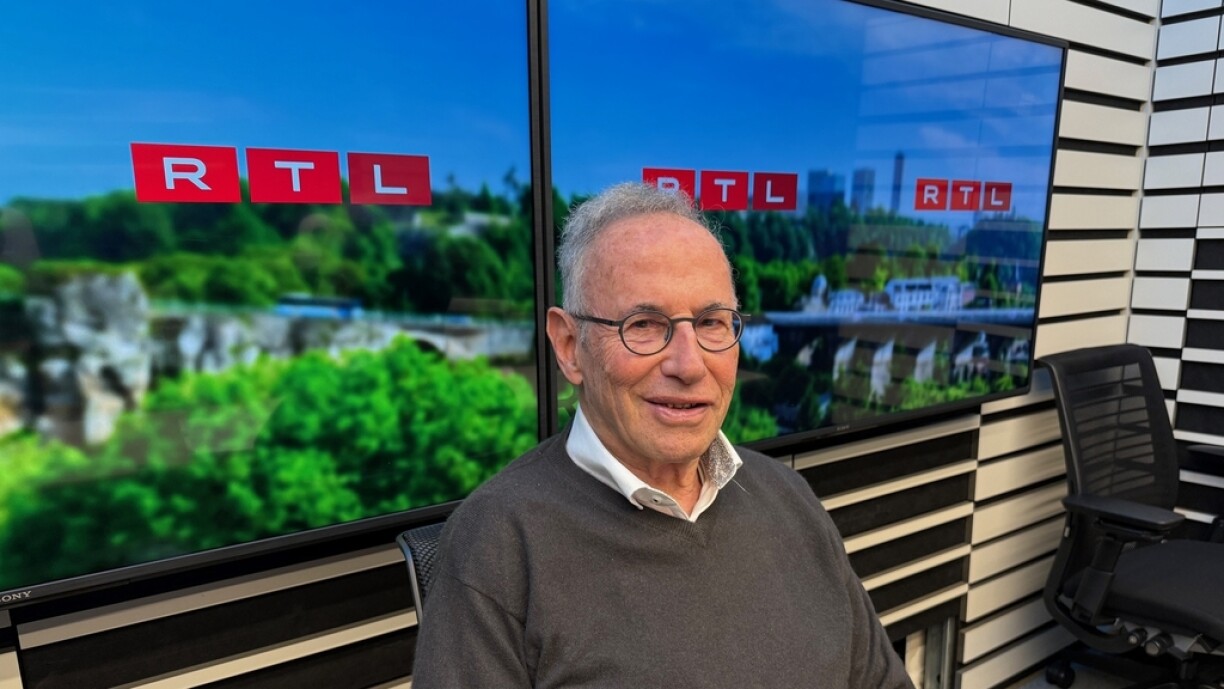
He cited examples of activists following Foreign Minister Xavier Bettel into restaurants and calling him a war criminal, and said the pattern of incidents is worrying.
Gottlieb said that, on a numerical level, RIAL has recorded about 115 antisemitic incidents so far this year and expects the final total to reach roughly 130 to 140 by year-end. He stressed that many of the messages are no longer openly violent but are expressed in subtler, indirect ways that nonetheless convey hostility towards Jews, for instance slogans implying there should be no place for Israel, such as chants that equate "Palestine will be free" with the removal of Israel.
Gottlieb described a recent case: for the first time this year, RIAL registered a physical antisemitic assault in a primary school. A ten-year-old boy who is an Israeli national and Jewish was allegedly attacked by four classmates. According to Gottlieb, those pupils forced the boy to the ground, beat him, scratched and bit him, and taunted him with slurs referring to his nationality.
Gottlieb said the assailants are themselves likely from migrant backgrounds and may be traumatised by their own experiences, but he emphasised that such behaviour is nonetheless unacceptable. He added that the school intervened promptly, summoned the four pupils and that the boy's mother has filed a complaint with the police.
Gottlieb explained that RIAL forwards many online incidents to BeeSecure, which then passes items to the police after screening. He said he is convinced the authorities take these reports seriously and that repeat offenders will be pursued. Prosecutions can follow if the police and public prosecutor decide to act, he said.
However, as RIAL is a private organisation, Gottlieb noted it does not receive formal feedback on the outcome of investigations and that gathering comprehensive data across ministries is difficult.
When asked about protest banners and slogans seen at recent marches, including placards that call for the destruction of the State of Israel, Gottlieb said RIAL's role is to document and inform authorities and politicians about trends rather than to lodge complaints for every single banner.
He explained that some messages are framed historically or ambiguously yet carry the implication that the State of Israel should not exist. He gave examples of local graffiti and slogans that, while not always explicit, pass on that implicit message.
Gottlieb said he criticised two MPs of the Luxembourg Socialist Workers' Party (LSAP) in July, not for asking parliamentary questions per se, which he accepts as legitimate, but for the systematic way certain political actors have amplified Middle East grievances in Luxembourg.
He warned that when a large mainstream party adopts a pattern of activism traditionally associated with a smaller, more radical party, it risks importing the Middle East conflict into Luxembourg discourse. In his view, this does little to help Palestinians and instead fosters an atmosphere that can be dangerous for Jewish residents and may encourage people to voice extreme messages.
Gottlieb also reflected on the cancellation of a recent concert at the Ghent festival featuring the Munich Philharmonic under Israeli conductor Lahav Shani. He said it is unacceptable to demand an Israeli artist publicly declare a political stance and asked who would decide when an artist's comments are "clear enough".
He warned that expecting artists from countries accused of human-rights violations to swear their political allegiance before performing dangerously blurs the line with discrimination by nationality. Gottlieb suggested that such pressures force Luxembourg's Jewish community to remain cautious and often to keep a low profile, noting that within the community opinions are diverse and any public position can provoke attacks.
The interview ended by stressing that the war provokes deep emotions and the debate now reaches cultural arenas, making the issue especially explosive. It closed with a remark about how these developments leave many open questions and create challenges not only for Jewish communities but for society as a whole.
Fulle interview available in Luxembourgish:





