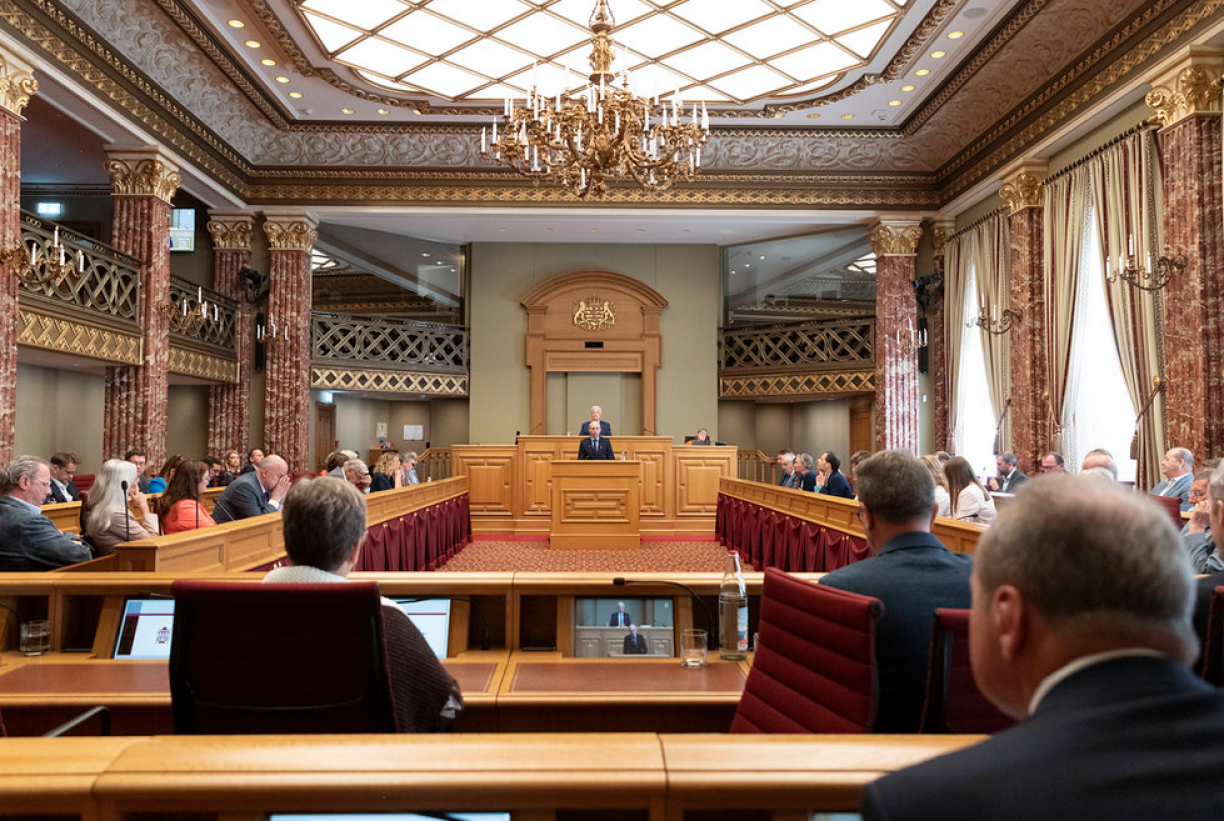
Prime Minister Luc Frieden told MPs in the Chamber on Thursday that the government had succeeded in breaking the deadlock in labour relations discussions after long hours of negotiations, and now would focus on finding solutions for unresolved issues.
There was little time for recovery from the extensive overnight talks, as the Prime Minister faced the Chamber of Deputies at 9am on Thursday morning. He highlighted the need to find the right balance to resolve the remaining labour disputes.
"The government listened, talked and succeeded in building bridges between all the social partners in these intensive negotiations," Frieden said. "Sometimes this worked better than others, but it was certainly our intent to succeed. And the fact that we spent 11 hours in these discussions to strike a deal is proof that we achieved our goals."
Although the opposition parties in the Chamber unanimously agreed it was a good thing that discussions had resumed with the trade unions, they also criticised the fact that matters had deteriorated so badly.
A plethora of issues were said to have led to the breakdown in labour relations discussions, according to the opposition, including the exclusive right for unions to negotiate collective agreements, disputes over Sunday working hours, mooted changes to the right to protest; and overblown announcements regarding pension reform.
Pirate Party's Sven Clement said the discussions were akin to repairing porcelain the government had broken by itself, while the LSAP's Georges Engel criticised the Prime Minister's initial response – or lack thereof – to the unions' historic demonstrations on 28 June. He felt Frieden could have offered more insight, saying:
"Admitting mistakes, Mr Frieden, represents strength rather than weakness. It is a sign of responsibility, maturity, honesty and respect towards our citizens. This was all missing on 28 June."
Wednesday's negotiations did indeed yield initial results, as the government offered assurances that it would not take away the trade unions' right to negotiate collective agreements. This had previously been designated a red line for the unions. But while much has been negotiated, there is still a long way to go in establishing clarification and solutions, said Sam Tanson of the Greens.
"We welcome the progress made, but we regret all this lost time, and above all the loss in trust, as cracks have appeared in the relationship between our social partners. There is still a long way to go. The one thing that is clear though, is that the government isn't doing enough. What is happening with pensions, with Sunday opening hours, minimum wage? The situation is still unclear."
A major talking point in the discussions was Sunday working hours and amendments to opening hours in commerce. The trade unions agreed that the more technical aspects should be handed over to the trade and employment committee. The government, employers and unions will then meet again in October to consider the results of these discussions. For other subjects, such as pensions, where there are no agreements, the Ministry of State will resume discussions on 14 July.
Overnight deal secures union rights, but major labour issues persist





