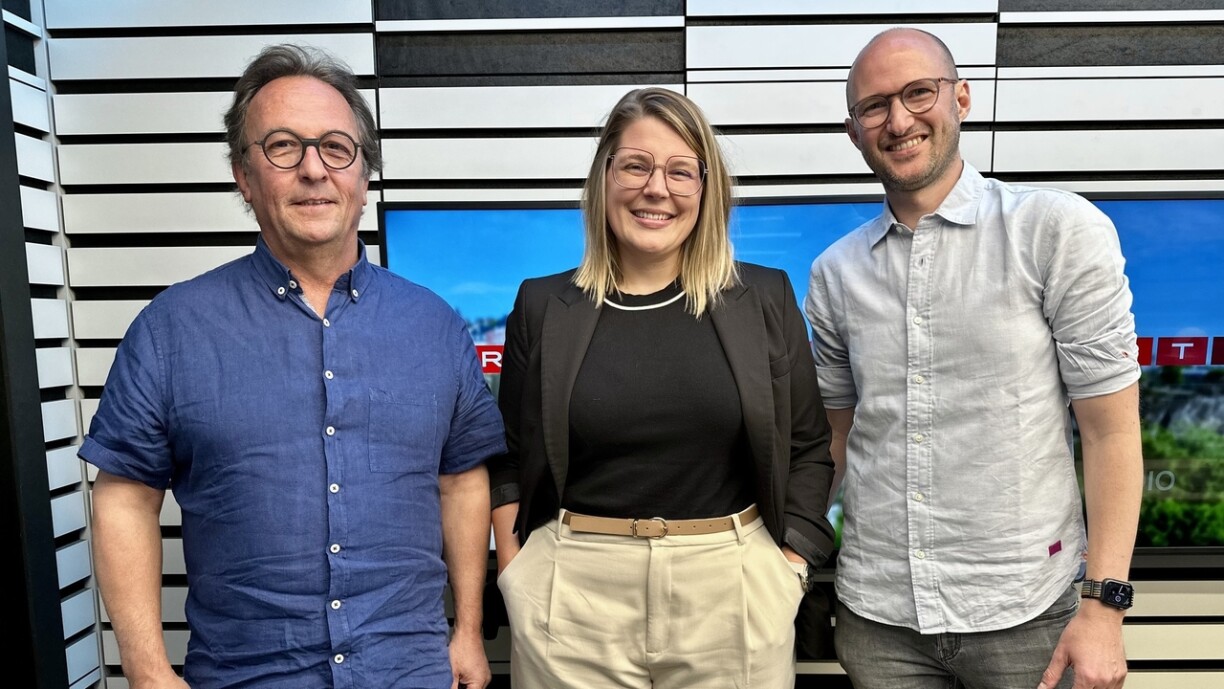
On Saturday, our colleagues from RTL Radio hosted a panel discussion on poverty in Luxembourg, featuring Raoul Schaaf, Director of the National Committee for Social Defence, Nadia Dondelinger of the Association of Social Welfare Offices, and Paul Heber of Unicef Luxembourg. The participants expressed unanimous concern about the severity and persistence of poverty in one of the world’s wealthiest nations.
Schaaf highlighted that individuals with less than €2,382 per month – equivalent to 60% of the national median income – are classified as at risk of poverty. Heber added a troubling dimension to the issue, noting that one in four children in Luxembourg lives in poverty.
“The situation is deteriorating compared to other wealthy nations,” Heber said, emphasising that long-standing awareness of the problem has not translated into progress. He pointed to systemic failures in wealth distribution, citing statistical evidence.
Dondelinger and Schaaf underscored the paradox of the working poor – employed individuals who still struggle financially. Many households, they explained, manage precariously until unexpected expenses, such as broken appliances or rent hikes, push them into crisis.
Dondelinger also raised concerns about skilled foreign workers forced into low-wage jobs.
Heber criticised the tendency to soften public discourse around poverty, noting terms like “at risk of poverty” or “relative poverty” are often preferred over direct language. “These phrases sound better in a wealthy country,” he said, “but the reality is very different.”
Dondelinger acknowledged positive steps from the current CSV-DP government coalition, which has pledged to prioritise the fight against poverty. She cited the raised cost-of-living allowance, the elimination of minimum wage taxation, and plans for a simplified “one-stop shop” social welfare platform as progress. However, she admitted even her association lacks clarity on when the new system will launch.
A critical issue, Schaaf noted, is that many eligible individuals fail to claim aid – due partly to bureaucratic hurdles but also societal stigma. “We must combat outdated perceptions of social offices as ‘poor people’s services,’” he stressed, adding “In today’s complex world, anyone might need support – and that’s nothing to be ashamed of.” He acknowledged shame remains a “complicated element.”
All panellists highlighted “administrative harassment” as a key challenge. Overburdened applicants, they said, often struggle with repetitive paperwork required to access multiple aid programmes.
The panel unanimously called for urgent administrative simplification. Heber criticised Luxembourg’s default suspicion toward aid applicants, who must “prove their eligibility” before being heard. Dondelinger echoed this, advocating for a “benefit-of-the-doubt” approach. “The vast majority aren’t abusing the system,” she stressed, urging greater trust in social workers’ expertise to evaluate cases fairly.
All experts agreed housing must be central to the government’s anti-poverty plan, though they acknowledged no easy solutions exist.
Schaaf pushed for laws empowering municipalities to regulate “Kaffiszëmmeren” – overpriced, substandard rooms often rented above bars.
The panel also highlighted the need for flexible restructuring policies to quickly convert existing buildings into affordable housing.





