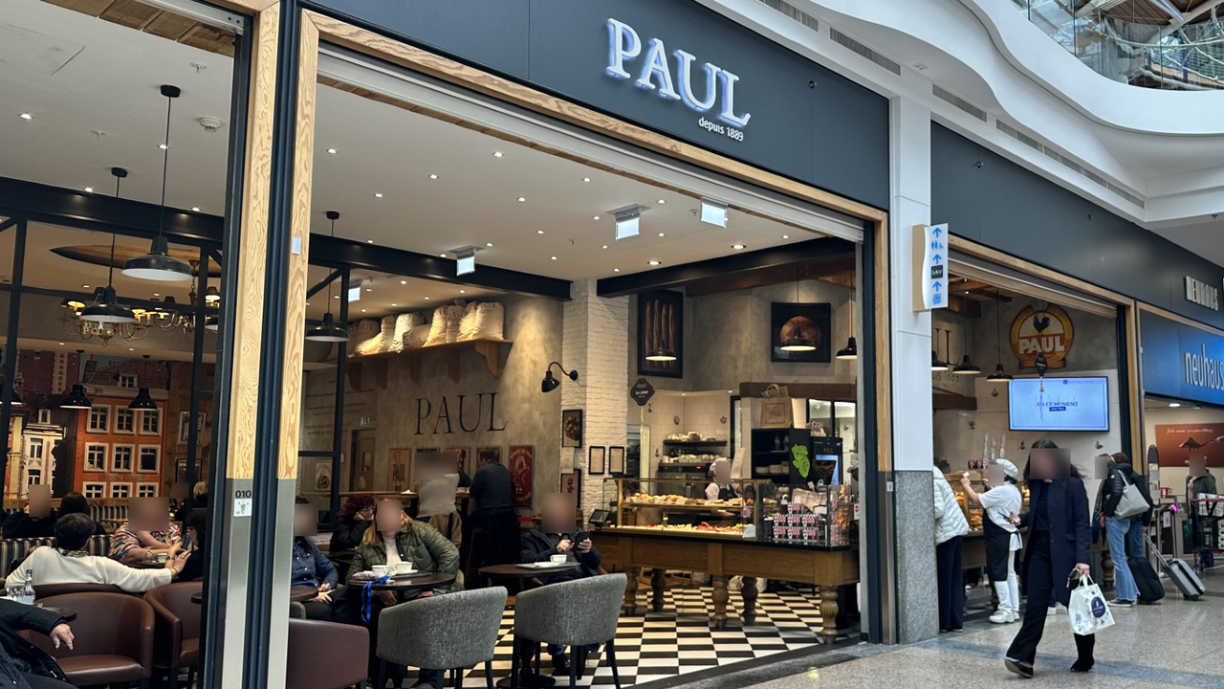
For the past year, the financial troubles facing Paul bakeries have gone largely unnoticed. But in September, Lux-Paul, the anonymous company behind the brand, quietly initiated general bankruptcy proceedings. It was a “voluntary” move, followed by significant restructuring, stressed managing director Christophe Gavazzi, who firmly rejects any head-in-the-sand mentality.
When Gavazzi agreed to speak with RTL Infos, his goal was clear: “to hide nothing.” He immediately confirmed that all 91 employees across the seven Paul locations were aware of the financial strain. Despite persistent rumours of bankruptcy, the teams remained committed and worked hard through the uncertainty. Their efforts appear to be bearing fruit, at Lux-Paul’s headquarters in Foetz, management is now discussing goals for 2025.
“We hope to reach a turnover of €7.5 million. We’re still hoping to open another shop,” Gavazzi said. He made no attempt to downplay last year’s difficulties, particularly over the summer. “We experienced a real slump,” he admitted, adding, “we didn’t necessarily bounce back quickly enough” from the succession of crises that have battered Luxembourg’s economy in recent years.
Gavazzi pointed to the Covid pandemic, the shift to home working, the energy crisis, and surging ingredient prices. “Electricity and gas have doubled, as have the prices of key ingredients like flour and butter,” he explained. Candidly, he acknowledged that “we might have made a few strategic errors too.”
Last summer, these challenges left Gavazzi seriously concerned. But now, he says, the outlook is improving: “We’re already seeing convincing results for the last quarter of 2024 and the first quarter of 2025.”
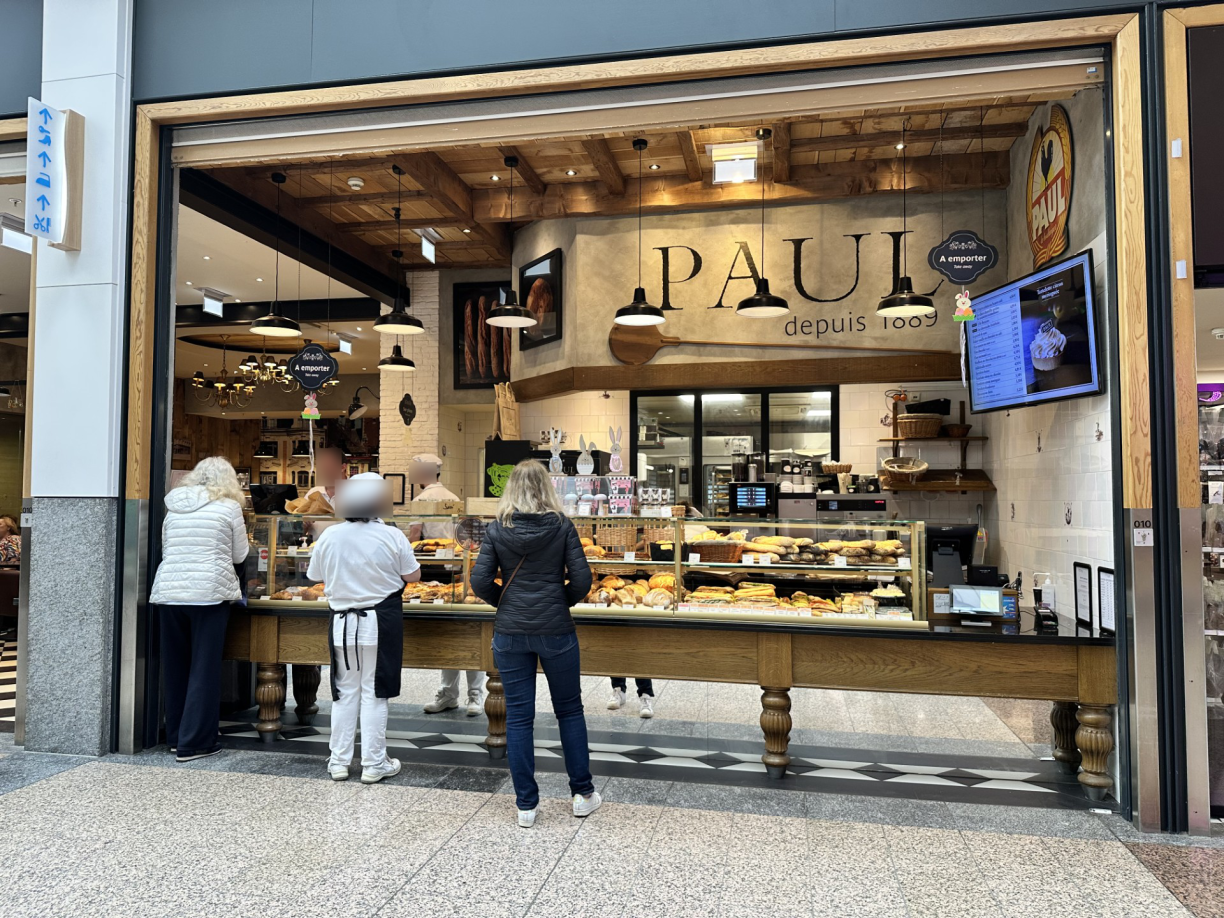
So, are Paul’s bakeries out of the woods? “There’s no miracle solution (…) but our situation is not as dire as it was seven months ago,” says the franchise’s CEO. He expressed satisfaction at having retained the entire workforce, despite the closure of two shops in 2024, one in Gare and another in the Infinity Centre in Kirchberg. “We did open a new location in Belval,” he reminded RTL Infos. While the outlook is more optimistic than it was last year, the coming months remain uncertain.
For Christophe Gavazzi, one thing is clear: “Purchasing power is at half mast,” and few sectors feel the impact as sharply as his. He recalls a time when customers indulged more freely in what he calls “pleasure consumption”: “People who came in for bread would also treat themselves to a lightning bolt,” he says, referring to the bakery’s signature pastry. “That happens less and less now.”
He explains that with rising production costs, keeping prices down has become increasingly difficult. “You can’t limit the impact on final prices indefinitely,” he admits, especially for everyday goods. “Bread, pastries, these are daily consumer products, and for those, people compare prices very easily.” Constant price increases, he warns, only serve to discourage customers.
Adding to the pressure, Gavazzi says, are the successive salary indexations, which, while protecting employees, do not ease a company’s monthly costs. “It’s a mechanism that doesn’t reduce expenses,” he notes.
Asked about potential solutions, Gavazzi sees partial hope in purchasing power, but says that’s not the whole story. Stability and confidence, he believes, are just as crucial. “It’s quite morbid. Ever since Covid, people feel like we’re permanently in crisis mode. We need to restore some purchasing power and encourage people to spend again, especially in shops like ours.”
For him, there’s a clear divide between the pre- and post-pandemic eras. He confirms that the ‘good years’ were those that preceded the pandemic – and he knows what he’s talking about, as Paul’s bakeries have been operating in Luxembourg for 13 years now. Despite the challenges, he still hopes to expand the brand’s footprint beyond expectations.





