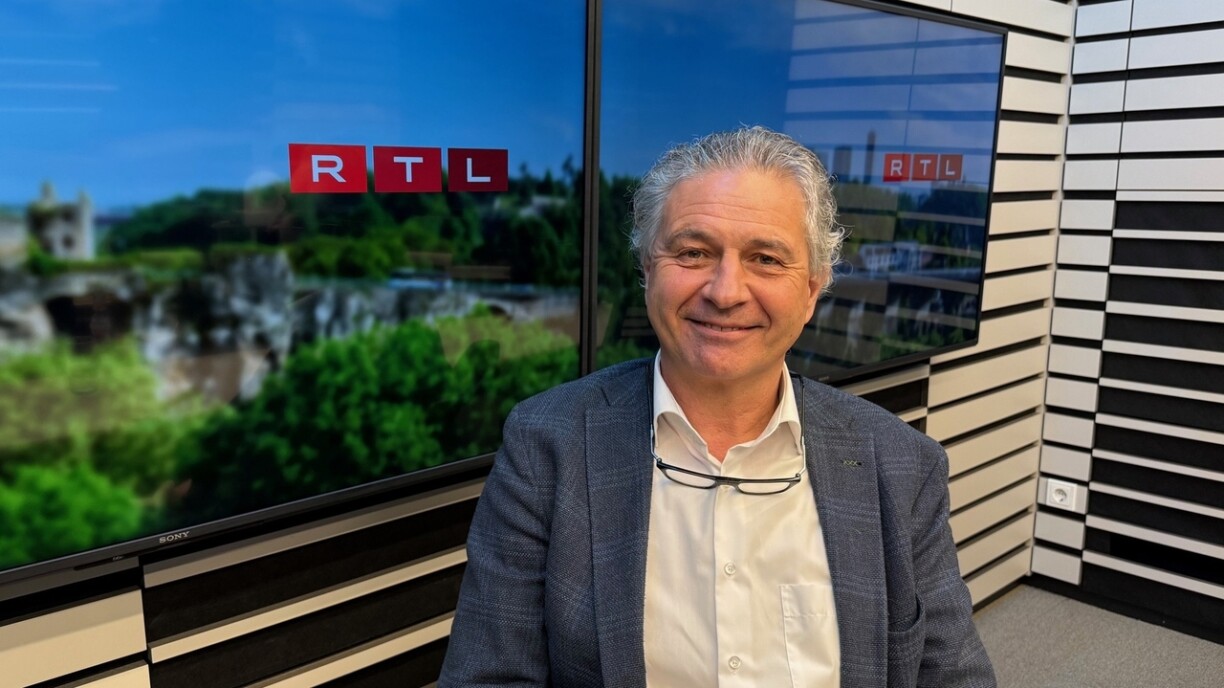
The Grand-Duchy of Luxembourg houses approximately 90,000 acres of forest, which corresponds to 33% of Luxembourg’s total area. Nevertheless, trees are continuously dying, laments Patrick Losch, president of the nature preservation institute “Hellef fir d’Natur”. It is a tendency exacerbated by long periods of drought or extreme rainfall. The trees in Luxembourg are used to moderate rainfall and moderate heat. A solution would be to reconstruct the forests by planting younger trees and other species.
One third of Luxembourg’s forests are made up of conifers. Most trees are spruces, originally from colder locations, which were planted in Luxembourg for economic reasons. These spruces are the first to die in the current weather conditions, so they cannot be counted on anymore. They are primarily rooted in the north of Luxembourg. If these coniferous trees face dry periods, they tend to be attacked by parasites such as the bark beetle. The trees consequently die after approximately six weeks.
The other two-thirds that make up Luxembourg’s forests are deciduous trees. These are primarily found in the Guttland region of Luxembourg. These trees are known for their habit of disintegrating when they are confronted with heat. This is extremely dangerous since the crown of the tree dies first, causing many dead branches to fall.
To maintain biodiversity, new trees of different species need to be planted. The diversity of trees increases the chance of discovering trees that deal well with periods of drought. However, this cannot be done without protection as wild animals like to eat the young plants, especially oak trees. An additional problem concerning deciduous trees has come to the surface; their extinction does not cover all areas, but it is arbitrary. Naturally, one cannot fence these areas purely to protect the line of new trees. Therefore, Patrick Losch requests a reform of the hunting laws.
The deer shooting numbers have not changed much in the past decades, but Patrick Losch does not want to start a discussion on this topic, he explains. It would suffice to see one oak tree growing tall within a forest without a fence protecting it. Therefore, hunters should be given a clear goal – enabling the rejuvenation of Luxembourgish forests. They do not need to know the specific numbers of animals, but rather could use a measuring tool to find out whether the oak can renew itself or not. Every hunting quarter should be equipped with such a tool. Whilever the desired tree species do not continue to grow, it is a sign that too many wild animals are endangering them, states Patrick Losch.
Nonetheless, hunters are reluctant. Some understand the purpose of it, whereas others feel like they will now be made responsible for damage done to forests. It is problematic though if not everyone participates – the issues simply move on to the neighbouring hunting area. The awareness of the importance of tree rejuvenation has not sunk in yet. However, Patrick Losch admits that the problem surrounding spruces and birches is still relatively new to hunters.
Interview in Luxembourgish:





