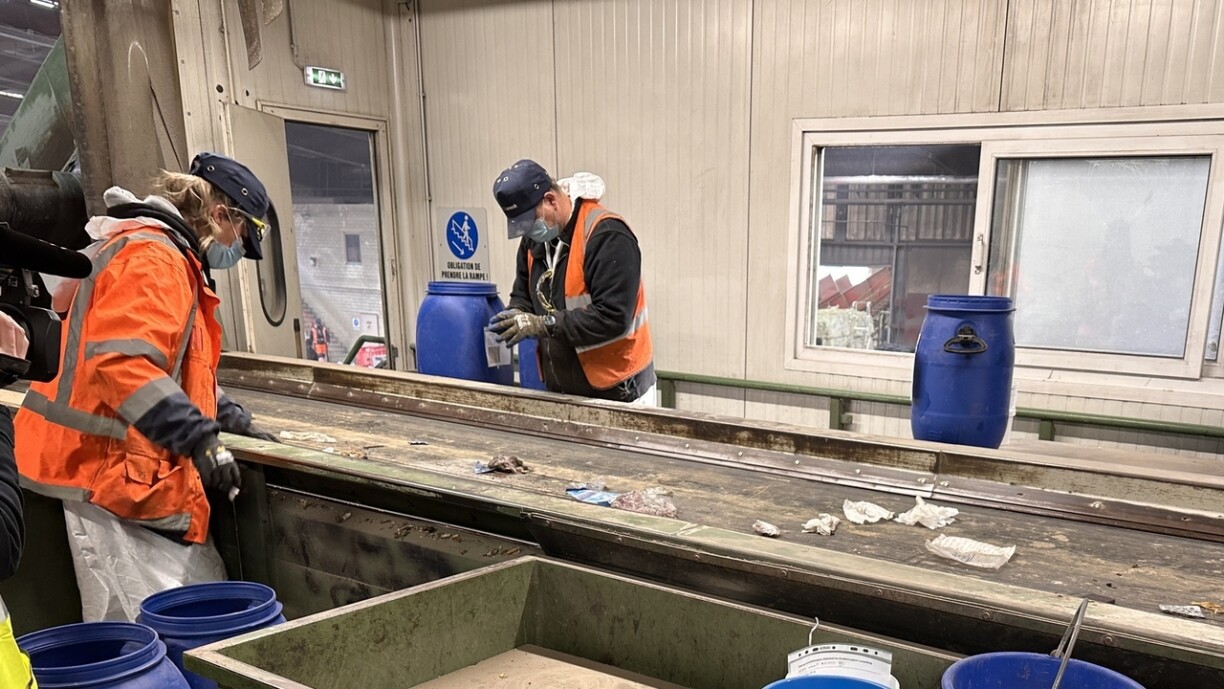
What do people throw into the black bin? How well is waste separated? What could be improved? These are the questions the Environmental Administration is hoping to answer.
Zero resource waste: That is the administration’s goal. For that to happen, however, as much as possible has to be recycled, and that in turn is only doable if waste is properly sorted. The 2019 Residual Waste Study revealed significant room for improvement. Around half of the waste was not placed in the correct bin.
At the site of the company Lamesch, the residual waste from the 15 selected municipalities is examined. There are specific criteria that need to be considered, explains Stéphanie Goergen, an expert in waste management.
“This is meant to be a national sample, meaning it should be representative of the whole of Luxembourg. That’s why we have selected 15 municipalities that best reflect this. What is the population density? What are the structural conditions? Are there mostly single-family houses or apartment buildings? The distance to a resource centre also plays a role, as well as the impact of municipal waste charges. All these factors contributed to assembling this sample.”
One thing does stand out: a lot of material that could be recycled still ends up in the black bins. Its contents vary greatly, however, stresses Stéphanie Goergen.
“Municipal waste charges, for instance, and how they are calculated, have an impact. If a municipality charges for residual waste by weight, people tend to use other separate collections that are free of charge. But there are other factors too: If a municipality actively communicates about a newly introduced collection system, people are more likely to use the separate collection.”
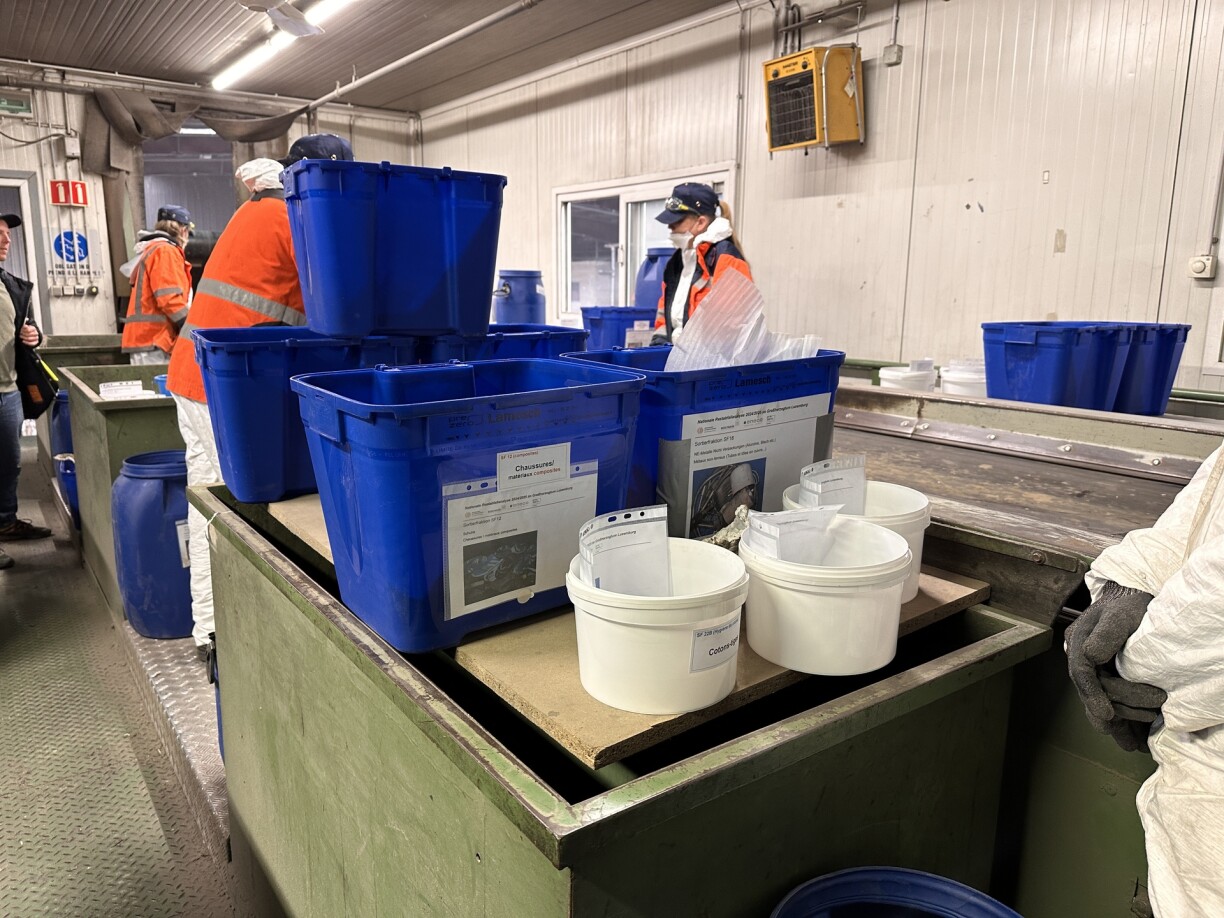
The samples are transported by special lorries to recycling centres, where they are sorted more thoroughly than regular waste. However, conducting a representative study for the whole of Luxembourg is not as quick as one might think, explains Alex Kolomijtschuk from Eco-novis.
“As part of the residual waste analysis, we conduct one winter campaign (which is ongoing) and one summer campaign, given the conditions differ. Different weather, different habits. Only after the second campaign in the summer can we compare the results to the municipalities or even the whole of Luxembourg and conclude whether waste separation has improved. That’s when we can identify trends.”
The results of the study should help develop new measures to improve waste separation.





