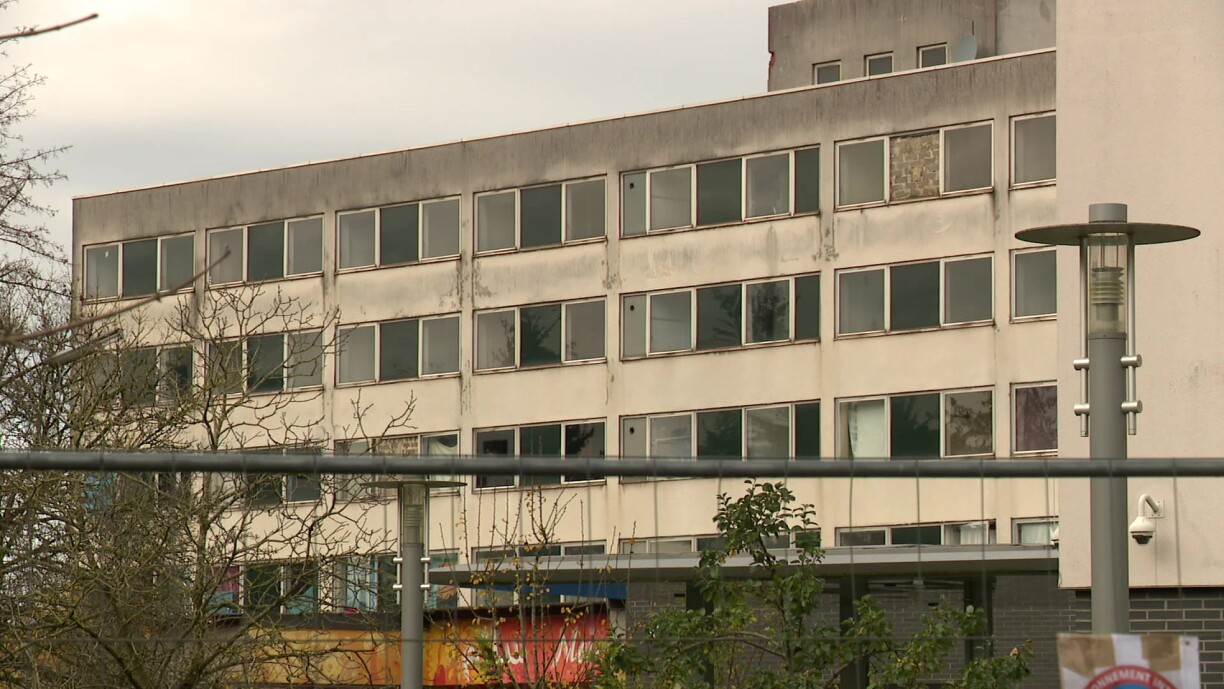
More than 2,000 refugees, officially granted international protection, are currently residing in shelters managed by the Office National de l'Accueil (ONA), despite the obligation or desire to move out. The search for housing is proving challenging, and despite the pressing need, suitable homes are scarce.
RTL interviewed affected individuals who, despite the necessity to relocate, are grappling with the difficulty of finding new accommodation.
Filmon Awet Ghebrehiwet, a young 22 year old man, has spent the past four years striving to establish himself in the country. “I’ve done my best to become a better person. A normal person who pays taxes. A normal citizen. I wanted to give something back to Luxembourg for everything it has done for me. But I’m losing hope. The situation is not what I was expecting.”
He has undertaken language courses, training programs, and even secured a job at the BENU village in Esch – yet, he will now lose all of that. Setbacks abound, despite proudly showcasing his file and numerous certificates. The most pressing challenge remains housing. Facing the end of November deadline, he must vacate the Don Bosco shelter, which has been marked by demoralizing living conditions.
The feeling of being unheard
The Don Bosco shelter was originally scheduled to close its doors in 2015, coinciding with the opening of the Lily Unden shelter. Refugees, concerned about the poor living conditions in the Don Bosco shelter, have taken the initiative to raise awareness. In February, they submitted a petition via mail with acknowledgement of receipt to the Office National de l'Accueil (ONA). “This petition addresses problems in the shelter, such as the water in the bathrooms. We have to go outside whenever we need to use the bathroom or take a shower. Sometimes, the water is even cut off. It is difficult to live here."
Despite sending letters and emails, the residents of the shelter express frustration over receiving no response. They feel unheard and, while grateful for being able to live their lives safely, they also aspire to contribute to society and build a meaningful life.
Sayah Assam, an Algerian refugee who has lived Luxembourg for the past three years, resides in the Lily Unden shelter but is witness to the issues at the nearby Don Bosco shelter as it is located directly behind. There, you are completely cut off from society.
According to him, the conditions there are not reflective of Luxembourg's standards. Constrained by mobility challenges as a wheelchair user, Sayah Assam is struggling to find a home and is faced with the obligation to leave the shelter in February.
Ambre Schulz from Passerell, the Luxembourgish association for the rights of refugees and asylum seekers, points to procedural issues as the root of the problem. From the beginning, there is a lack of support for people's integration into the job market, an important factor for societal integration. Establishing contact with the residents would even aid refugees in learning the country's language.
This underscores the necessity for simultaneous efforts in both upgrading shelter facilities and organising language courses and professional training. Currently, the topic of societal integration is not up for discussion.
For Filmon Awet Ghebrehiwet, this is a difficult situation: “I try to stay positive despite the difficulties. If I can overcome this, it means I can achieve other things as well. I keep a positive outlook through sports and forging new friendships. However, now I feel like I'm at the end of my rope I have lived 4 years without persona space; I feel like a prisoner.” "
What is going to happen with the Don Bosco shelter?
The reception of refugees and the support for those granted international protection in the country are being treated as distinct matters. Consequently, two separate ministries will be overseeing requests for international protection status and recipients of international protection status. The ONA told us in writing, "The situation and the lack of space do not allow us to plan a definitive closure of the Don Bosco shelter."
Despite our inquiry, the ONA has not addressed the issue of forced departures from the shelter, a circumstance faced by individuals like Sayah Assam and Filmon Awet Ghebrehiwet. Additionally, the ONA declared that “People who have had their refugee status for a while, are currently being supported in their search for a suitable home (Social Welfare Office, social workers working in the shelter, Lisko,…).” Furthermore, the ONA stated, "People who have held refugee status for a while are currently being supported in their search for a suitable home (Social Welfare Office, social workers working in the shelter, Lisko,…)." Currently, there are 100 people in the shelter, with around 60 having international protection status and approximately 40 having received a response from immigration authorities.
Video report in Luxembourgish:
Logementskris: Eng Famill muss hir Wunneng verloossen, ouni en neie Logement fonnt ze hunn
Logementskris: Eng Famill lieft zanter iwwer 6 Méint am Hotel





