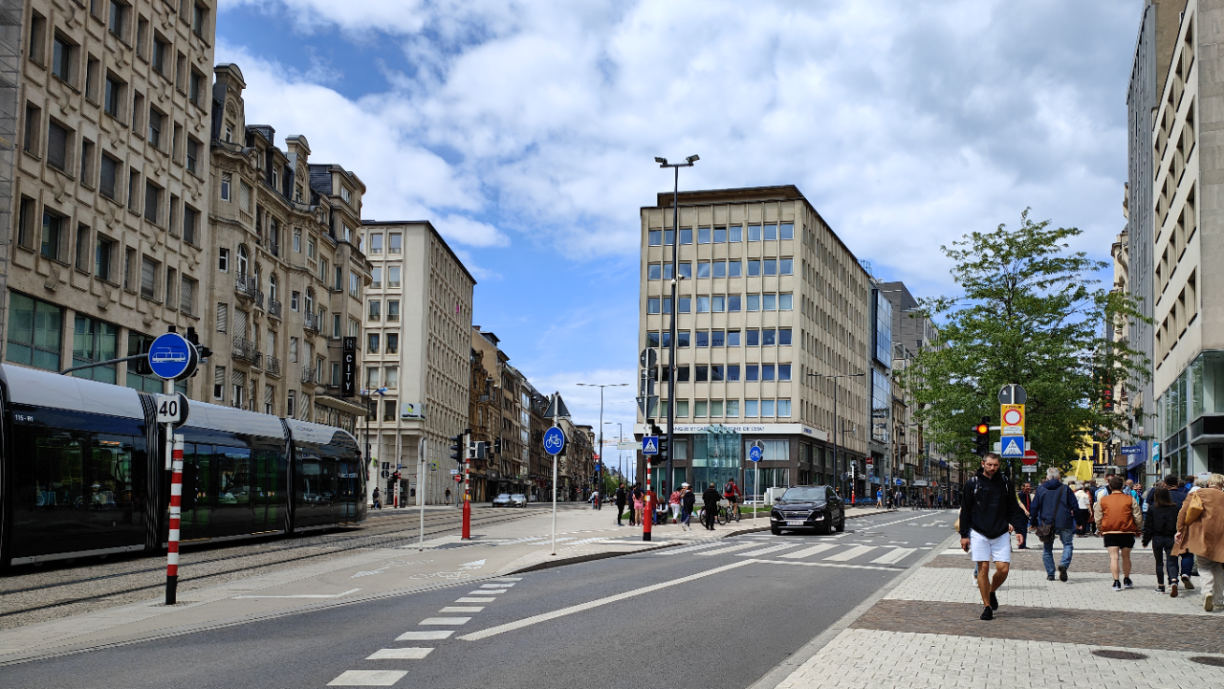
Present-day images of empty shops within the district hint at the period of decline it is currently experiencing, despite hopes that the reintroduction of the tram service in December 2020 would inject new life into the area.
In contrast, historical pictures from 1910 portray a thriving scene, with a tram already running along Avenue Neuve, facilitating the commute of businesspeople arriving by train to the city centre. There were so many of them at the time, that by 1929, there were 17 hotels with 978 rooms around the station.
An integral part of the district's history is Maison Lessure, a shop that has stood at the station for over a century, originally specialising in fabric sales. This type of shop was a dime a dozen in the past. However, the demand for fabrics significantly declined during the 70s and 80s.
Even the iconic Cactus supermarket chain traces its origins back to the central railway station, originating from Josy Leesch's self-service concept. Nearby, the Jacquemart family's business exported marble for graves, extending all the way to Paris and the Père Lachaise cemetery. The Monopol department store stood opposite from 1957 to 2006.
Place de Paris holds its own historical significance, as the first international franchise, the burger restaurant Wimpy, opened its doors there in 1968, strategically located next to the "Fieldgen" secondary school.
Another reminder of the district's illustrious past is the "am ale Wort" passage, where one of Luxembourg's most popular newspapers was printed for over 70 years.
The central railway station of Luxembourg City stands as a testament to whole chapters of Luxembourg's history. However, the district is evidently currently grappling with challenges, prompting discussions about its future potential and the desire for its revival to truly reflect its rich heritage.
Full report by RTL Télé (in Luxembourgish)





