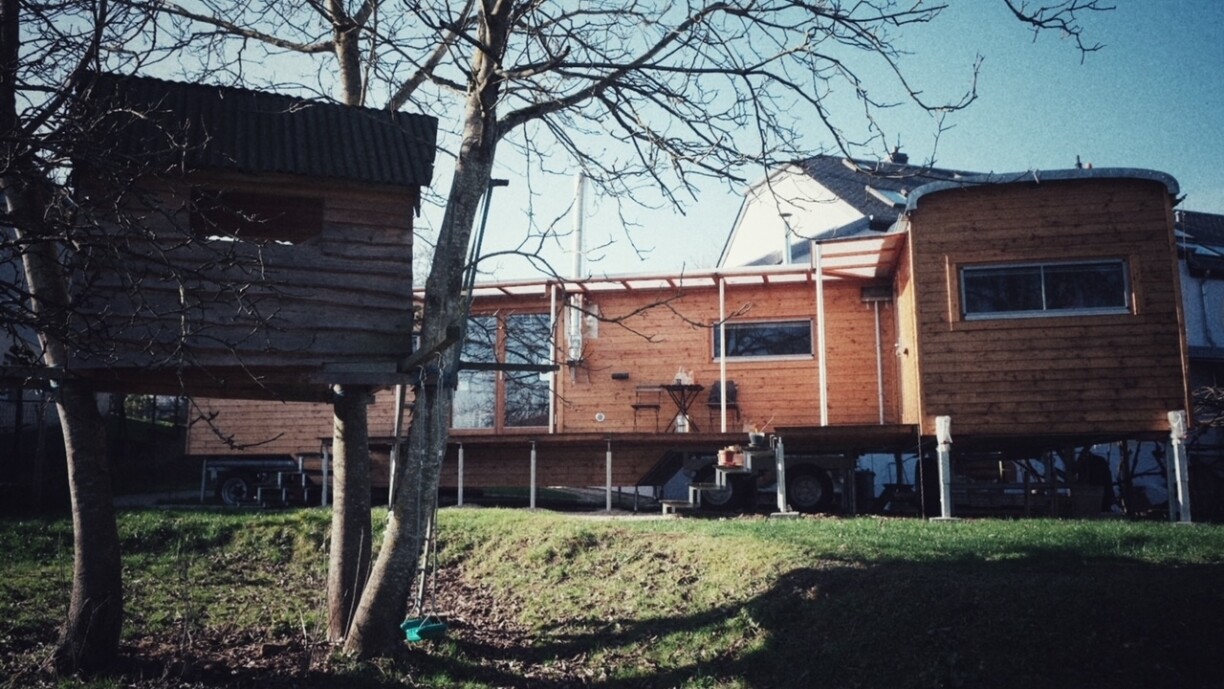
Tiny houses can be a maximum of 50 square metres to still be classified as "tiny". According to Minister Bofferding, the government intends to give people a lot of room for manoeuvre when it comes to other regulations, which means they are for instance free to choose the type of roof and face of the building.
Fixed rules meanwhile stipulate that houses are not anchored in the ground and that they have to be connected to public infrastructure like water and sewage pipes, as well as the electricity grid. Furthermore, a building permit is required and a certain level of thermic isolation needs to be reached.
In the past, problems tended to arise from the fact that tiny houses were often in violation of municipal building regulations. That is why the Ministry has met with non-profit organisation Tiny House Community to work out recommendations on how towns can modify their general and particular building plans (PAGs and PAPs).
The Ministry thus hopes to fill building gaps with tiny houses thanks to looser regulations. There will also not be a minimum height, which usually applies to regular houses.
Still, tiny houses will not be allowed in town centres.
"It is up to municipalities to decide if they want to implement those regulations or not", said Minister Bofferding. She underlined that tiny houses are not meant to solve the housing crisis, a point also voiced by Nickie Lippert, president of the Tiny House Community.
The non-profit will organise an open house day on 7 and 9 May so that people can examine and explore the insides of a tiny house in Dalhem (8 Rue de l'école).