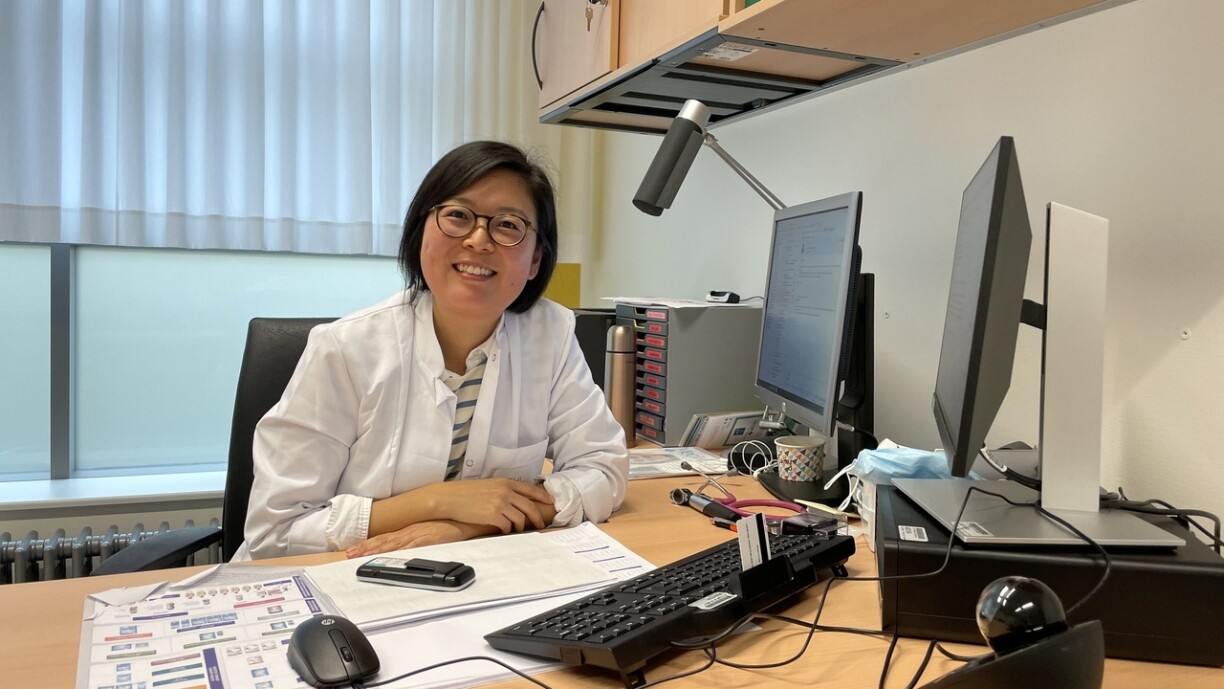
Dr Scholtes is specialised in tumours and blood diseases in children and has been working at the National Paediatric Onco-Haematology Service (SNOHP) for one year. In conversation with RTL, the practitioner talked about the differences between diagnosing adults and children with the life-changing disease.
The SNOHP treats 25 to 30 children each year. "Most common is leukaemia, so blood cancer, and lymphatic leukaemia in particular", explained Dr Scholtes. Children as young as one year might suffer from the condition, others can still develop it later in adolescence.
According to the physician, the second most common condition are brain tumours: "They are common in young children, but can also affect people who have reached adulthood."
Dr. Scholtes emphasized that a cancer diagnosis should not be perceived as a death sentence for children and that the chances of successful treatment in pediatric oncology are quite favorable: "We really look at 75 to 80% chances of healing. Of course it still depends on each individual case, the type of cancer, and the stage of progression."
According to Dr Scholtes, informing patients and parents about the diagnosis is always difficult and requires straightforward words: "It is important to remain upfront and call the disease by its name. One has to use the word 'cancer'. Parents naturally do not want to hear or understand that, which is why it is so important to use clear words to avoid any misunderstandings."
In some instances, parents may have already had an idea about the diagnosis even before it was officially confirmed. In such cases, receiving the confirmation may come as a relief as it provides clarity and enables prompt initiation of treatment. "There is no point in taking away hope from a family, because there is always reason for hope", said Dr Scholtes and further noted that physicians hardly ever come across cases where they believe that nothing can be done.
Working with children and their parents is special due to the duration of the treatment. "In oncology, we get to know patients particularly well as we accompany them for a long time." "Due to the relatively small number patients, physicians can allocate more time compared to adult patients. This is important as it's not just about the patient, but also the parents who may have concerns and questions."
Dr Scholtes acknowledged that the situation can also become emotionally draining: "Informing parents and patients about a relapse can be especially challenging, particularly when you have been with them since the initial diagnosis and they were in remission."
Healing chances decrease with every new relapse and people have to be prepared for the worst.
"There are also instances where we lose patients to a relapse. We accompany them until their passing, and still provide support to their parents, even beyond that point to some extent. Naturally, this can be emotionally taxing when you take that load home with you, and you still remember these patients years later."
Dr Scholtes underlined the importance of psychological support for children and parents: "Sometimes we almost have to push families who are in crisis mode at the beginning. They often forget to look after themselves."
The first five years are most critical when it comes to relapsing. Still, patients need a follow-up for the rest of their lives, as side effects from chemotherapy and radiation might remain for years after the treatment.
Not every pathology can be treated at the SNOHP. Some treatments require patients to go to specialised centres in Brussels, Paris, or Homburg. Dr Scholtes explained: "We try to provide parents with a diagnosis and then guide them. If a transfer abroad is necessary, we also take into account the languages that the family is most comfortable with."
Last year, 70 to 80% of cases were completely treated in Luxembourg. In 2021, however, the number of leukaemia patients was higher and they usually have to be treated abroad.
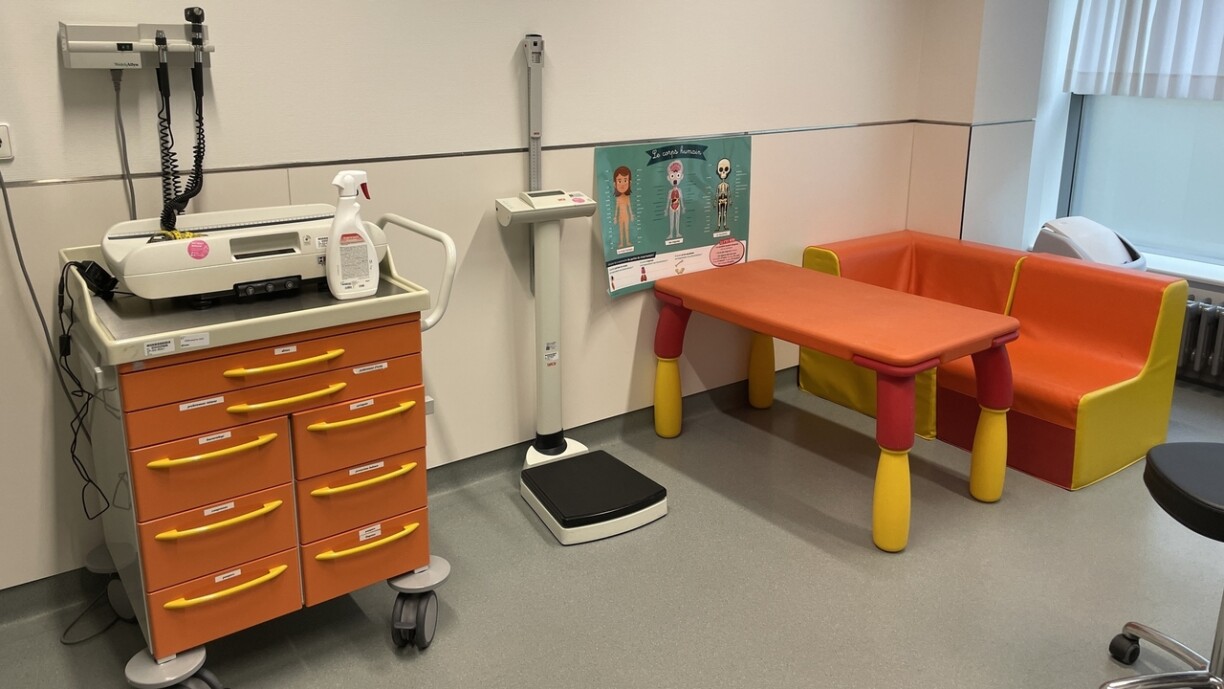
At the moment, the CHL has two stationary rooms. One of them allows children to be properly isolated, the other one is a standard room able to house two patients. Hopes are that the specialised service for paediatric onco-haematology will be further expanded within the next two years.





