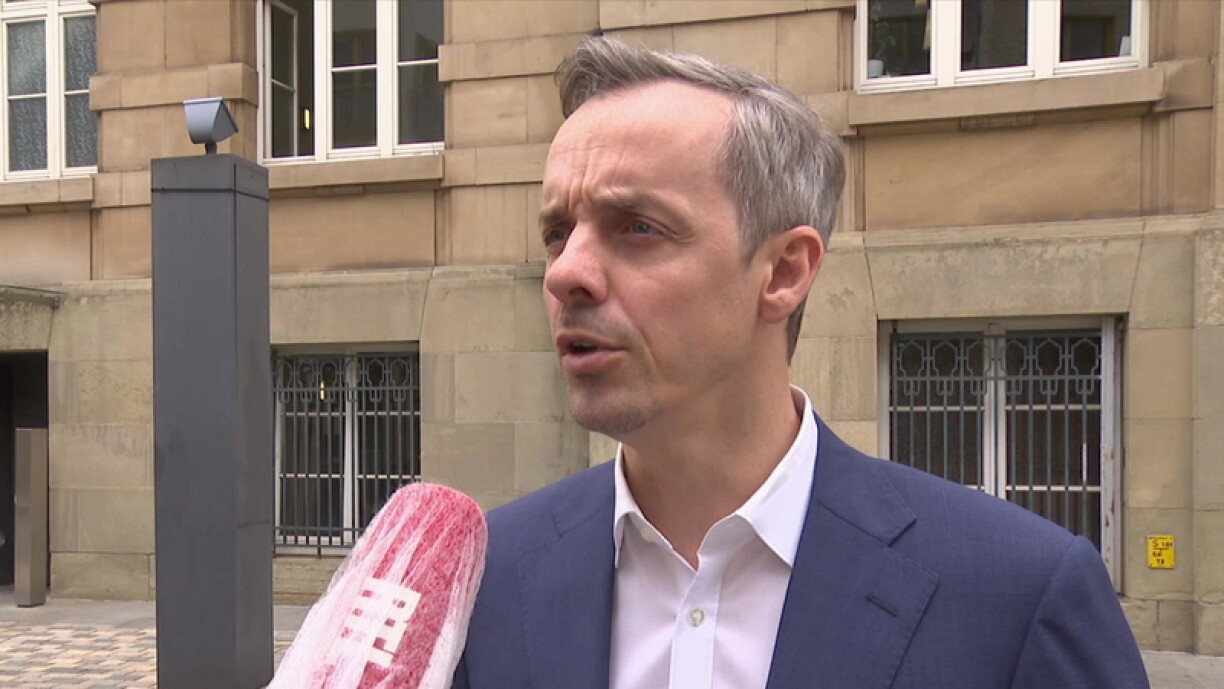
A new heritage preservation law came into force in February 2022, once again bringing a divisive topic to the forefront. Luxembourg benefits from a large number of buildings with historical importance, while the preservation thereof is usually left up to municipal councils. Some are more proactive than others, according to Sanavia, whose statements have sought for outrage in Esch-sur-Alzette after he termed their handling of heritage buildings “catastrophic”. RTL’s Nina Schagen investigated.
The INPA classified 2,500 buildings in the municipality of Esch as being in need of protected status. But the council took over just 790 of the buildings in the end as part of their PAG, or development plan.
Sanavia told RTL that certain streets in Esch, such as Rue Würth-Paquet, had no protection at all, despite individual buildings being considered as having historical importance. He said protection was vital to prevent the buildings from being torn down in future.
Esch-sur-Alzette mayor, the CSV’s Georges Mischo, jumped to the city’s defence. He said such statements were upsetting to hear and accused the INPA of not wanting to understand that the council had opted to protect around 3,600 buildings in total - just not as part of their PAG. Instead, he told RTL, the council had protected the buildings by ranking them in seven different categories, and therefore protecting them in seven different ways.
An example of the categories used by the council: a building could be classified as a “national monument”, or as an “ensemble worth preserving”. Rue Würth-Paquet, according to Mischo, is therefore protected under the council’s classification, meaning buildings on the street could not be torn down and turned into a residential development. He explained the “ensemble” classification, applies to some 1,449 buildings belonging to an ensemble, and said it was therefore untrue that they had only protected 790 buildings.
However, Sanavia claimed there were other elements at play, which meant participating in the PAG would be vital. “The houses which are not protected do not have available subsidies for the owners. These are only available if there is clear protection through the law and the PAG.”
The INPA director said he had spoken to Esch authorities on a number of occasions, while the Minister of Culture had also been in contact before the PAH was approved, to notify the city that its architecture deserved more protection.
Mischo refuted these claims, saying the former warehouse, the Gebléishal, was still standing thanks to the city’s countermeasures. There were also other positive examples of historical buildings that were given a new role in Esch, he added, such as the Bridderhaus and the rout Lëns.
The mayor did not rule out protecting further buildings using the PAG in future. It remains to be seen if these modifications are sufficient to please Sanavia and the INPA.





