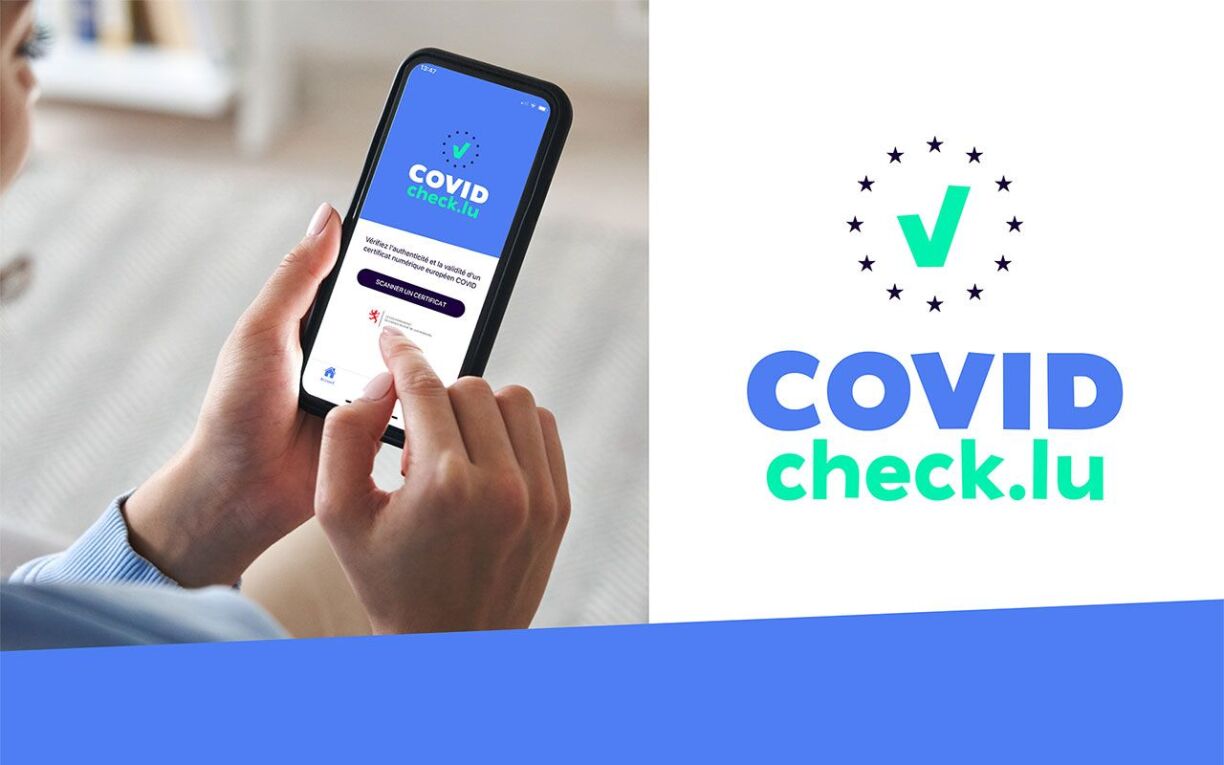
Businesses and administrations are free to decide whether they want to implement the regime. The law also provides for CovidCheck to apply only to parts of a building, or some services. Where it applies, everyone must prove via a QR code that they are either recovered from Covid, fully vaccinated, or had a recent negative test.
Non-certified rapid tests are no longer accepted. This led to queues outside some pharmacies on Tuesday morning.
"Our people were constantly busy. We will have to deploy additional personnel over the next few days, who do nothing but checking the QR codes. There is huge demand, much bigger than we could have imagined 2 days ago," said Alain de Bourcy, president of the pharmacists union.
Restaurants are also feeling the change, where CovidCheck became obligatory for inside spaces. But for many of them, this is not new.
"We've had CovidCheck for three weeks now. So far we have not had anyone refusing it. Some people are even glad that we ask. They find it reassuring," said Stephanie Alesch, who manages a brasserie on Kirchberg.
The new regime has also been launched at a wholesaler for electric material on Gasperich. They are introducing it in stages, however.
"We've decided to start slowly. We have people who have only had one jab, who need to get their second dose. So we decided that for the first week, masks still have to be worn - especially in the corridors," says Laurent Saeul, delegated administrator.
Some offices have started working without masks. Just under 90% of employees are vaccinated. There are internal negotiations with those who aren't.
"If someone can't present a valid QR Code, they are asked to go home for that day. But at the moment it doesn't look like we will have such cases. We've noticed that those haven't had the vaccine have arranged to be tested," adds Laurent Saeul.
A similar solution is used at the Ministry for the Economy on Boulevard Royal. Luc Wilmes, responsible for the implementation, explains that people who don't have a valid pass have to inform their superior. "Then they can request vacation time, use accrued overtime, or if they haven't used up their remote work quota for the week, they can use that."
It is not known at this point how many businesses and administrations have impemented the regime. The Health directorate confirmed they are still receiving notifications and would confirm numbers as soon as it was possible. A few examples are available, however: at the Ministry of Education, the QR Code is only mandatory for meetings between the staff and schools.
In the RTL building (where most of or scribes are located), CovidCheck only applies at the cafeteria, which means masks and distance apply as usual. The same applies at the postal service, where it is not applied throughout.
Supermarkets don't intend to introduce it as there is too much contact with the general public, and the old rules apply. A number of banks and Luxair, for instance, intend to introduce it, and many businesses said a few days ago they were still undecided.
The country's unions (Aleba, OGBL, LCGB and CGFP) have criticized the optional CovidCheck in the workplace for weeks. They are not against vaccination per se, but estimate that the new regime will further split society and have many legal questions about potential consequences for employees if they refuse to comply. The fundamental rights of all employees had to be respected, said the banking union ALEBA in a statement.
Video report in Luxembourgish:
The union had a meeting with the employers representatives from the banking and insurance sector ABBL and ACA. They could not agree on a common CovidCheck application, however, meaning that the decision now lies with individual businesses or staff delegations. The ALEBA stresses they are not against the CovidCheck, but it must not be used to stigmatise individuals.
Within the government, the procedures are clear, as the responsible minister Marc Hansen explained last week: employees could receive a caution or lose part of their salary. Only in extreme cases were they at risk of losing their job.
Things are less clear in the private sector, as the debates held during the vote on 18 October made clear. While it would be preferable that no cases ended up before the courts, MPs acknowledged that it was impossible to formulate a law that could regulate every possible use case and situation in thousands of different workplaces across the country.
They stressed, however, that the Covid law falls under common law, meaning that worker participation rules in businesses over 150 employees applies.





