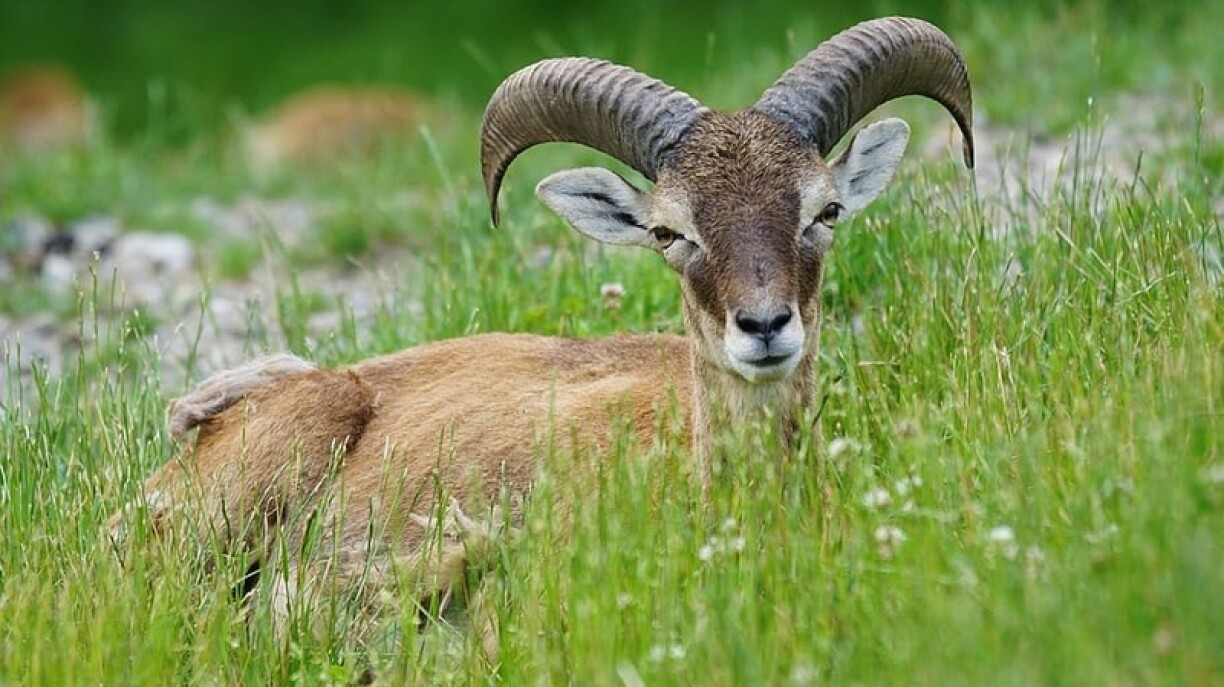
Wild sheep are causing considerable damage to the woods surrounding Echternach, leading the Ministry of the Environment to announce an administrative hunt. The ministry made the decision to cull the population at the request of Echternach's municipal council. The decision was criticised over social media, with some individuals even suggesting shooting the minister instead.
But what kind of damage do wild sheep actually cause, our RTL Radio colleague Monica Camposeo wondered, stepping away from the emotional discourse.
The number of mouflon wild sheep in the vicinity of Echternach is estimated at 150. The Nature Management Agency reported the large number of sheep is causing surface damage to the forests. A forester took RTL's team to the woods to show the evidence. The proof was visible at one spot, showing how sheep biting a tree had damaged the beech's natural regeneration. The trees are unable to grow because sheep tend to continuously bite them.
Added to the issue is that the sheep also cause damage to trees by eating the bark. This makes trees more susceptible to disease.
Dr Laurent Schley, Nature Management Agency biologist, said it was crystal clear which animal is causing the damage. For one, he explained, there is no mass population of deer in the woods, and they do not tend to eat the bark anyway. As well as the damage having occurred at the height of sheep rather than deer, they are the only possible perpetrators in the forest.
As for how there are so many sheep, Dr Schley said this can be attributed to many reasons. For one, hunts over the past 20 to 25 years have focused too much on male animals, which has not led to a natural selection, like with predators such as wolves. The shooting plan as stipulated in the 2011 hunting law has thus not had its targets met. This, Dr Schley stressed, is why an administrative hunt is planned.
Dr Schley said while he personally does not take part in hunts, he believes it is important to act now due to years of inaction. The situation has since become untenable, the biologist explained.
Given the emotional discourse on social media, Dr Schley pointed out there was a discrepancy between the reaction to the cull and reactions to hunts in general, which have not experienced as significant an uproar. "This is an administrative hunt of 52 sheep. If you look at the total figures of animals shot throughout Luxembourg, also during non-culling hunts, the figure reaches 15,000. It's not exactly clear why there is an issue with these 52 sheep."
He concluded that administrative hunts are strictly regulated, adding that the hunt will be a hiding one, and that the flesh of the shot animals will be repurposed, rather than wasted.





