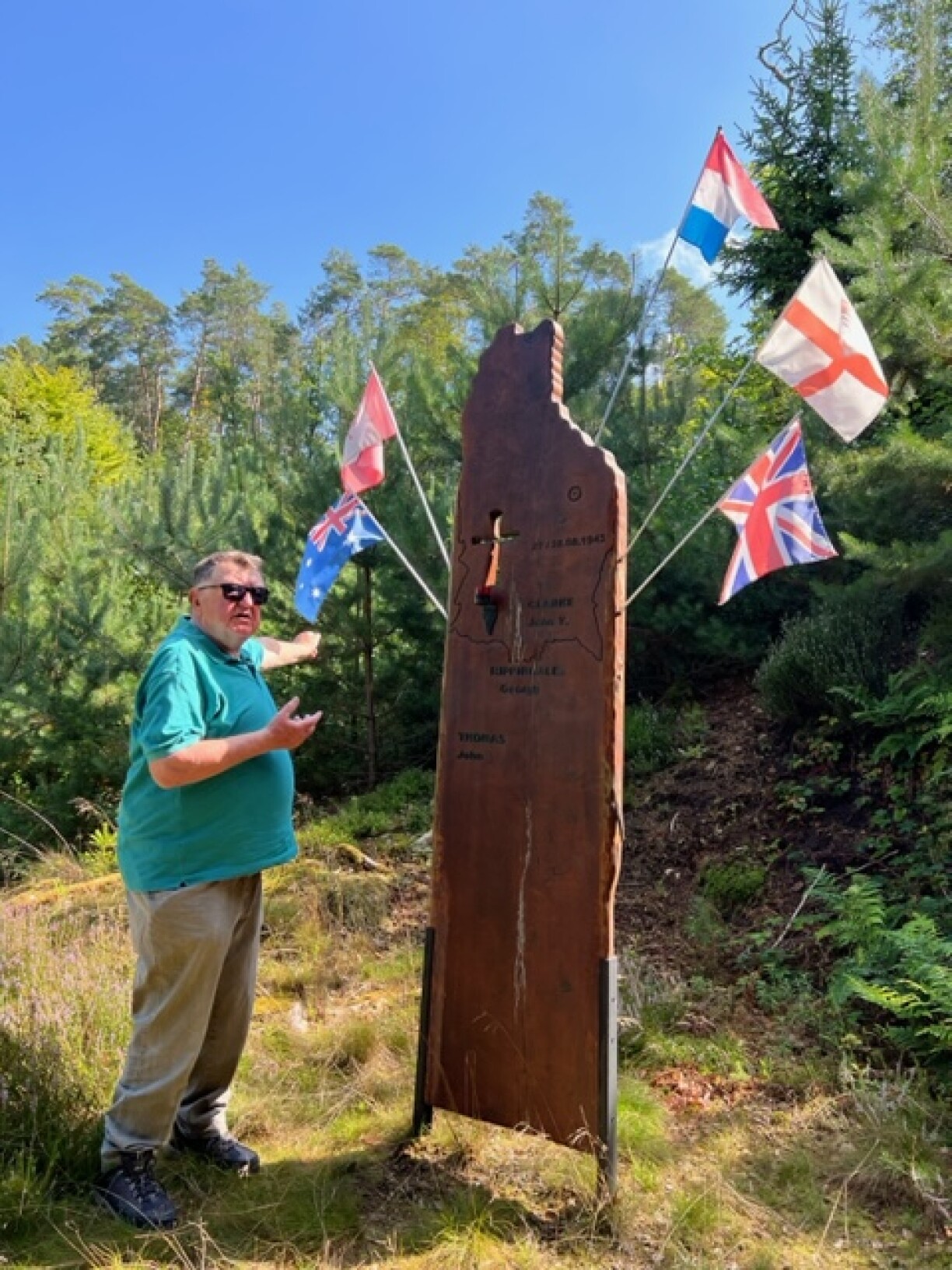
Not far from Graulinster, a deafening explosion shattered the silent night of August 1943. Seven soldiers, part of a Halifax aircraft crew dispatched from England's Lisset military post, had embarked on a mission to destroy a German munitions factory in Nuremberg.
However, their journey was cut short, as they were met with hostility in the skies over Luxembourg. The aircraft was brought down, claiming the lives of four of those on board.
"Their deaths on this very soil secured our future," reflects Schaaf, who dedicated years to advocating for the recognition of this site.
"I visited this place for the first time in 2012. Accounts of eyewitnesses drew my attention to the crash that occurred here on the night of 27-28 August. However, for 70 years, nobody bothered to do anything that would indicate that a Halifax was shot down here," Schaaf recounts.
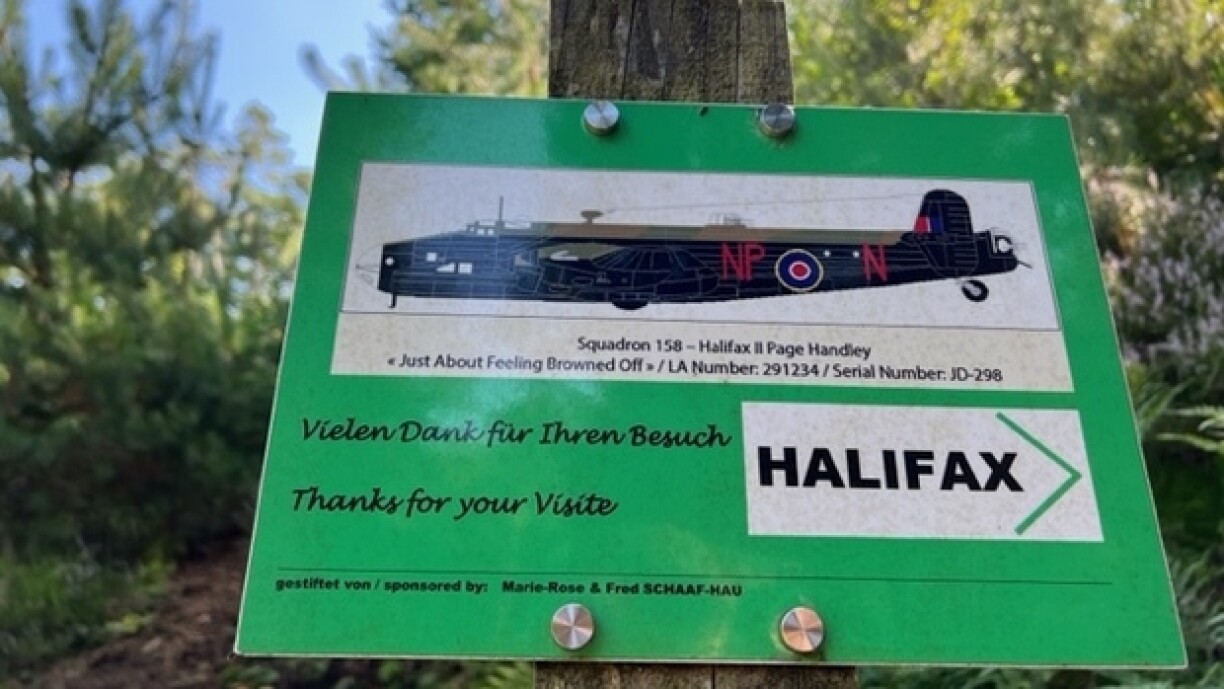
A year later, the Royal Air Forces Association of Luxembourg, together with the owner of the forest and the forester, decided to properly honour the incident at this precise spot.
"They bailed out mid-flight; the pilot, realising that he couldn't control the plane anymore, urged them to 'jump out!' And so, they descended to safety in different locations. Harald Robinson landed in Volmerange-les-Mines among the vineyards, George Hirst's fate led him to Rodenbourg, John Dix leaped into the woods near Lilien by Herborn and was discovered there by a farmer. Meanwhile, Eric Brearley's parachute brought him here, where he was discovered the following morning. The camaraderie of the resistance aided these young men, sheltering them within patriotic families and ensuring that they would be safely hidden for weeks," details Schaaf.
Over the years, some of the survivors have come back to the forest to pay homage to the victims.
Schaaf recounts with great passion how the locals helped the soldiers at the time:
"They jumped down and hid with Luxembourgish families who helped a lot. The resistance of Junglinster was quite active and they were in touch with patriotic people from the local community."
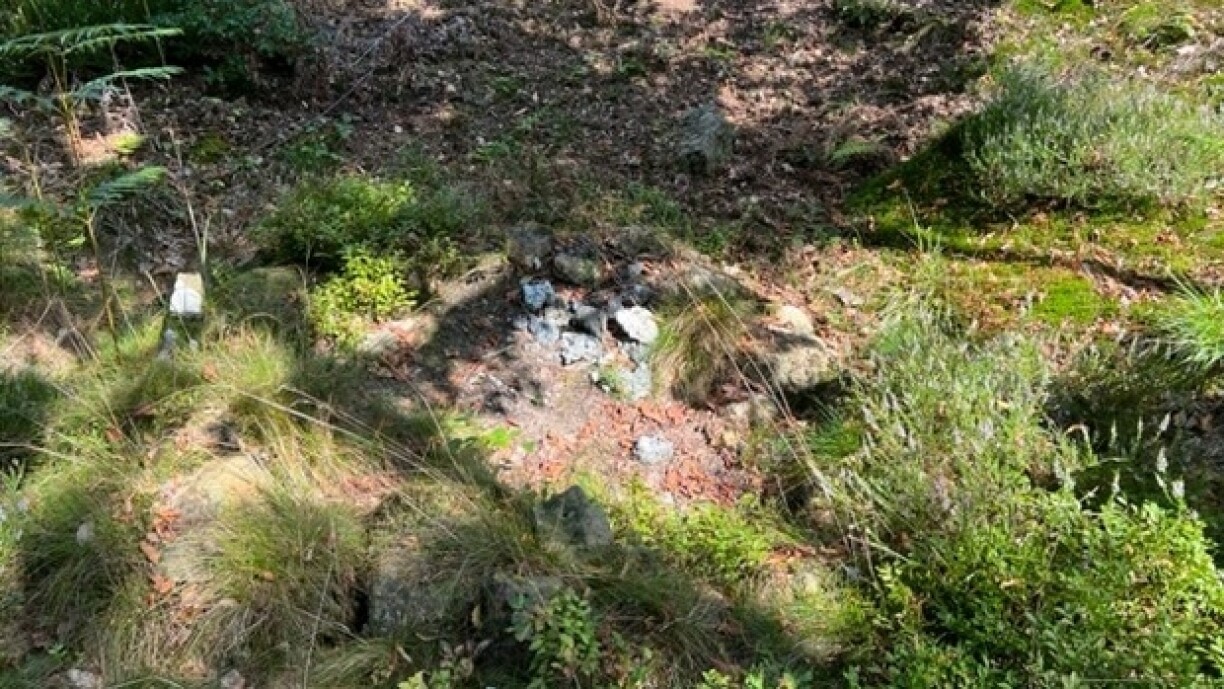
Today, a plaque recounting the incident, a monument commemorating the soldiers, and even some remnants of incendiary bombs stand in the woodland near Graulinster.





