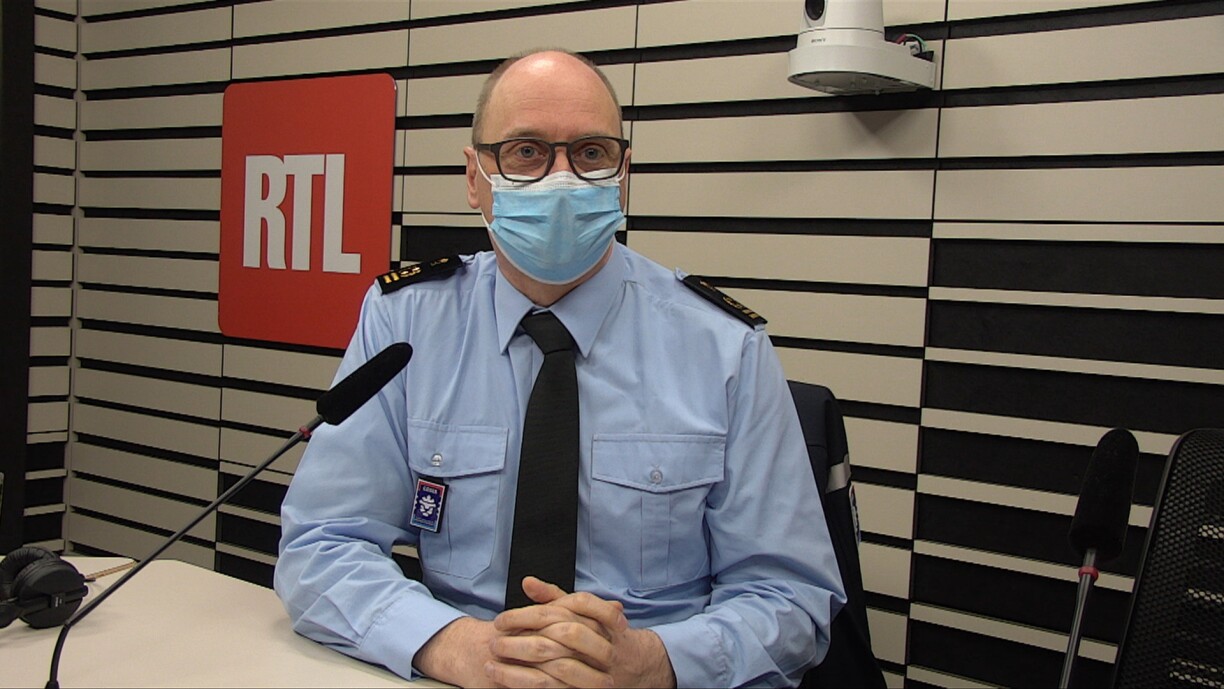
In his interview with RTL, Paul Schroeder rejected the criticism by the Association of Luxembourg Cities and Municipalities (Syvicol) that communes will have to pay 10% more for the services of the CGDIS in the future. Schroeder stated that good emergency services are "not available for free" and that it was known beforehand that the National Plan for the Organisation of the Emergency Services would increase costs. Minister for Home Affairs Taina Bofferding has proposed "clarifying discussions" to Syvicol.
The National Plan, which was passed unanimously by the Chamber of Deputies, stipulates that a first response team should be able to reach the site of an accident within 15 minutes, no matter where it occurs in the country. Currently, the CGDIS is able to fulfil that promise in 78% of all cases. In 90-95% of all cases, the emergency services reach the site of an accident within 20 minutes. The plan is also to have the necessary 36 ambulances operational by 2025. Schroeder added that, for comparison, 29 of the necessary 36 ambulances were operational at the time of the interview.
The CGDIS' General Director thinks that to guarantee such an "efficient system", additional professionals are needed, as voluntary emergency services workers are no longer available enough to guarantee every rescue mission. The emergency services currently count around 4,000 voluntary workers, and the goal is to at least keep the number at that level. Last year, 500 new volunteers signed up to work for the CGDIS, without any major marketing campaigns. In Schroeder's eyes, this is a sign that the desire to help others remains high, maybe also due to the ongoing pandemic. In the long term, the goal is 80% volunteers and 20% professionals, according to Schroeder. In order to become a full-time employee, candidates must be able to speak all three of Luxembourg's official languages (Luxembourgish, German, and French).
The number of rescue missions remained stable in 2020, with only a slight decrease of 1% resulting in a total of 60,000 operations. While the number of accidents went down significantly, the number of patient transfers increased.
Regarding vaccinations, the head of the CGDIS explained that every rescue worker in direct contact with other people, i.e. those driving in ambulances, have already been or will be prioritised for the vaccination. This comes down to about half of the CDGIS' total staff, i.e. about 2,300 people. While he does not have any concrete figures, Schroeder stated that he estimates that this group of people has been vaccinated or received their invitations. He did reveal that 75% of those who received an invitation have accepted it and been vaccinated.
Fire fighters not in direct personal contact with others will be vaccinated according to the general vaccination strategy of the government.
Schroeder has also already moved into the new intervention centre, the CNIS, located at the Gluck roundabout. A number of administrative offices are already there, and other departments will follow. Schroeder admitted that the new centre is less ideally located to cover the entire area around Luxembourg City. However, a new barrack for the airport fire department is planned at Luxembourg Airport, which will make it easier to cover Kirchberg, Neudorf, and Senningerberg. Initially, a team will also remain at the old location on route d'Arlon, Schroeder added, in order to cover the north-west of the capital until a new location is available.





