Figures from between 2016 and 2018 paint a stark picture. 15 pedestrians died in traffic accidents and a pedestrian was hit by a car every second day on average. Statec's figures released at the end of November revealed that pedestrians were also at fault in near 30% of cases.
The Road Safety Association has reacted, stressing there is a lack of information surrounding the causes of accidents. More pedestrian-involved accidents tend to occur in the winter, due to the shorter days. The circumstances of accidents often revolve around pedestrians crossing the road and being hit by a car driving straight ahead. In 79% of cases, the pedestrians are crossing using zebra crossings, which could suggest that motorists fail to see the pedestrians in the darkness.
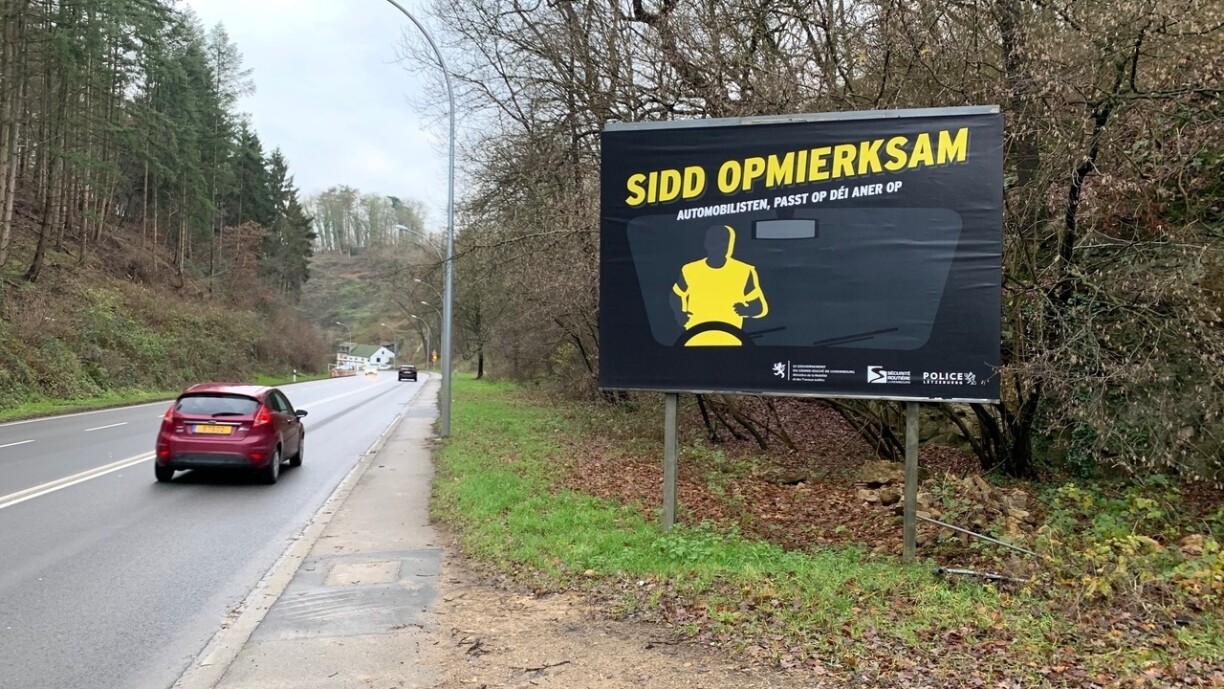
The police, the Road Safety Association, and the Ministry for Mobility launched a campaign two years ago encouraging people to wear reflective clothes. However, there is no data on whether residents took to wearing more reflective clothing. At the same time, another concern is that municipalities are not beholden to regulations on making crossings safer.
Two age demographics are overly represented in figures: those aged 75 and above and those between 15 and 24. The Road Safety Association explained that the representation of the elderly in figures can be explained as many tend to have worsening sight and hearing. But the same explanation does not account for the high amount of young people involved in pedestrian accidents.
According to the Road Safety Association's president Paul Hammelmann, more and more people, mostly younger ones, tend to cross the road whilst on their phone. He highlighted their lack of concentration and spatial awareness, exacerbated by earphones. Whilst Hammelmann admitted this could be a cause, he described the lack of spatial awareness as 'marginal phenomena'. Nevertheless, he believes that a campaign should stress awareness when crossing the road.
An issue outlined by Hammelmann is that Statec's figures only included accidents in which a police report had been drawn up, namely where police were at the scene. He decried that this means statistics are incomplete, as a further two-thirds of accidents occur without police attending the incident. These accidents are then not examined, a point which Hammelmann stressed is important not only for the consequences of the incidents, but also in determining the causes.
Finally, Hammelmann examined urban plans promoting soft mobility. He pointed to Kirchberg as a positive example of making the neighbourhood safe and accessible for pedestrians. However, cars tend to be prioritised in areas like Belval and Cloche d'Or.





