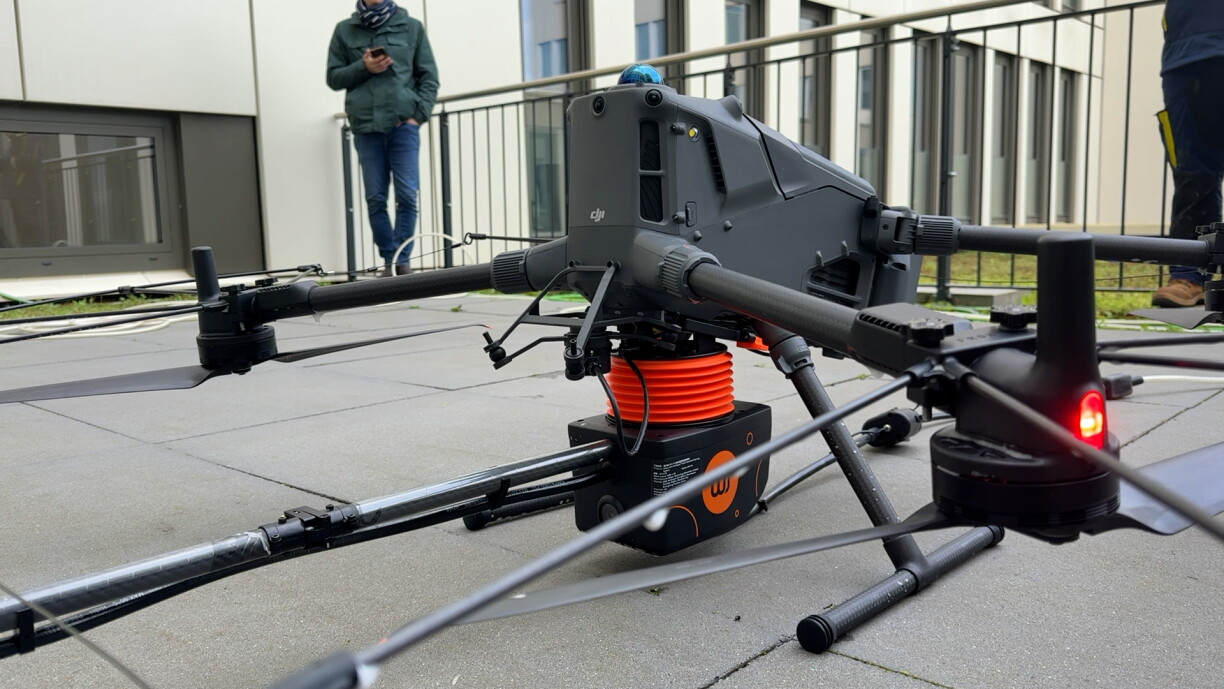
Traditional cleaning methods are being replaced by new technology at Belval's Moiré building. In fact, Acrobatica Luxembourg has introduced a drone specifically designed for washing building façades.
The company recently deployed the device, which is a drone measuring 1.5 metres in both length and width and weighing around 10kg, to tackle the challenging inner courtyard. This had previously been nearly impossible to access without expensive equipment.
Marc Gravier, property manager at Inowai and owner of the Moiré building, explained that cleaning the courtyard had long posed a problem due to the high costs involved in reaching the area, and Acrobatica Luxembourg’s proposed drone solution seemed the most suitable for their requirements.
An alternative approach would have required the use of aerial platforms, but these would have pushed costs above €10,000, according to Gravier.
Such an expense was not feasible for the building’s budget. Accessibility was not the only issue: the courtyard’s delicate cladding is also vulnerable to scratching and damage during standard cleaning operations.
As a result, rope access specialists managed the rest of the building’s cleaning, while the drone was selected specifically for the sensitive courtyard area.
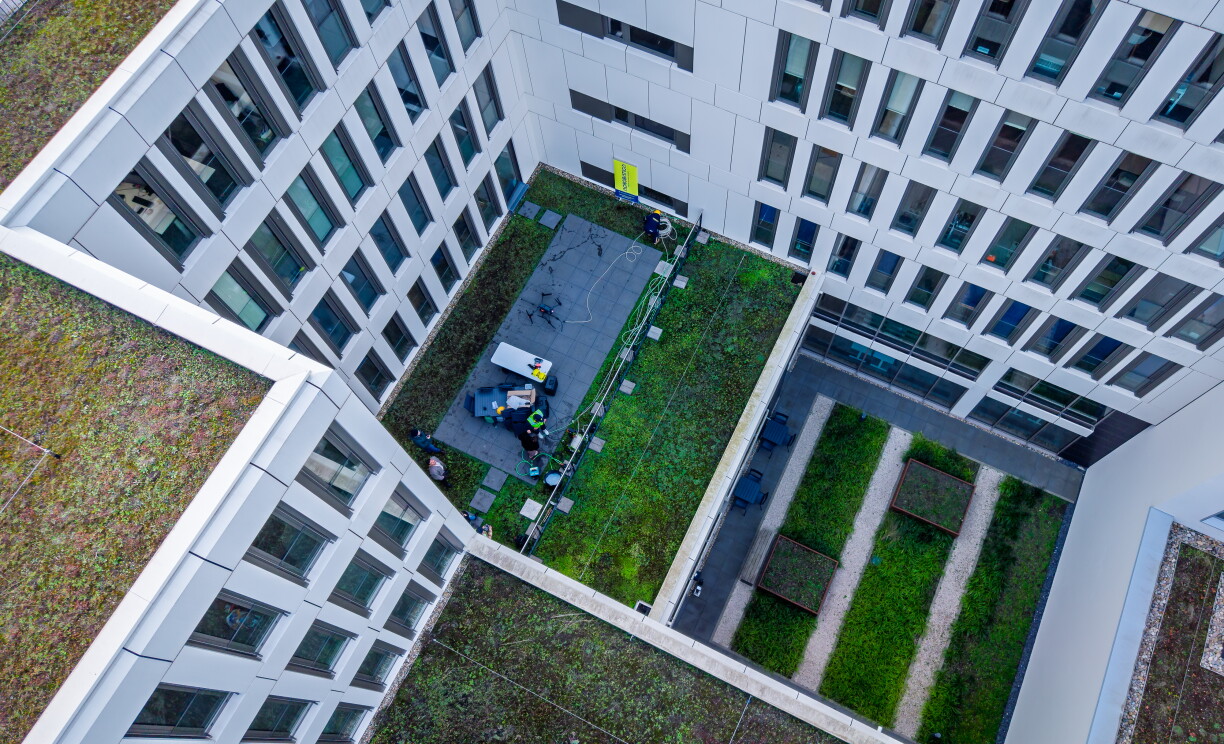
The entire operation was overseen by an experienced pilot, Vincenzo, who conducted a series of preliminary tests to ensure the equipment and weather conditions were suitable.
He explained that these preliminary checks are crucial to prevent accidents, especially given the drone’s value of around €30,000.
After successful tests, the drone sprayed cleaning solution onto the façade and created an effect almost reminiscent of a snowstorm as soap was scattered through the air.
The cleaning agent was then left to work before a thorough rinse, a step Vincenzo described as requiring particular care for a spotless result.
Cleaning this section alone is expected to take a full day.
The entire dusting and cleaning operation for the courtyard facade is scheduled to last three days. Conditions can be demanding, particularly when the wind picks up, making it harder to keep the drone stable at higher altitudes.
However, thanks to thorough training and advice, even such challenges can be managed effectively.
In response to the unique demands of certain sites, Acrobatica expanded its approach to include drone technology.
While the drone brings clear benefits in terms of what it can achieve and the cost savings it offers to clients, management emphasises that it is designed to complement, rather than replace, rope access technicians.
Both methods are seen as working in tandem to address a wider range of cleaning challenges.
Preparing for a drone cleaning operation of this scale requires months of planning, including specialised pilot training, securing permits, monitoring weather conditions, and ensuring the drone can be supplied with water and electricity on site.
For now, Acrobatica Luxembourg operates with just one drone and two qualified pilots, with the possibility of expanding their fleet and team if client demand increases.
It remains to be seen whether drone cleaning will become a standard tool for facade maintenance in the years ahead, but the ongoing project at Belval could signal the beginning of a new era for building upkeep.


