19th century
Before gaining its independence in 1839, Luxembourg had been under the control of the Holy Roman Empire, Spain, Austria, France, and the Netherlands. These came with many different changes: fortress works, trade, and industries among many others.
However, Luxembourg essentially remained a backward, agricultural country with limited structures: industries such as traditional forges and breweries existed, but they were scattered and rather small. About a third of the population emigrated to France, Germany, or the highly popular United States, hoping to escape overpopulation-induced poverty.
After four centuries of domination, the Grand Duchy had suffered through much exploitation, and had to find a way to build its own economy on which it could depend. As a land-locked country with no access to the sea, it did not have any other choice than to open up to its neighbors.
Indeed, in 1842, Luxembourg joined the Zollverein (German customs union under Prussian leadership) and benefited from the powerful economy of what would later become Germany. This entry marks a very important turning point in Luxembourgish economic history: Soon after joining the union, railway lines were constructed to establish good trade communication lines. With those also came German capital and labor, and so the migration fluxes that we still know to this day began. Now a well-connected country, Luxembourg’s industrial revolution did not start off until the discovery of iron ore deposits in the south of the country in the 1840’s.
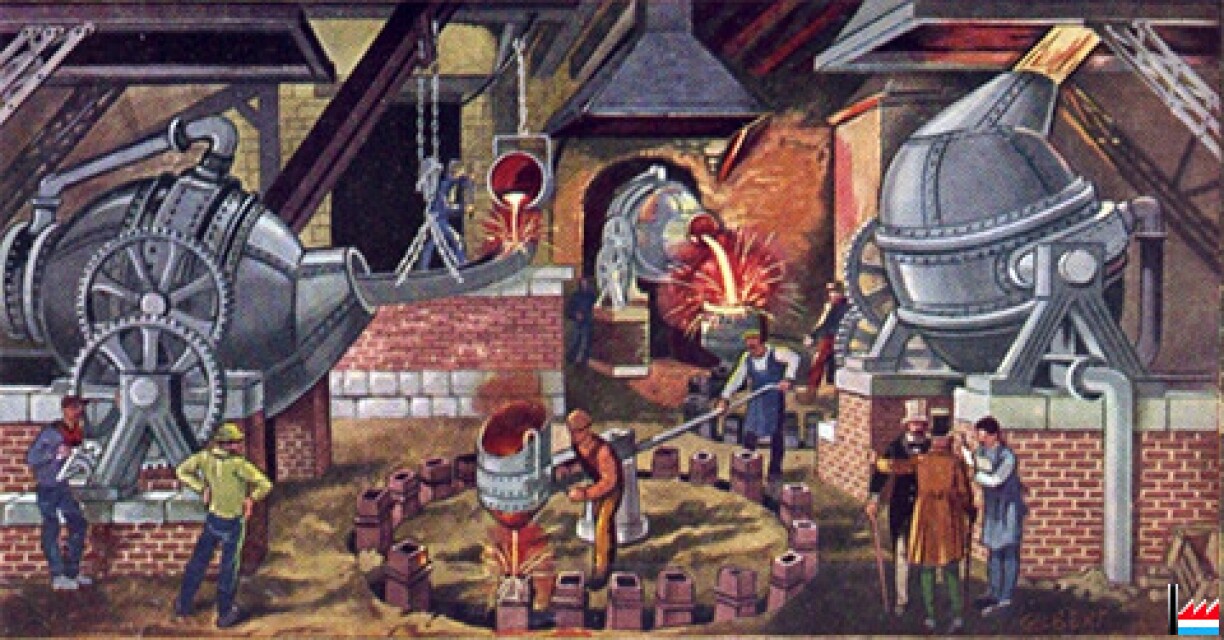
By the 1870’s, large-scale foundries and steel mills were being built all across the ‘minette’, but were met with a disadvantage: the Luxembourgish mineral contained too much phosphorus due to its low iron content. It wasn’t until the “Bessemer converter” was introduced that the steel industry rose to international levels and no longer needed to rely on its German partners.
What is often forgotten is that Luxembourg did not only make itself a name in the world with its steel, but also roses. Between 1850 and 1900, the country was exporting nearly six million rose bushes, being one of the largest producers of quality roses.
20th century
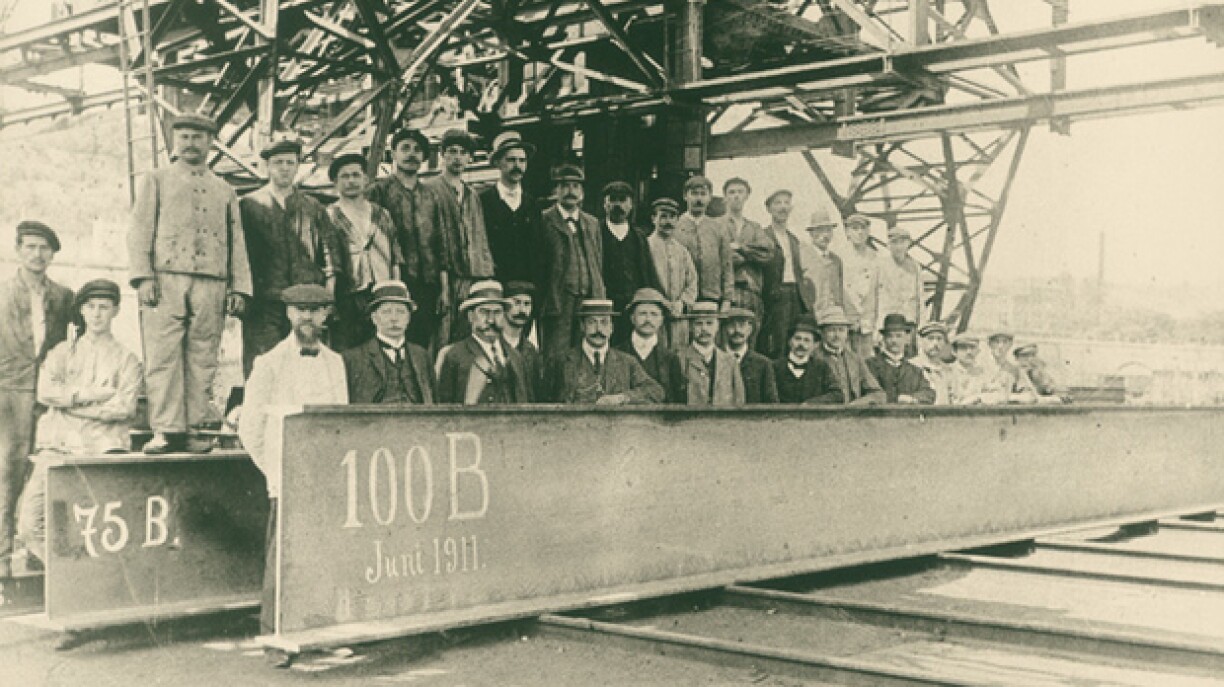
With the creation of ARBED (Aciéries Réunies de Burbach, Eich et Dudelange) in 1911, productions rose to the point that by 1914, Luxembourg ranked among the world’s six largest steel producers.
The steel industry now being the backbone of Luxembourg’s economy, demographic changes came about: farmers left the Oesling to work in the mines, and social structures changed. More importantly, Luxembourg became a country of emigration, as local labor was no longer sufficient. German, Italian, and Portuguese immigrants moved to Luxembourg to work here temporarily, but immigration soon became a permanent trait. Already in 1915, immigrants represented 15,3% of the population.
The German occupation came with strict rationing and inflation, resulting in social dissatisfaction and the creation of two trade unions in 1916. Their effect was rather insignificant: most of their strikes were repressed brutally by the German army. After the war was over, Luxembourg had to denounce the Zollverein and continued its dependency on foreign trade by forming an economic union (BLEU) with Belgium in 1921.
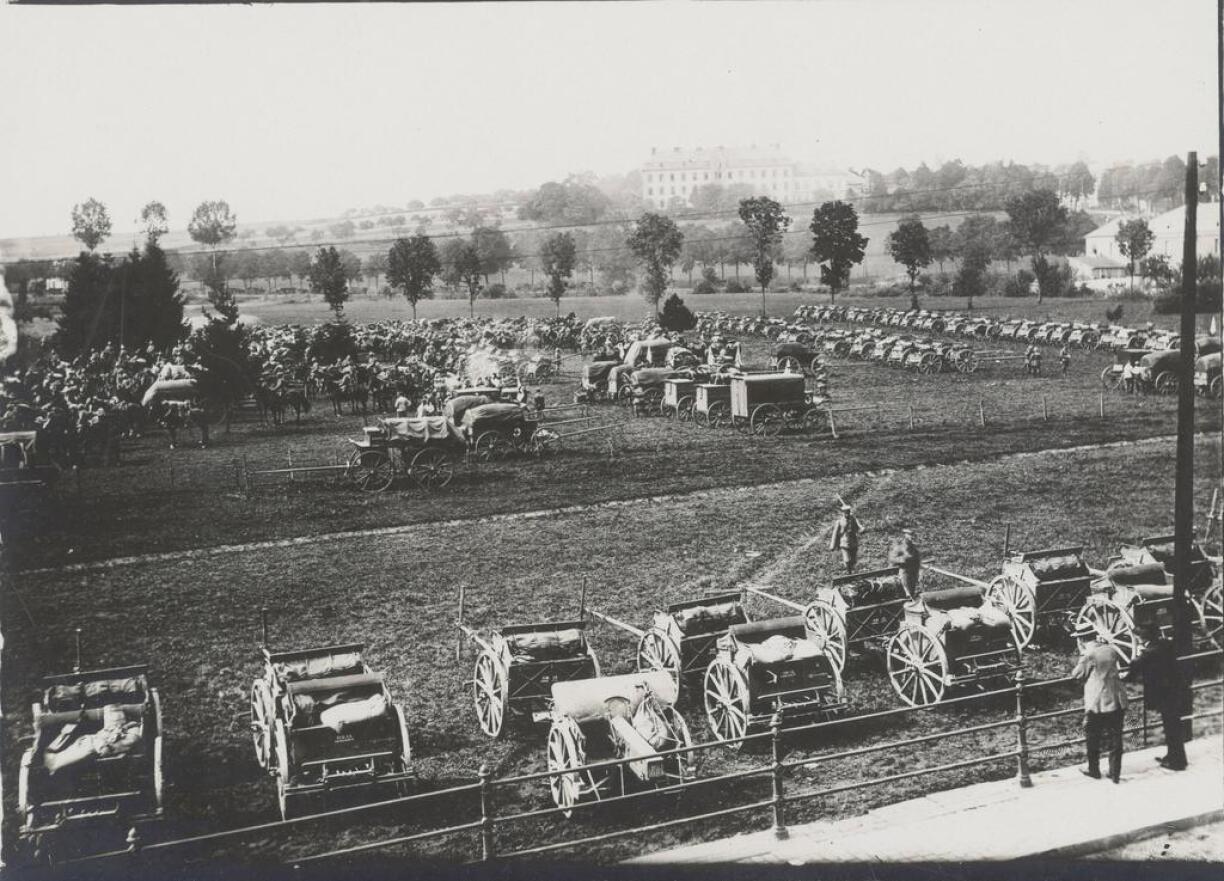
Apart from some communist influences, the interwar years in Luxembourg went relatively smoothly. Unemployment rates didn’t increase, as many immigrants returned to their country of origin.
Similarly to World War One, Luxembourg played an active role in supplying the Germans with steel. The industry was booming, and continued to do so until its crash in 1974.
From industry to finance: the late 20th century
Steel production dropped by 50% between 1974 and 1992, but authorities had predicted such a crisis and had already looked into different sectors. Effectively, Luxembourg had become more involved in international relations.
The Grand Duchy joined several international organisations: NATO, the Council of Europe, and most importantly, the European Coal and Steel Community (ECSC) in 1952. 5 years later, it became one of the 6 original signatories of the Treaties of Rome, founding the European Economic Community. Soon thereafter, Luxembourg City was established as one of the three European capitals alongside Brussels and Strasbourg, becoming home to many European institutions.
Next to diplomatic relations, Luxembourg was benefiting from the growing capital seeking investments and its highly attractive institutions. Private wealth management, too, became a popular attraction to foreign banking institutions. A key decision made by the government was to lower taxes to level comparable to Switzerland’s. All of these led to Luxembourg’s financial boom in the late 20th century which has given its residents one of the best living standards in the world.





