How does the beloved vegetable make its journey from field to plate?
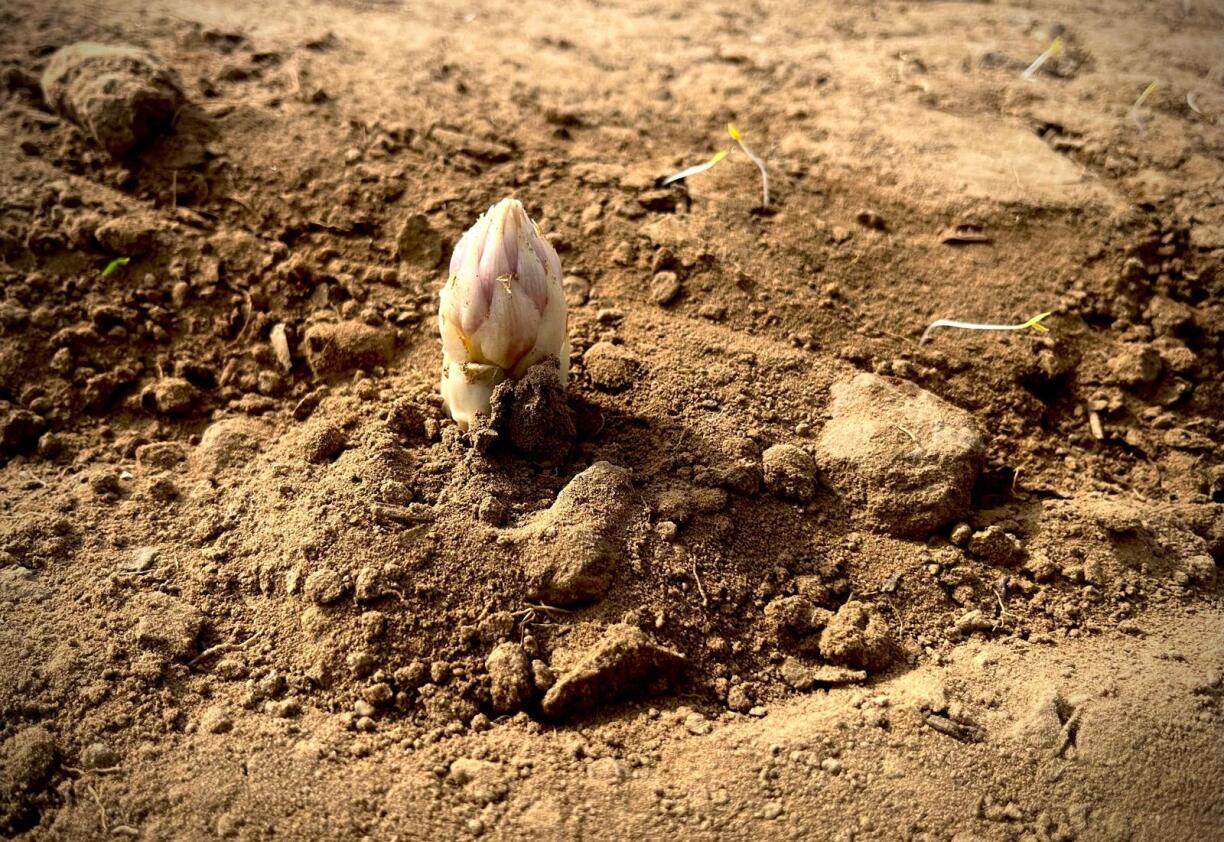
For Luxembourg's growers, asparagus season runs from April to mid-June and leaves little room for pause. Each day depends heavily on the weather. As farmer Yves Hoffmann explains, growth only begins when soil temperatures reach around 12°C. Below that, the plants remain dormant. Once the ground warms, the shoots push through the earth, signalling the start of harvest.
Picking asparagus is a skilled, manual process. Using a specialised knife, workers must cut each spear at exactly the right depth to avoid damaging the plant. Across the fields, rows are covered with plastic sheeting. Beneath it, white asparagus grows shielded from sunlight, preserving its pale colour. The black outer layer helps trap heat and retain moisture, creating the warm conditions the crop needs to thrive.
Every spear is picked by hand, as machines cannot match the precision required. Once harvested, speed is essential to maintain freshness.
The asparagus is quickly transported to a processing area, where it is cooled in ice water. This rapid drop in temperature helps extend shelf life, as the spears come straight from the soil at around 18 to 19°C. After cooling, they are washed, trimmed, and sorted.
Classification is based mainly on size and appearance. Thicker, uniform spears are the most valuable, while thinner or irregular ones are often set aside for processing, such as for soup or tips. The sorting process ensures that the highest-quality produce reaches consumers in prime condition.
While some consumers see green asparagus as the healthier option, Hoffmann says the difference comes down to preference. Both varieties come from the same plant. Green asparagus grows above ground and develops its colour through exposure to sunlight, while white asparagus remains buried and protected from light.
For farmers, the season is a race against time. With just two months to harvest, success depends on careful planning and favourable weather. Even then, conditions can shift quickly.
For consumers, however, the message is simple: this is the moment to enjoy fresh, locally grown asparagus at its best. The vegetable's short season is part of its appeal, a reminder of the care and effort behind each harvest.
Once the season ends, the plants are left to grow freely and recover, storing energy for the following year's crop.






