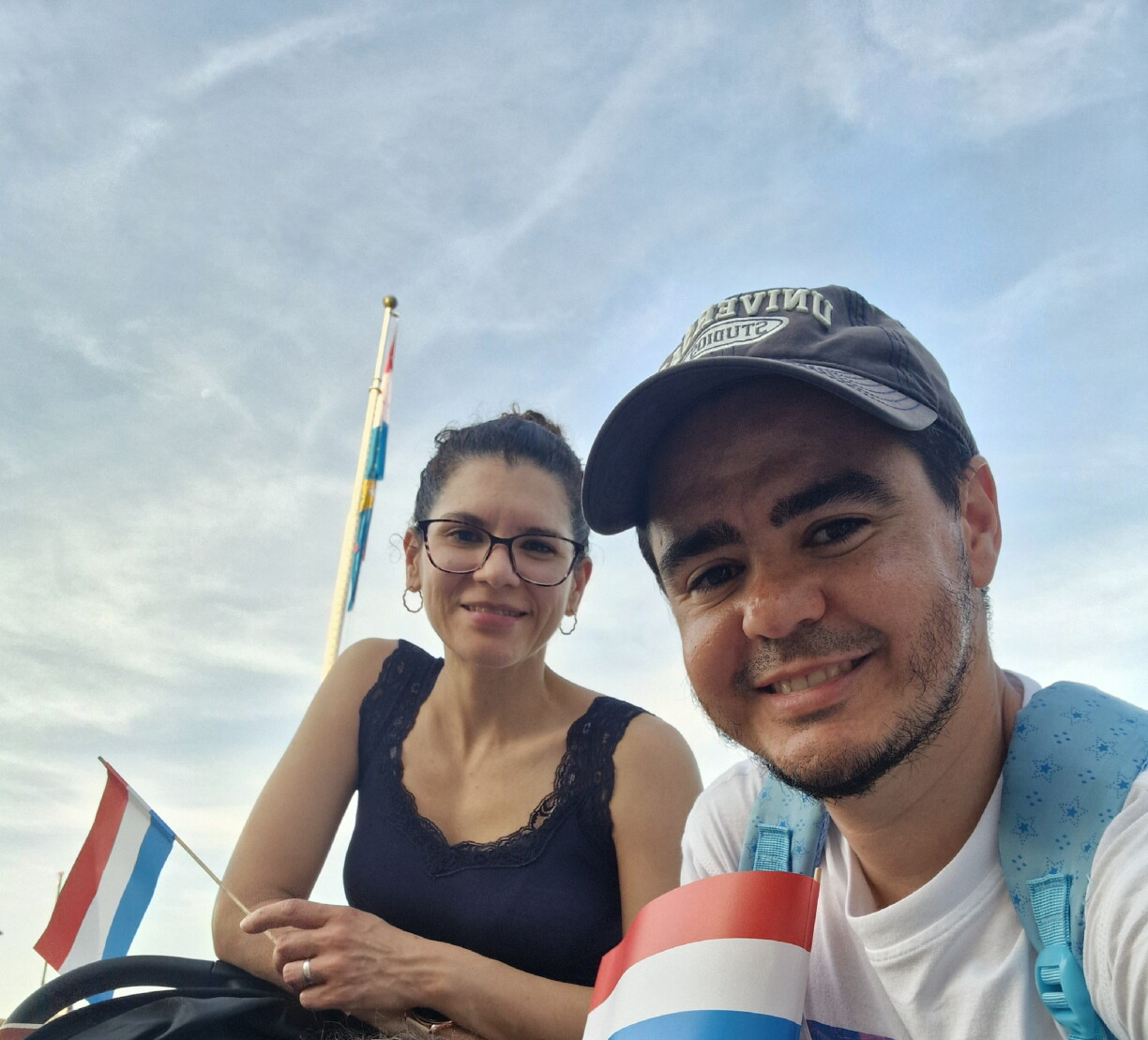
In 2017, one ordinary dinner changed everything for Jean Manuel Delgado Rojas. Sitting in a restaurant with his wife in Venezuela, he barely looked at his food – instead, his eyes were fixed on the car parked outside. "I spent the entire meal looking through the window because I was terrified it would be stolen", he recalls.
His wife, a qualified bioanalyst, had worked an entire month, yet her salary barely covered the cost of that single dinner. Violence and hyperinflation had turned everyday life into a struggle.
"That was the moment I realised something had to change", he says.
Until then, leaving Venezuela had never crossed his mind. His Spanish grandparents had travelled there decades earlier in search of a better life, and his father, although Spanish by birth, always considered himself Venezuelan.
"I grew up believing Venezuela was where I'd spend the rest of my life", he explained.
Instead, he and his wife packed their lives into suitcases and boarded a plane to a country they knew almost nothing about: Luxembourg.
Today, nearly a decade later, Luxembourg is home. He speaks four languages, has built a successful career, raised a family, and has turned his own experience of rebuilding a life into a passion for financial education.
We spoke to Jean Manuel about migration, identity, and why financial freedom is about much more than money.
It brings two conflicting emotions. On one hand, I remember my friends, the beaches, the warmth of the people, and the joy of everyday life. On the other hand, I feel sadness and frustration, because it became a country where even the simplest things became impossible.
It really was a "friend of a friend" story. Looking back, I truly believe God had a plan for us.
At first, we thought about moving to Spain because of the language and my family’s connections there. But everyone we spoke to warned us about the difficult job market there, so we started looking elsewhere.
Then a friend introduced us to another Venezuelan who had settled in Luxembourg. Until then, we barely knew the country existed. She answered all our questions, helped us find accommodation, picked us up at the airport, and her husband even helped me find my first job.
The more we learned about Luxembourg's quality of life, safety, and opportunities, the more it felt like the right place to start again.
Learning a local language was essential to develop my professional life here. And so four evenings a week, after a full day of work, I went straight to language classes.
It was exhausting, but I knew every lesson brought me closer to the life I wanted.
Surprisingly, it didn't take long. After moving a few times, we finally settled into an apartment in Walferdange. We bought our first car, my parents came to visit us, and for the first time I realised we weren't just living in Luxembourg anymore – we were building a life here.
My career was moving forward, and I could finally picture our future.
It taught me to become more organised, more responsible, and much more independent. When your family is thousands of kilometres away, you learn to be cautious about every decision because there's no one nearby to rescue you if something goes wrong.
Absolutely, in many ways, we still live as we did in Venezuela. I left when I was 30, so those traditions were already part of who I was.
My wife shares the same background, so we still cook the same dishes, celebrate Christmas the same way and even manage to find many of the ingredients we grew up with. Our friends from the Venezuelan community here have become like family, which makes those traditions even easier to keep alive.
Luxembourg makes it much easier to start again than many people realise. There are integration programmes, support for learning languages, and practical help for newcomers.
I still remember receiving language-course vouchers through OLAI that meant I only paid €10. That made me feel the country genuinely wanted newcomers to succeed.
There are excellent universities across Latin America. Sometimes it feels as though those qualifications aren't valued equally and this makes it hard for even high skilled people to get employment.
His own experience of uncertainty also shaped the way Jean Manuel Delgado Rojas thinks about financial security.
There's a parable I love about the ant and the cricket. While the cricket enjoys the moment, the ant prepares for winter. Life has its own winters – unexpected setbacks that we can't always control.
That's why I believe young people should learn to save, invest, and think long term. Delaying instant gratification can give you much greater freedom tomorrow.
I understand why people think that, because, for a long time, investing really was something associated with wealth. Today, that's no longer the case.
Technology has made investing far more accessible, and many platforms allow people to start with small amounts through fractional shares. The most important investment isn't a large sum of money – it's learning how to get started.
I hope they grow up appreciating the opportunities they have while understanding that nothing should be taken for granted. My experience in Venezuela taught me that life can change quickly, so I want my children to value resilience, kindness, and respect for others – whatever the future brings.
I'd tell him: "It won't be easy, but you'll make it. Trust yourself, trust the process, and trust God. One day you'll realise that getting on that plane was the best decision you ever made."
Home is wherever my family is. I've learned that a house doesn't become a home because of the value of the items in it, but because of the people you share it with.
As long as I am with my family, I'll always feel at home.





