
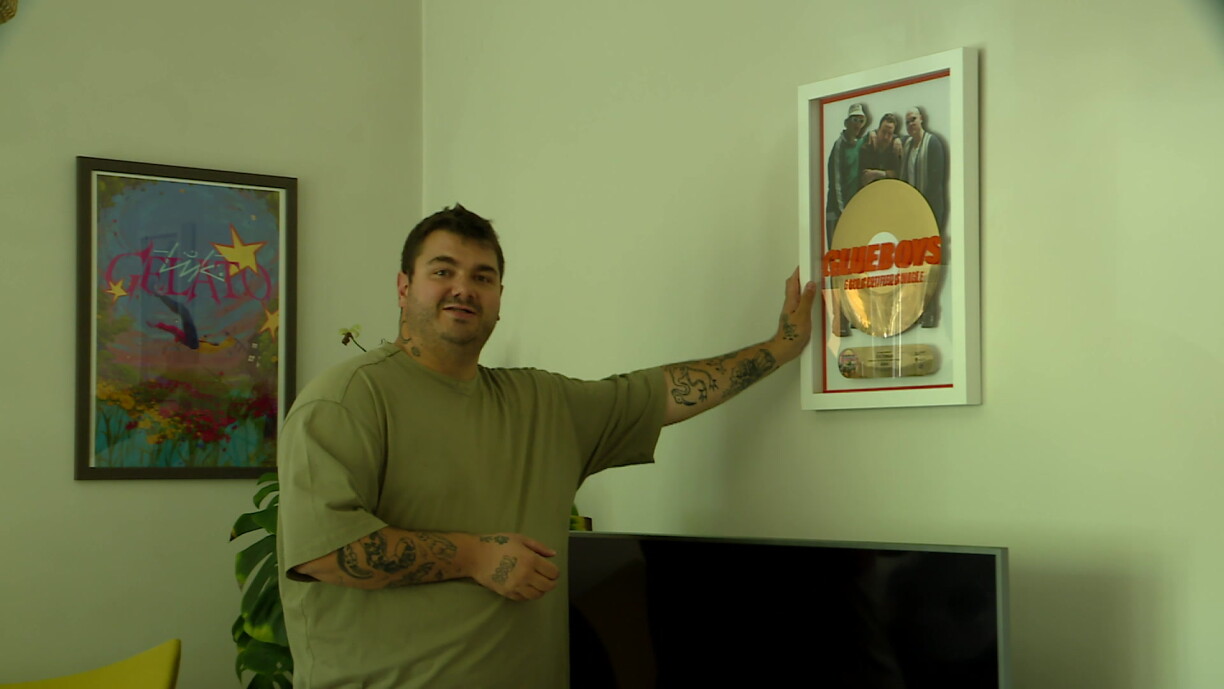
Luxembourgish producer and rapper Tun Tonnar has grown used to seeing thousands of views and clicks on the songs and videos he creates, but recently receiving a gold record award for his work with the Glueboys marked a new milestone in his career.
Speaking with RTL, Tonnar makes it clear that his passion remains unchanged: making music, in any form. Over the years, this drive has carried him from performing in bands to producing as Turnup Tun, and now to his current role as a sought-after producer in Luxembourg’s hip-hop scene. Not only has he become a fixture in local hip-hop, but he’s also established a reputation as an independent and successful music producer. His journey has been fuelled by an enduring enthusiasm for creativity and collaboration.
While many are already familiar with his music and the projects he’s been involved in – not to mention his occasional legal debates with politicians – this interview focuses on the person behind the music. What motivates Tonnar, and how does he approach his work in the studio?
If you ask Tonnar about inspiration, he is quick to point out that no one is reinventing the wheel in music. For him, inspiration comes from seeking out what’s new and different, especially in international music scenes, places off the mainstream radar. He, for instance, looks at what is in the charts in Thailand or Ecuador. While Luxembourg is flooded with influences from the US, UK, Germany, France, and the global Latin and K-pop scenes, Tonnar also looks for what’s happening in musical niches. He recently spent several weeks in Senegal, where he discovered ‘Mbalax’, a local style of Afro music known for its driving percussion and rich rhythms.
This openness is key to his creative process, and it sets him apart from some other producers. “Some producers focus only on ‘their style’ and just make hip-hop beats in their studio. But as a producer, you need to be open to what artists bring to you,” he says. For Tonnar, being a producer means adapting to and supporting the visions of the artists he works with, not just sticking to a predefined template.
Modern technology has made remote collaboration easier than ever, something Tonnar sees as a positive development. “Not everyone is as outgoing as me. If you are an introverted ‘nerd’ who’s brilliant at what you do, but you do not want to meet people in person, just use the Internet – reach out on Instagram, send beats to artists. I think it is amazing that this is possible now,” he says, highlighting how the digital age has opened up new pathways for musicians everywhere.
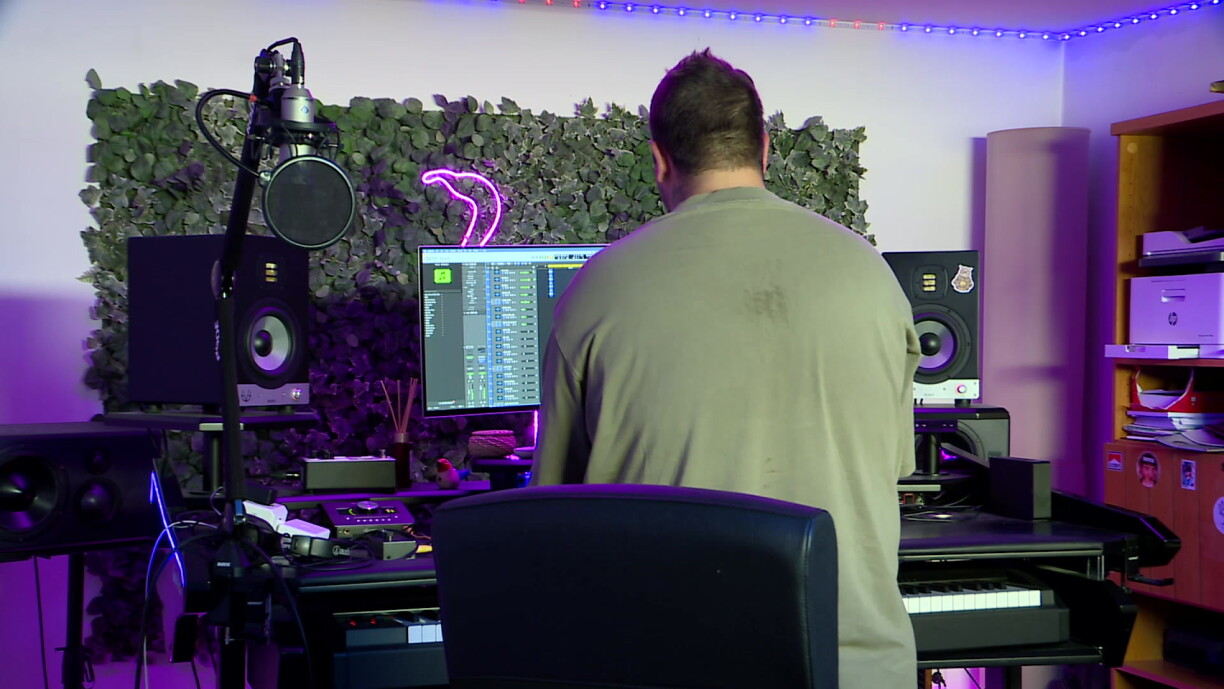
How much he gets involved in the creative process depends largely on the artist’s experience and preference. With newcomers, Tonnar often takes a more active role, helping shape melodies, lyrics, and even performance style. He explains that you need to sense how much help an artist wants and is willing to accept – and make it clear they can say "no" and should be open to criticism. He likens the process to a game of ping-pong, a creative back-and-forth that can spark ideas neither party would have reached on their own.
With artists like Maz Univers who have a clear vision of what they want, the collaboration is different. Sometimes, the artist will develop ideas in the studio and then finish writing lyrics independently. Tonnar is comfortable with both approaches as long as communication is open and the chemistry is right. "As a producer, you are a bit of a therapist", he says. "In our first session, I like to sit down and just talk, to find out who the artist is and what is driving them."
Sometimes, inspiration is lacking, as was the case in a session with Luxembourgish singer Irem. The creative "emptiness" itself became the theme of the song they wrote together. These experiences, Tonnar says, help him grow as a producer, though he admits that he has also made mistakes early in his career, which eventually taught him valuable lessons.
Early on, Tonnar found it hard to say no to artists who approached him for sessions. With his name not yet established, he felt compelled to take almost every job to make ends meet. On the positive side, this broadened his musical horizons. These days, with a stronger reputation, he’s more selective, only declining to work with someone if he has a good reason, such as a lack of experience. When that happens, he will often refer those artists to other producers who might benefit from the opportunity. Sometimes, though, it simply is not the right fit.
His collaboration with the Glueboys, however, was a perfect match. Tonnar recently received a gold record for producing their track “Adria”, which sold over 15,000 units in Austria, a figure calculated through a combination of streaming and sales. The partnership began in Vienna in 2023, where Tonnar met the group through film producer Ganaël Dumreicher and musician Kevin Cool. The chemistry was immediate, and after agreeing to a studio session, the result was a gold-certified song just a few months later.
The Glueboys hail from the Pinzgau region in central Austria, rapping in their local dialect over techno beats, a style Tonnar likens to Ski Aggu, but with a strong dialect twist. He observes that they were not taken seriously at first because they made music in dialect, while most choose standard German to succeed in Germany too, noting that the same happens in Luxembourg as you are frequently overlooked if you sing in Luxembourgish.
Interestingly, “Adria” is not even the most commercially successful track Tonnar has worked on. That title goes to “So Good” by Nosi, which has over 50 million streams. In that case, however, Tonnar says he was only responsible for the finishing touches, with much of the song coming from Nosi himself.
How important is success to Tun Tonnar? He is upfront: while recognition matters, it’s far more important for him to have a great session with an artist he connects with, creating music he believes in. "All I ever wanted was to make a living from music. That’s success for me – being able to earn a living without having to work another job. Everything else is a bonus", he says.
Stream and sales figures, he says, do not feel tangible. The real reward is performing live and seeing people in the audience who genuinely enjoy his music. The industry’s obsession with numbers, in his view, is a pity.
Tonnar believes that the traditional idea of "mainstream" music no longer exists. Thanks to streaming and the diversity of playlists, artists in any genre can find success, from metal, and hyper-pop, to techno. For Tonnar, this diversity is one of the most positive things about the streaming era, broadening listeners’ musical tastes and encouraging artists to experiment and push boundaries.
When asked about returning to his own Turnup Tun project, he admits that his priorities have shifted. Right now, he enjoys producing for others, a role that pays the bills and allows him to focus on the creative collaborations he values most. The Turnup Tun project is not over, he insists, but at the moment, his focus lies elsewhere. Fans can look forward to more creative surprises from Tun Tonnar, whether as artist or producer, in the near future.





