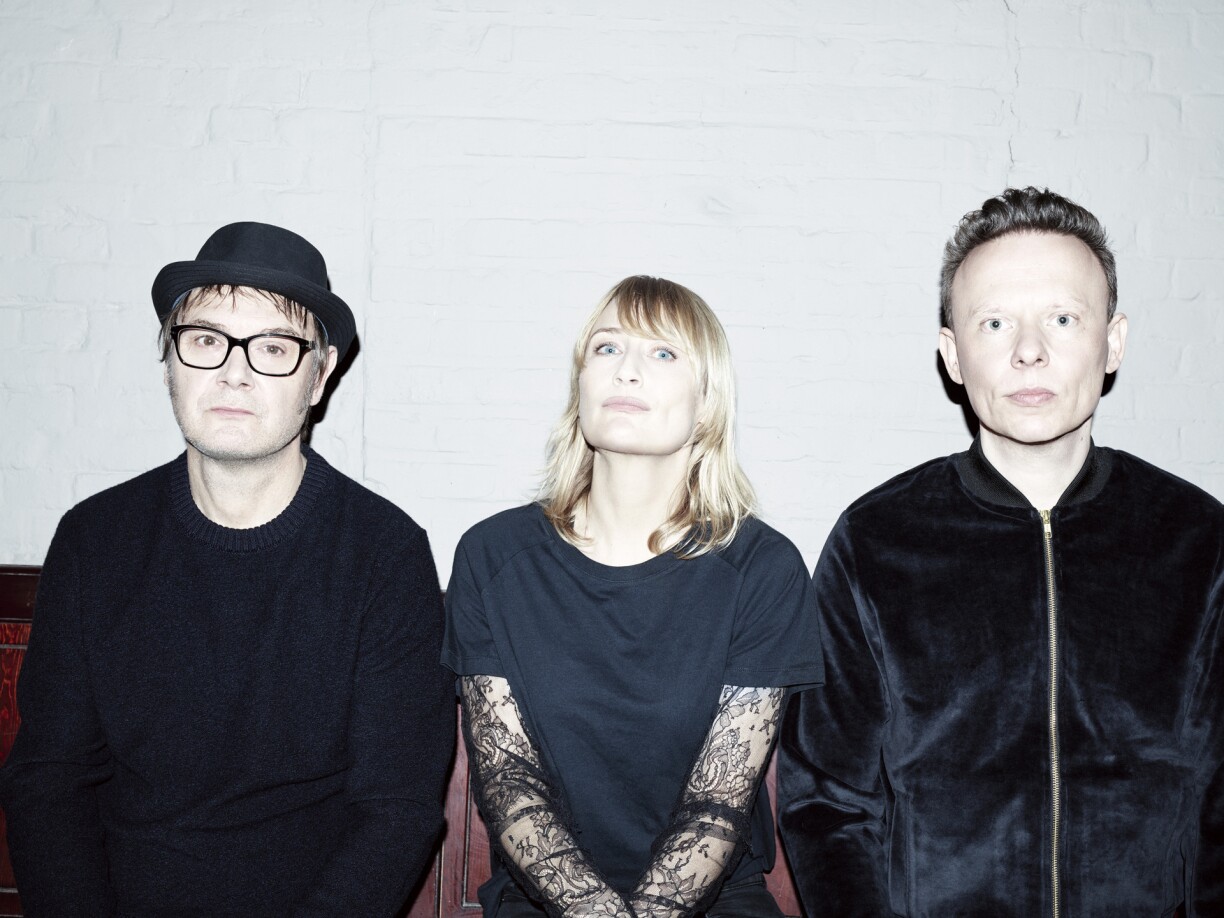
Alex Callier of Hooverphonic is very easy-going – “I just finished mixing an album and have nothing until later in the day” – to the point where he could have talked for another hour if I had let him (“I talk too much I know, it has advantages and disadvantages. It’s a lot of work to filter”). We started slightly awkwardly because my response to “how are you” was “Yeah pretty good, you know, sun’s out guns out and all that” and admittedly, there is not much one can say in response. Indeed, I myself was slightly horrified at what I had just said. Fortunately for me, Alex is a professional who quickly took the conversation to what matters: music.
"We have our first try out tonight where we’ll finally be on stage with a live crowd again after a year and a half, we’re thrilled!" he says without breaking stride.
Of course! Where is it you’re playing tonight, you won’t be in Luxembourg until later in the week, right?
It’s in Puurs, a really small town… not even a town it’s more like a village.
Is that strange to you, the difference between headlining something like Rock Werchter versus playing in a small village?
(AC) I love it actually. I like the contrast, sometimes we’re on stage for 20 thousand people and sometimes we play in small theatres. I really enjoy playing in small theatres to be honest, it’s not making you rich but it’s warmer, you have closer contact with the audience, you can talk to people, and you get more personal. I like smaller venues but at the same time it’s great to be at big festivals headlining. it’s like everything in life, you know I’m very happy with contrast. Some bands play only areas but that’s not my dream. My dream is playing in different kinds of environments and situations. Otherwise it becomes a routine and that kills creativity, you need something to trigger you.
They say that about working in offices, that if there’s any way to kill creativity or productivity in work, it’s to limit people to one space and one time without any freedom. Is that partly what attracts you to being a musician in the first place? This constant change?
(AC) That’s the thing, after all these years we’ve been a band for 26-27 years. It’s a very insecure life, and for some weird reason we’re addicted to that insecurity. We like not knowing what tomorrow will bring. Every day is different, sometimes we’re recording, sometimes we’re writing, on the road, doing interviews, photoshoots and the other week we did a video shoot. We like the variety.
But this also applies to the creative process. Sometimes I write in my studio, but sometimes I also like to write in a different environment, on the road or a hotel room. A hotel room can be even more inspiring than a professional studio. Writing music or writing songs I always try to use different kinds of ways to write, sometimes I’ll use piano, sometimes a sample, sometimes a groove, an instrument that inspires me. The biggest enemy of creative people is starting to repeat yourself, which is kind of weird because at some point people also want you to be comfort food. They want their favourite bands not to change too much, but if you don’t change enough then they get bored of you. It’s a balance you need to find, you know?
Well interesting you say that because I had wanted to ask you about something you said in another interview. You mentioned you have a team of people that you have worked with across your whole career – from make-up artists to directors – and the importance of ‘sticking to your guns’, believing in the music and knowing what works. Then again you have also had some change and rotation of band members throughout the band’s career. Can you talk about the difference, the pros and cons, of “change” on the one hand, and “continuity” on the other?
(AC) As a joke I always compare it to two of my favourite artists: Serge Gainsbourg and David Bowie, they have very distinct voices, and their sound is very particular. After a while you could be like “here we go again, we get the idea” but they were always very smart with it. Every album was something different, they tried new things. So I always compare it to a really cool chair, like a design chair. They always made sure to completely redecorate the room so the chair wouldn’t become boring. Well with us it’s different, we leave the room the same, but we change the chair every time, that’s what we do.
But I have to say it was really good to get Geike back after such a long time – I mean 11 years really – and it wasn’t really our choice. We understood why she left, she was 17 when she started and going on the road for 11 years. It was one big rollercoaster ride, and I can imagine, doing what we do, at 28 you have a bit of an early midlife crisis, like “is this it? Is there something else? Can I do something else? Can I do this on my own” and she really needed to follow her own path for a while. And then now, we’re all the same but also different. We’re a bit older, and when we started talking again the chemistry was back. And in the end, that’s what it’s all about, it’s all about chemistry. Back in 2007 it was gone. But if you wait a while, it can come back.
But in the end, we’re really happy that it happened the way it happened, the big gigs with Noémie [2010-2015] and going on the road with Luka [2018-2020]. It gave us constant change and different energy. When people ask me if this working with Geike will be until the end of days, I always say as long as the chemistry’s there we’ll keep on working together. That may be for the rest of our lives, it may be 5 years, 10 years, who knows?” And so we’re back at insecurity again! It’s what we do, it’s a creative practice, it’s not something you can force. But for now, we’re really happy to be together again.
We made the band big together. We started with Geike in ’97 in a small venue, in Orangerie in Brussels, and 4 years later we were headlining [Rock] Werchter. The whole image was created by all of us and going through that evolution creates a strong bond.
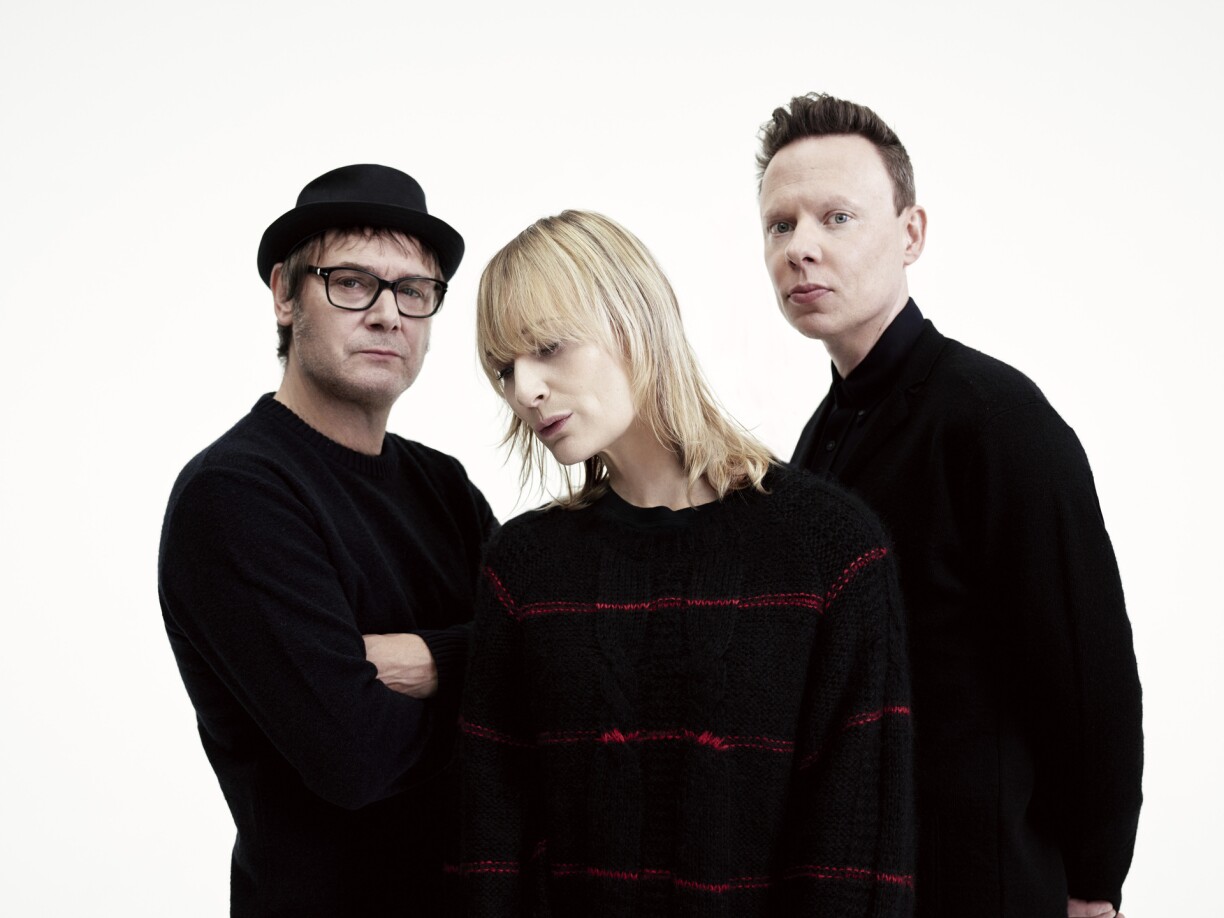
You’ve just touched on it now, how can you compare being a musician now to being a musician 20 years ago? It’s so strange thinking about it, but the entire way we consume music has changed. I read in a really old interview how you were on MTV, and I definitely don’t sit and watch MTV for the music the way I used to! What do you think about it?
(AC) Yeah, it’s completely changed. We used to earn money selling records, and touring was promoting selling records. Nowadays recording an album is promoting touring and you earn money playing live. When we started because we still selling records there was a budget to go off-grid for a year to write and to record, you were on the road for 2 years then you cam back and wrote an album. Now you really need to keep on playing live which makes it more competitive. Every band wants to be at every festival every year, play all the gigs, all the venues. Spotify is great for users but for musicians it’s not great to be honest.
On the other hand, technology made it possible to be creative on the road. I had a studio on my laptop so I had a studio on the road, so I could keep on working and writing songs and music. And that makes touring more interesting to me because I can be creating while touring. You can also write long distance. I wrote songs with Luca Chiaravalli, most of the time we were together in a studio but because of Covid, in the first lockdown with him in his studio, me in my studio, we had a Zoom link, we had a Pro Tools link, and Full Moon Duel from our new album was written that way for instance. So that changes a lot.
Promoting is becoming more difficult, I guess. People think that because of Spotify and other platforms you don’t need a record company, but I think you need it even more because you need to stand out and need to notice you. On Spotify there’s so much music, most people don’t even know where to start. So it’s important, even more important, to have good marketing. The only thing that hasn’t changed is we’re still passionate about making music. I mean most younger bands don’t earn money that way but they do it because they love making music and that love is stronger than earning money. For us as an older band we have a following, so we do earn some money from it, but you really need millions and millions of plays to get some kind of income out of it. For young bands that’s not that obvious to do, when you start up. But music is like water, it will always find a way to go further. I always try to look at it from a more positive perspective. It’s changed, it’s different, but people will always like making music and people will always like listening to music.
But the experience of music changes. Our last album is only half an hour because people don’t really have the time to listen anymore. They listen in the car, they have their phone, they’re making calls, really we’re listening a fast life. So I’d rather make a very good quality album that’s short that people listen to rather than one where people skip the last 4 songs. That’s something you often see, and you can obviously see how people listen to your music. They start the first 5 and then they skip a song, and then they skip again. We’re living in a skip culture. Sometimes you wonder whether you even need an album or whether you just make singles like in the 60s, and a lot of younger bands just make singles. But the thing is, you can fight technology as much as you want but you’ll never win. It won’t go away so all you can do is make something cool with it, make the best out of it.
With some albums I feel like there are definitely “filler” songs to just take up space, so it also makes sense to just leave those out. EPs are also becoming more popular I think, with 5-6 tracks but you do tend to listen to the whole thing then. Considering you have this limited time to impress upon your listeners, what kind of reaction or feelings do you hope to trigger?
(AC) Well to be honest I really wanted to touch people. They have to feel something when they listen to the music, that-s the important stuff. I was listening to this one French artist, and you listen to it and immediately you feel kind of dreamy, happy, whatever. For me the emotion needs to be there. And emotion of course can be all kind of emotion.
But I also like strong melodies. For me a song should stick. When you listen to an album 2-3 times, the songs should nestle themselves into your brain. My favourite songs are like that where I find myself thinking “this is a great melody, this is a great tune, this is a great lyric”. If after 5 times if nothing kind of stays with the listener then you’ve made a bad album. it didn’t trigger anything. Great melodies linger in your mind and when that happens you’ve achieved something. A melody that survives time.
Of course I’m dreaming about an album that people keep on playing for decades but I’m not sure if that’s still the case. Now everything switches really fast and I’ve got to be honest, last year I listened to Other Lives’ latest album and it’s a great album, I listened to it for weeks almost daily, and then at some point there’s another album and you start listening to that. To be honest you need a couple of hits to get into playlist and people play these, and that’s how you stay with people. There was that Wikileaks thing 10 years ago, where a big shot of Sony US said in an email: “We’re no longer interested in new music, evergreens are the way to go”. It’s shocking as an artist because you want to keep on writing new music and you hope people will listen to it, but on the other hand, from a business perspective, I get it. “Mad About You”, our evergreen has played millions of times on digital platforms and keeps on getting played millions of times. That’s already is an achievement. But I make music because I need to make music. Last year I stopped, I quit working for a while and became depressed. I went to a psychologist and she asked: “Did you ever think maybe making music is your therapy?” and at first I thought “yeah whatever”. But I started working again and I felt better, so for me it’s just something I have to do, I need to do it, and I hope that there’s an audience for it, that they’re touched by my music. And I know they are because otherwise we wouldn’t still be making music, but that’s why I listen to music.
They need to grab me, take me on a voyage, take me on a trip to another place. And that’s also while I love touring. Raymond and Geike are touring people and I love being a in a studio, but I still really enjoy being on tour, and I do need that sometimes, to connect with the fans and the people who listen to the music. I was at a Hooverphonic exhibit in my hometown with my mum and saw this guy who said he was our biggest fan and loved our album. When he told me his favourite song – “Belgium in the rain” – I said I was thinking of making it into a single but he said: “Don’t do that, there are better singles on the album’ and it’s great to have that honesty from your fans.
Coincidentally, “Belgium in the rain” turned out to be a bit of a prediction. Alex also shared that the song was originally written in Belgrade and called “Belgrade in the rain” but was changed to “Belgium” while driving through rainy Luxembourg and into Belgium. We ended the chat there and both went about our ways, saying we might meet at a gig one day.
Hooverphonic play the Abteihof Echternach on Saturday 31 July, click here for ticket info.





