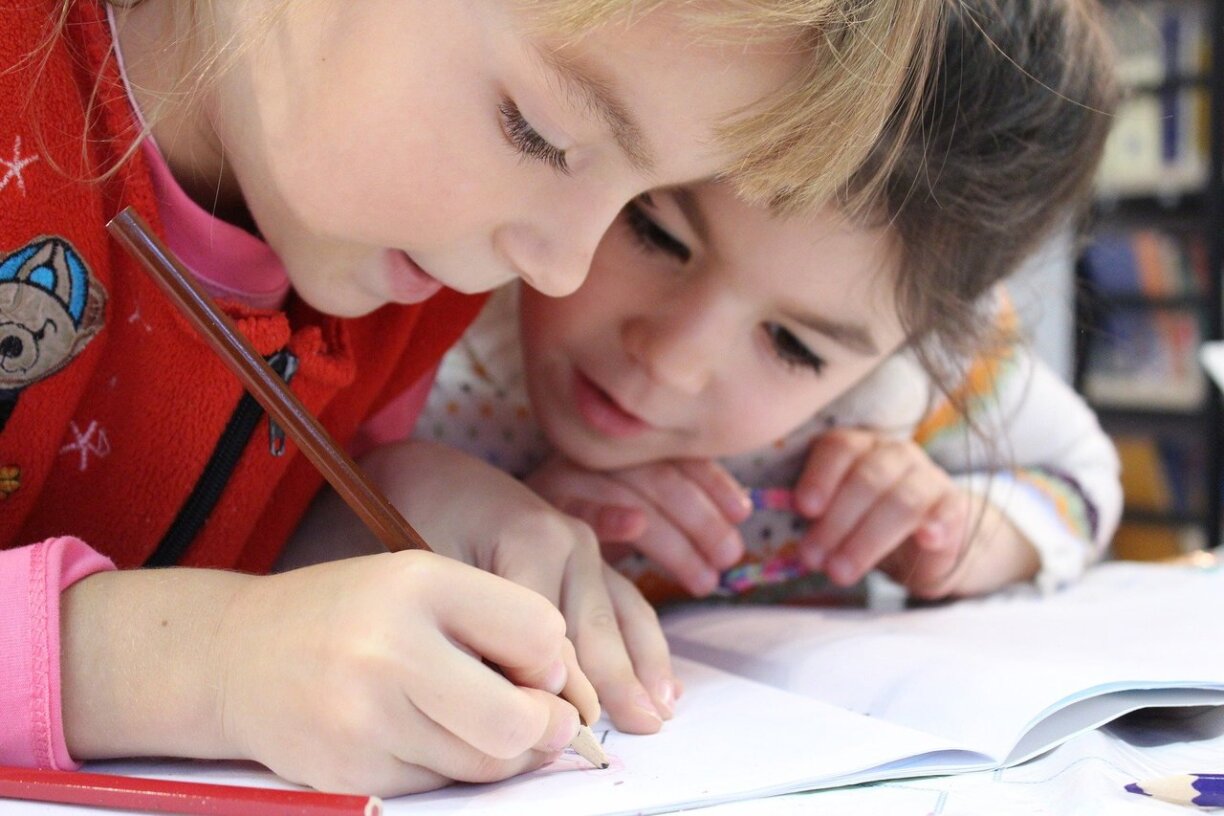
It seems that governments are slowly grasping the fact that equipping pupils with digital skills in order to prepare them for the digital future is essential. Citing, amongst other things, a lack of necessary qualifications amongst the current workforce in Luxembourg, Minister for Education Claude Meisch announced that coding and algorithmic thinking is being introduced into the primary school curriculum.
I agree with Minister Meisch’s assertion that young people need to be primed for the changes that are to come, for the changes that are already well underway. For while the world of work and employment is still in constant flux, there is no doubt that digital technology will be its defining feature of the future in many ways: big data, automation, coding, renewable energy and technologies are all areas that are currently flourishing.
So I also fully agree that ensuring Luxembourg’s younger generations will be able to compete in the job market is a priority, especially since we don’t yet know how exactly technology will shape our future, and to what extent certain jobs and skills will become obsolete. Predictions remain just that, with numbers fluctuating as our understanding of technology and its capacities evolves. Meanwhile, we have all, in some capacity, seen or heard the numbers bandied about as to how many are at risk of losing out in view of impending automation – the BBC forecast 1.5 million jobs being replaced in the UK alone. This number is magnified to 20 million once we consider the world at large, and some outlets calculate that it could affect up to 50% of the global population.
These numbers vary from country to country, however, unsurprisingly, the technological transformation will negatively impact those in already precarious positions most, that is, those employed in low-skilled, repetitive and routine work. Think: manual labour, cashiers, and bar staff. Think: women, young people, and part-timers. There will be new jobs created where others are lost, but since it is higher education and specialisation that will be our saving grace, think: all those of low socioeconomic status who already struggle.
But I digress. This isn't the angle that I want to talk about, as significant as it is. Because while governments are always looking to ensure that people are employable, they are – as always – neglecting the side of the equation that requires a human touch.
Neoliberalism and market ideology, the dogma of the 21st century, dictates that human beings need to be productive and efficient, that we fulfil our function and contribute to society. Cogs in a machine, the metaphor supply is bountiful. What this mass production doctrine does not require is an understanding of the mental and emotional impact of a force that fundamentally transforms our way of life. I find this bizarre. From a purely utilitarian point of view, the happier and healthier a population, the more productive they can be.
Without providing the tools to negotiate online bullying, inappropriate content, the social media minefield, feelings of isolation, or whatever else might accompany the digital future, we aren't exactly setting up the best foundation for future generations to thrive, let alone survive. An LSE report has already stipulated that , despite already using it, children under the age of eight are not really aware of what the internet actually is, let alone how it might be risky. And while parents and older guardians might be aware of the dangers, they often remain in the dark about what younger people actually get up to online, nor are they really cognisant of how children mirror behaviours relating to technology use.
I am by no means advocating for increased surveillance and monitoring of internet activity, and too often communities are swept up in moral panics pertaining to new media. The proliferation of apps that parents can use to track their offspring’s online activity is in itself a worrying development, and the number of articles facilitating a parent’s quest to spy on their child is worrying, but not surprising. Adults will always try to control and curtail young people’s behaviour, and young people will always invent new ways to circumvent restrictions. As this cat-and-mouse paradigm is likely to merely continue and develop as technology allows it, we should consider methods that would ensure open, honest conversations and safety. We all need to learn how to assess risk, and we all deserve a right to privacy.
Moral panics surrounding new media – or even old media – and the potential danger they represent are not new. Yet so often these legitimate fears are co-opted by other forces and used to exert control over those who are already voiceless. We can't just ban everything we don’t like, as it doesn't solve the problem (this extends to so many other areas that we don’t really have time to discuss here… maybe next time). The call of the unknown and the mysterious forbidden is always stronger to those looking to rebel and assert themselves as independent, autonomous beings, which most of us do during our teenage years.
But I am also not advocating a laissez-faire attitude. My question is, how are schools preparing for these challenges? There is a sore lack of education and guidance on behalf of schools and the government that sets curricula. This is not to say that support is nonexistent: people can find help most notably from the platform beesecure.lu and the events they organise. These resources are limited in their application however. They are often not mandatory, and rely on schools to arrange schooling sessions that last two hours, which just isn't enough.
What has been dubbed the fourth technological revolution is impacting not only our sociocultural landscape, it is shaping the way we communicate with others, identify our selves, and learn about the world. It informs how we live and already is a staple of modern life.
And still, we are not providing people – not only young people, but individuals of all ages and backgrounds are lacking access to digital literacy – with the tools to make the most out of their lives, to successfully navigate issues from fake news to cyberbullying. How are we preparing people for the aftermath of “revenge porn”? Of leaked photos? Of embarrassing screenshots? We already often fail younger people when it comes to old school bullying, and this doesn’t even scratch the surface of what it means to be subject to cyberbullying. How do we provide a safe space if harassment can invade the home, rendering traditionally comforting places threatening? What about privacy and data mining? Grooming and phishing? Accessible content as regards different methods of self-harm? And these are the more obvious dangers I'm talking about.
There are mental health crises across the board in Western cultures. Whether due to more stressful lives, the medicalisation of society or an increased awareness about emotional and mental disorders, people are struggling. The stressors that are leading to record highs of anxiety and depression are often tied in with social media use, but we aren't providing anything useful to cope with the reality of what it means to be human. Work is important, but surely health comes first. Teaching mindfulness and encouraging healthy coping strategies is already proven to be beneficial to children from mood regulation to concentration, so why isn't it inscribed in the lesson plan?
There are so many ways in which we could prepare future generations for the obstacles they will have to overcome. Employment is one of them, but our emphasis on being a productive member of society feeds into a culture where stress and anxiety are the norm, and this doesn't have to be the case. Coding and algorithmic thinking only go so far if you cannot cope with life itself.
Social and digital media are so intertwined they cannot be untangled, but they are concepts that can be explained. There are ways to navigate even the most futuristic of minefields, so let's start early. Let's prepare.





