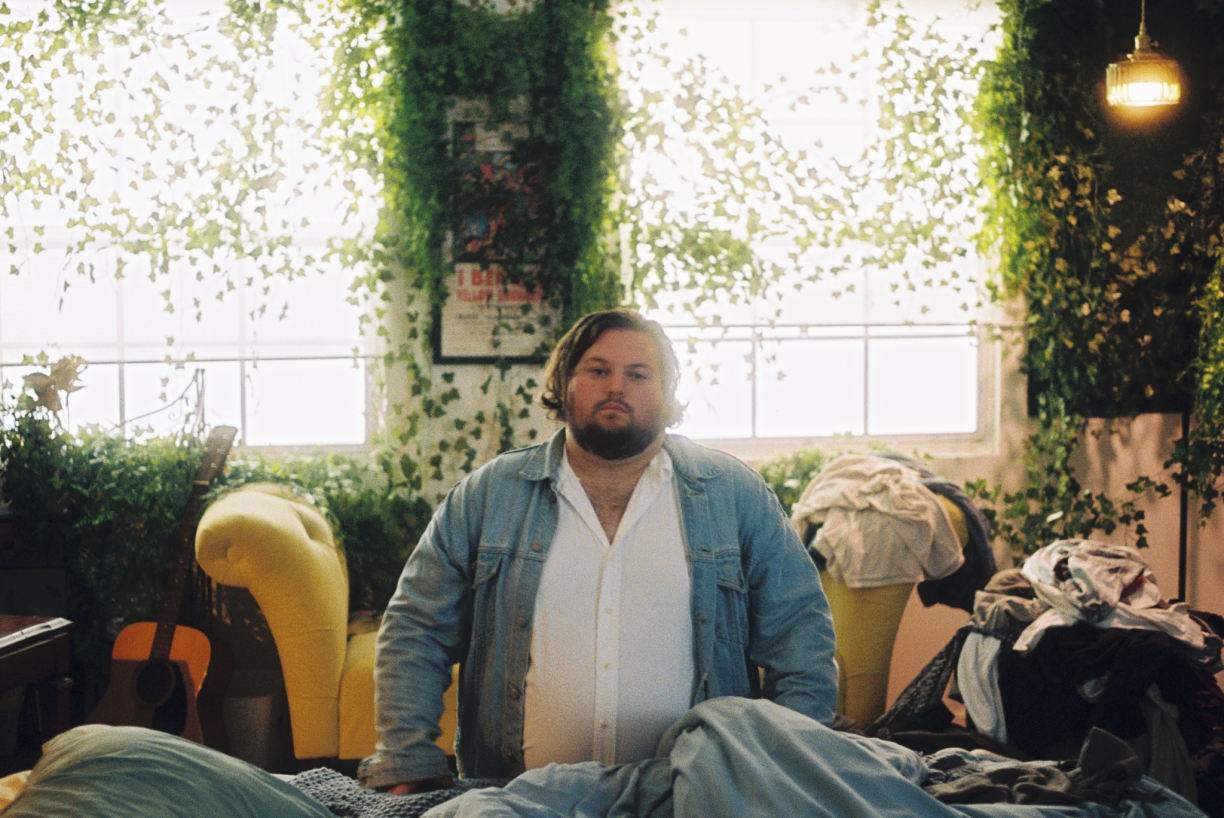
Tyler Ballgame is somewhere in Belgium when we connect over a video call, midway through a gruelling summer stretch that’s kept him away from his home in Los Angeles since June.
The Rhode Island native, who released his debut album For The First Time, Again in January, is touring a mix of festivals, headline shows, and support slots across Europe and the U.S. and he’s learning something new at every stop.
“I’m right in the middle of a super long stretch and I’m kind of delirious, but also kind of blessed,” he says, laughing.
The tour has been an education in how audiences express appreciation - or don’t. “It’s been really interesting playing so many different types of rooms and different size crowds, and different types of crowds, and different cultures of listening around Europe and the U.S.,” Ballgame explains. “I’ve been learning a lot.”
In the United States, the feedback loop is immediate: “People let you know by their body language and by their behaviour if they’re into it or not. You can kind of read their eyes and read their faces. If they like it, they’re rocking out and dancing and trying to sing, and if they don’t like it, they’re talking to each other and turning their back to you.”
Europe, he’s discovered, operates differently. “Whereas [with] some of the European audiences, I’m like, is this going well? Can someone let me know?”
I tell him Luxembourg crowds have a reputation for being hard to read, and that I once saw an artist have a panic attack on stage as a result. His response is generous: “People are really sweet. I mean, they’re there to see the show, and are quiet and listening. It makes me want to play, like, chamber music, folk, chamber folk, and get a harp out or something. But bringing a six-piece rock band and trying to dance and strut around and rock out, it’s like, is anyone, does anyone want to do this? Is anyone having fun?”
The payoff, he notes, comes at the end: “They give you an ovation, and they want you to come back out. So it’s like, oh, OK, you like this, it’s just a different culture of listening.”
At the Rotondes show in August - part of the annual Congés Annulés series - one thing that stood out was the range of ages in the crowd, pre-teens alongside their parents, older couples next to university students. Ballgame has noticed this across dates. “This music is so grounded in analog process and the influence of the 60s and early 70s,” he explains. “I get a lot of messages from people saying, ‘Oh my God, I sent this to my dad. It’s like what we used to listen to, and now we’re coming to your show together.’ It kind of has that timeless quality.”
“It’s cool that it’s not just people who look like the band, in the band’s age group, which I used to see growing up,” he adds.
Ballgame’s official bio invokes Elvis Presley, Roy Orbison, and Harry Nilsson - and I don’t not hear it, but to my ear the reference points are wider and delightfully diverse. My own notes from the show read: Macy Gray, Lynyrd Skynyrd, Devendra Banhart, Anohni (of Anohni and the Johnsons). I ask him whether he’s consciously pulling on these threads, and how he finds his own voice among them.
“It’s a pretty interesting topic because I feel like today, there’s so much emphasis on individuality and ownership, especially as it relates to being a singular artist,” he says. “People think you should invent something from nothing and that it’s totally yours. I just don’t really see music or art making as that. I exist within a heritage and within a lineage.”
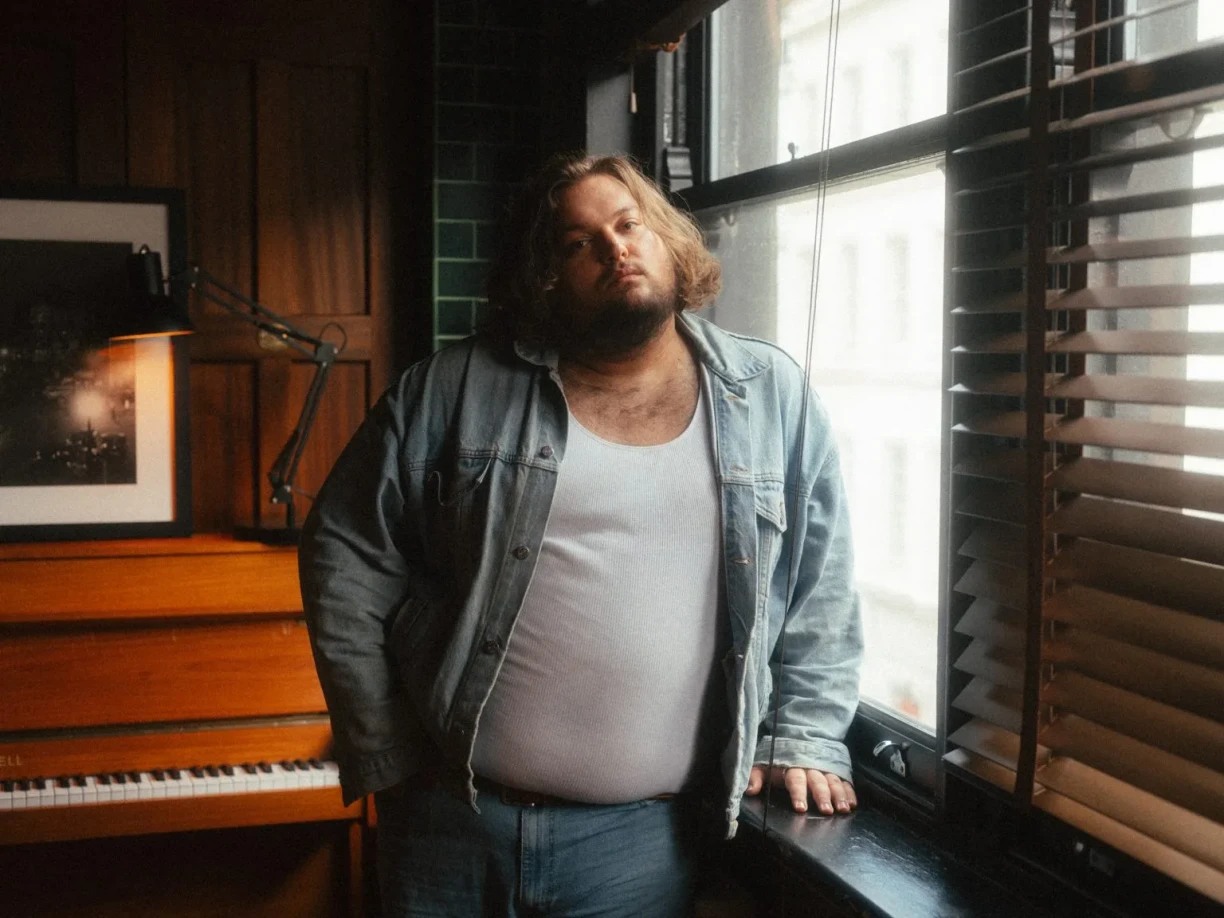
He describes the “great paradox” that is songwriting: “There’s only so many notes and so many chords and words to say within that structure. It’s everything you’ve ever heard, all mixed together and run through the prism of you. I’m the only one that can write these songs, but it also sounds like everything I’ve ever heard.”
The self-awareness comes after the fact, not during creation. “I never think about [other music] when I’m writing. I think about it right after we record it, and go, oh, it sounds like Fleetwood Mac, and where can we lean in and where can we lean off? It’s really just being guided by what’s fun to me and what stirs that spark inside me and not thinking about anything else.”
Ballgame’s songwriting has evolved significantly since his early days. The track “Got a New Car”, the only song on his debut that predates his move to Los Angeles, offers a window into his early approach to songwriting: “I think that song is pretty nonsensical and kind of abstract, which was, I think, just related to the headspace I was in at that time, very psychedelic, kind of like a self-mining time.”
Los Angeles changed the equation. “Once I moved to LA, you’re just surrounded by so many social circles, and kind of putting yourself up against others, not in a competitive way, just in a, ‘Who am I as I relate to others?’ way,” he says. “I was in such isolation in Rhode Island, that it was just this kind of fantasy world in my head that I was writing from, and then it became grounded in real relationships and real community.”
He’s also growing up, and is perhaps less interested in cleverness for its own sake: “Getting older and not being in psychedelic spaces as much makes me write more groundedly, and in a more concrete way, trying to be very simple and very human and trying to be less clever.”
This is perhaps where the comparisons to Elvis, Orbison, and Nilsson resonate the most: the immediacy of the lyrics and melodies that made their songs timeless classics are the same qualities that have helped Ballgame’s music connect to listeners of all ages.
Ballgame reveals that album two is finished, and that it represents a departure. His recent single “Live It Down” sits between the two records, it’s “very much an LA song, like kind of like a relationship song, like a breakup song,” but one that didn’t fit neatly on either album.
The new record went in a different direction entirely. “I wrote probably 100 songs for it, and we recorded 25, and we’re going to release probably 11,” he says. “We did it all live to tape. It’s very much a different writing style. It feels more like alternative music from the early 80s mixed with 90s. It feels less nostalgic and less grounded in the voice and more in the writer, which is interesting, and I’m kind of like figuring this all out after the fact.”
“It feels scary to not be doing what I just did,” he admits, “but also, I know there are people that might appreciate that.”
When I ask whether he feels like he’s found his voice or is still searching, his answer is characteristically philosophical: “I feel like we’re liquid, you know what I mean? Like we’re very fluid. Writing, there’s no rules, it just comes from you and there’s no structure really, which is so beautiful, it’s just a real-life conversation with your life and what’s around you and a processing of that.”
People who attended the Rotondes show told me the same thing: the record is amazing, but Tyler Ballgame is something else live. I ask him about the experience of performing, and whether his stage name functions as a kind of alter ego.
“As a frontman and as a singer in a rock band, that carries with it certain cultural archetypes,” he says. “It’s building on certain expectations and part of wearing that mask, of fulfilling a certain role within society, it grounds you and it also frees you to inherit a role, and also adjust to that role, and fit yourself to that role and change that role.”
There’s a deeper liberation at work too: “And also to get rid of, or to un-inhabit, parts of you for a second that maybe are causing you to suffer, or maybe cause you to think negatively or something. Being in a larger body, being in a non-typical entertainer’s looks and what people expect from you… I think there’s power in challenging that expectation.”
On stage, he says, the everyday noise falls away: “I’m not thinking of, oh, what did this person say to me, or what do I have to say to this person, or how much money am I going to have to save for this… I’m not thinking of any of that on stage, those thoughts that plague all of us. I’m just within this sacred vibration of music, and it’s music that comes from me and my soul and my spirit. And it’s imbued with light of the love of my friends who are on this journey with me. And to dissolve into all of that, it’s really a gift, to be able to do that every night and bring that around the world and see people react positively, it’s a real special thing.”
Ballgame’s music radiates joy, which I find remarkable, since he’s been open about past struggles with depression. I ask him how he turns sadness into something so uplifting.
“I think it’s purpose,” he says simply. “I think purpose is the cure for a lot of depression, because it grounds you within community. And it is that thing I mentioned at the top, you know, that illusion of individuality that the Western psyche calls for, this egoic ladder state of becoming. That really doesn’t satiate us, doesn’t feed us, our true spirit, like dissolving into an experience does.”
Hangover host Sarah Tapp managed to ask the man/myth himself for three more musical recommendations on this special episode of the Algorhythm.
He’s not immune to bad nights: "Obviously I’m human, and there are days when it doesn’t click, and we all have a bad show.” But music works in mysterious ways, which he finds sustaining. “Why is - how is - a vibration imbued with human meaning? Why does a minor chord sound sad?”
Purpose is “to be able to play a part in that mystery and witness it. We all know cause we’ve gone to a show or hope people have been freed by music. It’s that, and to live your life and devote your life to the craft of that is divine purpose. It’s really beautiful.”
Ballgame studied songwriting at Berklee College of Music, and while he admits he was “a bit distracted and maybe aimless” as a student, certain lessons stuck: “The songwriting department classes I took—basically, how to create a workshop in a communal setting, which mimics songwriting rooms I’ve been in. And also the performance studies classes, giving yourself that musician hat, like, ‘I’m now a musician. I’m a songwriter, and I’m going to carve out my life and time in my life to work on that.’ That was really valuable.”
But claiming that identity wasn’t easy, particularly on the east coast. “Being a songwriter, people don’t really know how to receive that,” he says. “They say no, what do you actually do? I work in an office and they go, oh, OK—it’s almost a shame that you have to carry, that dare to dream of some foolishness. I think that was pretty pounded into me.”
For years, he kept going quietly: “I wrote by myself for a long time and kind of just wore that shame in bar gigs, playing covers and stuff, and then I’d go home and write ‘Got a New Car’ and these songs that I knew were good, and a couple of friends told me, you’re really good, you know? Don’t give up. When I’d send stuff to them, they’d save the songs and keep them all there… chronicling my work because I wouldn’t.”
The pandemic, paradoxically, became his launchpad: “The world asked nothing of me, and there was this chance, like, oh, everyone’s living on my terms now. Everyone has to stay home in their basements and look out the window. And that freed me to build up the courage to try for real.”
By the time he entered the industry, he’d been writing for 15 years. “I already knew who I was. I was already 28, 29, so I wasn’t as malleable to the circles and energies I was interacting with. I was this self-formed thing that was like, oh, I’m this, I’m not this, and if you like this, then let’s work together.”
The second album is due in the second half of next year, and Ballgame is working on visuals—including, potentially, a film. The final recording sessions took place at Abbey Road Studios, where the band made tape loops tying together all the album’s themes. “It’s very cinematic and it feels like a bunch of memories of a time and a place,” he says.
And then, casually: “At Abbey Road, we got to meet Paul McCartney, which was crazy and was very much like the universe saying, all right, you’re doing the right thing, keep going. I got to talk creativity with him and talk music, which was insane.”
Does he ever stop and think, how did I get here? “It’s crazy. And then literally a week later, I was on stage singing with Joan Baez at Newport Folk.”
The mention of Baez brings us to Ballgame’s opener on the Luxembourg date, Marla Moya, whom he met through an LA-based songwriter named Lucy Clearwater. “Lucy has these amazing nights where it’s just all her friends and people who are stopping through town and we just play songs to each other and sing with each other, and there’s no industry motive. There’s no audience. It’s just for the love of writing and for the love of community, and it’s really special,” he says.
“I’ve met so many people through that, and it’s always good people, and it’s always good music. I would put the songwriting power in any room in the world up against that one.”
It’s a fitting note to end on. For an artist whose music bridges generations and whose philosophy centres on dissolving the ego into something greater, community isn’t a nice-to-have, it’s everything.
“It’s more important than numbers and streaming and money,” Ballgame says. “Feeling that you’re a part of something and being inspired and carrying that energy, it’s so important for being an artist.”
Listen to Sarah's full talk with Tyler Ballgame on RTL Play.
Tyler Ballgame’s debut album is out now on Rough Trade. His new single “Live It Down” is available on all streaming platforms. Album two is expected in the second half of 2027.
🎵 Song 2 podcast: Tyler on why the second track is the most important (or isn’t)





