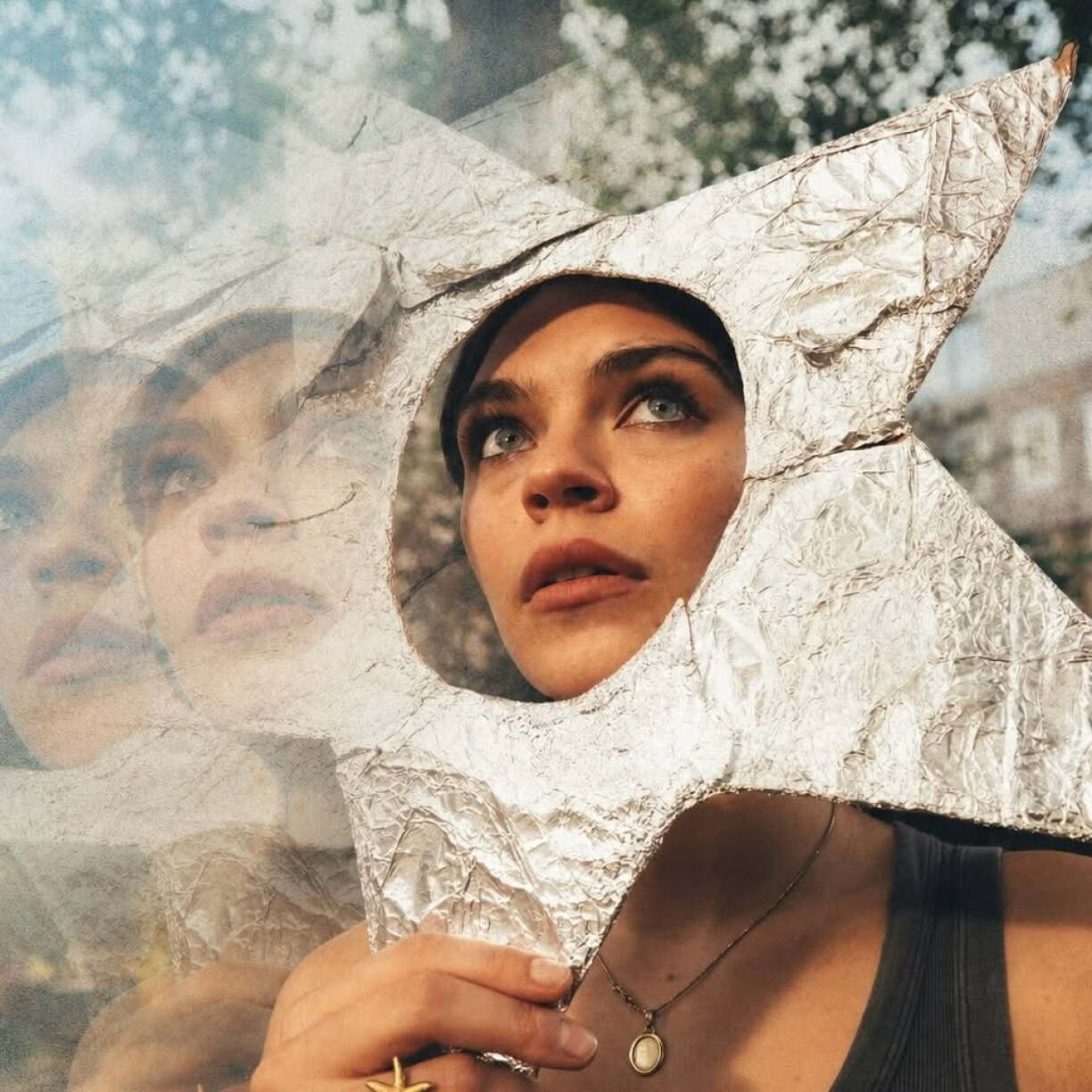
With new single Little Star arriving on 13 November, she joined Stephen ‘Steps’ Lowe on RTL Today Radio's The Lunchbox to discuss life after the Eurovision spotlight, the challenges of going it alone and why she's hungrier than ever to make music.
For many young musicians, performing at Eurovision would be the culmination of years of ambition. For Eva Maria, it feels more like the beginning.
Having represented Luxembourg with Mother Nature, the singer-songwriter is now navigating the rather different world of being an independent artist. Gone is the enormous team that accompanied her Eurovision adventure, replaced by the realities of organising promotion, contacting radio stations and, as she laughs, even doing her own makeup.
But rather than feeling overwhelmed by the change, Eva Marija seems to have developed an even greater appetite for the music business.
Her latest single, Little Star, arrives on 13 November (you can get an early taste of it on Drive with Tom Einarsson at just after 5pm), offering a bridge between the artist who stepped onto the Eurovision stage and the one she's becoming.
Although Little Star is a new release, the song itself dates back a year, having been written shortly after Mother Nature.
Eva Marija was just 19 when she wrote it, drawing on her feelings about growing up, entering adulthood and taking her first steps into an industry that can be both exciting and intimidating.
“It talks about not being scared of growing up and not being scared of kind of stepping into this world of the music industry and just being an adult in general.”
The message has taken on an additional significance since Eurovision.
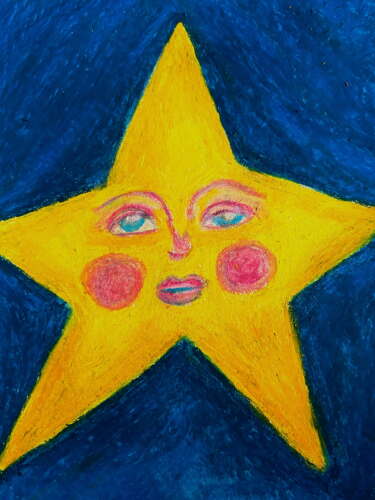
Now responsible for steering her own career, Eva Maria finds herself facing many of the uncertainties she was writing about before her Eurovision experience began.
“Being an independent artist after Eurovision, which was the biggest project that I've had so far, it's like, ooh, where do I go from here?”
She describes the single as the last of the songs written during that earlier period, with future releases set to explore new experiences and stories that have emerged since.
For several months, Eva was at the centre of one of the world's biggest music events, surrounded by a professional team and enjoying the sort of exposure most emerging artists can only dream about.
Returning to everyday life might have been difficult, but she says the transition was relatively painless, largely because she'd made a conscious decision to remain herself throughout the experience.
“I don't want to shapeshift into another form of myself, or like a fake version of myself for TV.”
The biggest adjustment was practical rather than emotional.
Suddenly, the infrastructure that had supported her during Eurovision was no longer there. She was back to arranging things herself, from promotion to approaching radio stations.
But the experience also provided something invaluable: confidence.
The contacts she made, the lessons she learned and the experience of performing on such a large stage have all helped her become more willing to take risks.
“It gives you motivation to be a bit more daring and a bit more fearless and just go for it,” she says, “I've gotten a taste of how it feels like being on the big stage. And it just kind of makes you more hungry for it.”
There's another side to Eurovision that isn't always discussed.
For a brief period, an artist becomes the focus of extraordinary attention. Television appearances, interviews, social media engagement and streaming figures can all increase dramatically.
But what happens when the competition ends and the spotlight moves to somebody else?
It's a question Eva has clearly considered. Asked whether she worried about being forgotten once Eurovision was over, she admits that the answer is both yes and no.
She had already developed a plan to keep releasing music, promoting herself and maintaining a presence on social media.
Nevertheless, adjusting to the inevitable changes in audience engagement hasn't always been straightforward.
“When you're during that Eurovision process, there's a big spotlight on you, so naturally you get these big numbers and big views.”
Afterwards, the numbers can be very different.
She admits that seeing one video attract thousands of views while another receives considerably fewer can be frustrating.
The challenge, she says, is learning not to judge success entirely through statistics. “It's hard, like, you need to kind of just dissect yourself away from all the data.”
Her studies in music business and marketing have helped her approach that side of the industry with a little more perspective.
She understands that building a sustainable career requires patience, consistency and a willingness to keep learning.
And she certainly doesn't intend to disappear. “I don't think I'll be forgotten. I think I've also got quite the personality,” she laughs, before delivering perhaps the most memorable line of our conversation.
“You're not gonna get rid of me that easy.”
Eva will also be returning to the Luxembourg Song Contest, although this time in a rather different capacity.
Having experienced the competition as a performer, she's looking forward to watching the next group of hopefuls take their chance.
She's already met a number of the aspiring contestants and is excited to discover who will represent Luxembourg next.
There's also the small matter of handing over the winner's trophy.
Joking about whether she might hold on to it for a little longer than necessary, Eva Maria suggests that might depend on who wins, before quickly making it clear she's kidding.
For her, revisiting the competition brings back overwhelmingly positive memories.
She expects the realisation that her turn has passed might hit home at the after-party in January, when she'll no longer be the centre of attention.
But there's no bitterness about handing over the spotlight. Instead, she appears genuinely enthusiastic about the opportunity for another Luxembourg artist to experience what she did.
One of the more unexpected consequences of Eva's Eurovision appearance has been discovering that younger musicians now look up to her.
It's something she still finds difficult to comprehend.
After all, her own interest in music was sparked by Eurovision winner Alexander Rybak.
Now she's receiving messages from young people who have been inspired by her performances.
“That's crazy that people even think of me as an inspiration.”
Rather than feeling pressured by the responsibility, she sees it as another reason to keep working.
“I don't see it as a weight on my shoulders, I see it as a motivation again,” she maintains.
The relationship with young musicians is something she's continuing to develop through Rocklab.
She'll be appearing at its You Can Sing event in January, joining aspiring young performers on stage. Rocklab has also provided valuable support and advice as she develops her career beyond Eurovision.
And while she appreciates the guidance of experienced music professionals, Eva is equally amused by the directness of her younger audience.
“I think if anyone has been honest the most, it's probably the kids that I meet, which I love, but they're also scary sometimes.”
If Little Star represents the closing chapter of Eva's pre-Eurovision songwriting, there's already plenty of material waiting to follow it.
She's currently working towards an EP planned for 2027, having spent two months writing intensively after returning from Eurovision.
It was, she says, one of the best ways of overcoming the post-competition blues.
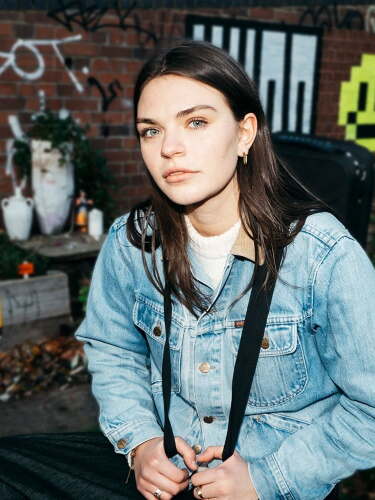
The result is a catalogue of approximately 30 to 35 songs, leaving her with the rather enviable problem of deciding which ones to release.
The EP could contain six tracks, although she's not ruling out something bigger.
“Maybe I'll feel spontaneous and turn it into an album.”
For now, the emphasis is on choosing the right songs and continuing to develop as a songwriter.
“That's kind of the joy of being a songwriter as well, because you get to create and control your craft.”
It's an important distinction. Eurovision may have provided Eva Marija with a remarkable platform, but she's determined that the music she makes afterwards will be defined by her own choices.
Thoughts inevitably return to Mother Nature, the song that introduced Eva Marija to an international audience.
Although the Eurovision result may not have been everything she'd hoped for, she remains proud of the song and the response it received.
“It connected with quite a lot of people from what I've seen, so that, for me, is already a win.”
It's perhaps the clearest indication of how she views success.
The numbers matter, of course. So do the opportunities, the performances and the recognition. But making music that connects with people remains at the heart of what she wants to achieve.
With Little Star marking the next step and a substantial collection of new material already taking shape, Eva Marija has no intention of allowing Eurovision to become the defining moment of her career.
If anything, it's made her more determined to find out just how far she can go.
Eva Maria's new single Little Star is released on 13 November and is available across major streaming platforms.
Her full interview with Stephen ‘Steps’ Lowe can be heard on RTL Today Radio.


