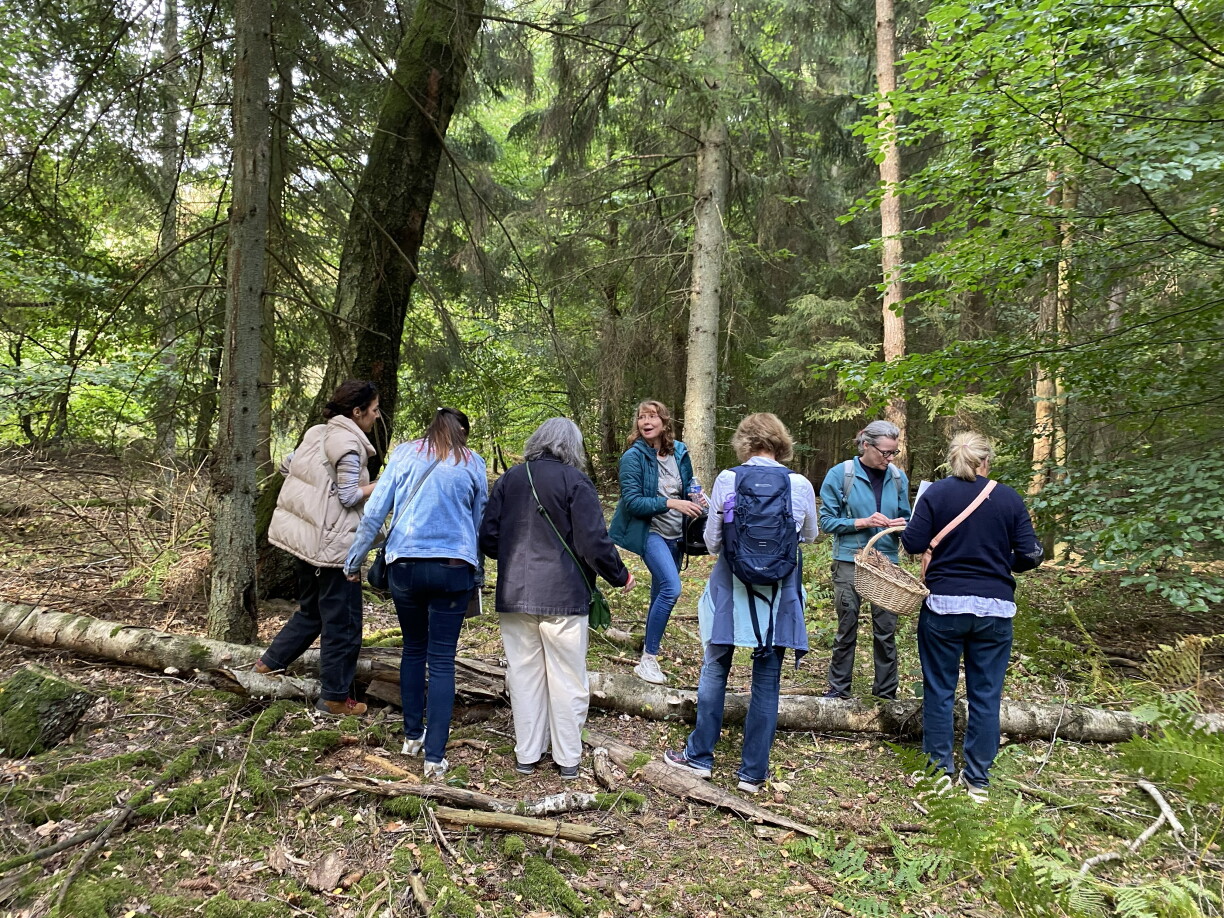
Mushroom foraging is attracting interest in Luxembourg, with guided walks, educational courses, and food experiences offering people the chance to discover the country's rich woodland habitats.
For Luxembourg resident Irina Simoncini, however, the appeal of foraging goes far beyond finding mushrooms to take home. With a background in biochemistry and a lifelong fascination with the natural world, she combines scientific curiosity with a deep appreciation for family traditions.
Having grown up learning to forage alongside her parents and grandparents, she now shares her knowledge through her popular masterclasses and guided mushroom-foraging walks in Luxembourg.
For her, the experience is as much about slowing down, observing, and understanding nature as it is about filling a basket with wild mushrooms.
"I've been fascinated by mushrooms for as long as I can remember", Simoncini says.
She grew up in a family where the forest was part of everyday life. Her father taught her to observe her surroundings, search carefully, and find her bearings.
She recalls that sometimes he would hide behind a large tree trunk and let her believe she was alone. In reality, he never took his eyes off her.
In those moments, she had to pay attention to everything: looking around, taking in the smells of the undergrowth, and listening for the distant sound of a road or a passing train.
She also remembers returning home with large baskets of mushrooms, which her mother and grandmother would carefully examine and clean.
"Their gestures were confident, almost silent. I would stay close to them, fascinated. That is where my passion began", Simoncini explains.
Later, her scientific background in biochemistry allowed her to explore that childhood curiosity in greater depth, learning about the molecules responsible for mushrooms' aromas, flavours, and toxicity.
Despite the Grand Duchy's relatively small size, Luxembourg's forests offer a surprising diversity of habitats for mushroom enthusiasts, she highlights: "You can quickly move from beech woods to mixed forests, from drier slopes to damper valleys, and each environment creates different conditions for mushrooms."
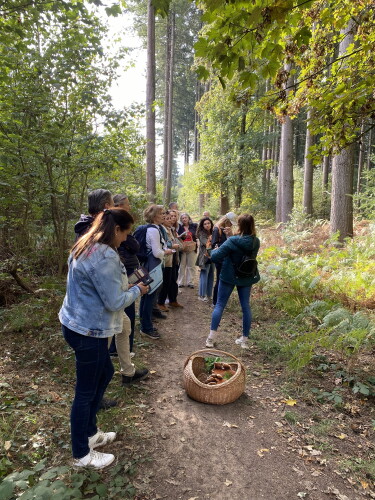
However, exploring these woodlands comes with responsibilities, and mushroom foraging in Luxembourg is more regulated than many people might realise.
For the 55 edible species listed in the regulations, harvesting is limited to one kilogram per person per day, with the limit applying to all species combined.
For other partially protected species, only three specimens per species and per person may be collected for study purposes.
Foraging is prohibited in nature and forest reserves, while in Natura 2000 areas, visitors must check the rules applying to the specific site.
Natura 2000 is a European network of protected natural areas designed to preserve threatened species and habitats. In Luxembourg, the network covers 67 protected sites spanning approximately 72,000 hectares, including forests, wetlands, grasslands, and river valleys.
While discovering edible mushrooms can be rewarding, knowing what to pick is essential. Some poisonous species closely resemble edible varieties, and relying on a smartphone identification app can be risky.
"An app can never guarantee that a mushroom is edible", Simoncini warns.
Proper identification requires examining several characteristics, including the underside of the cap, the entire stem and gills, as well as the mushroom's smell and texture, she notes.
Sometimes, cutting a mushroom lengthways can reveal a change in the colour of its flesh. At the base of the stem, an egg or volva can easily go unnoticed if the specimen is not examined in its entirety.
She adds that trained mycologists may also use a very small taste test, placing a tiny piece on the tongue without swallowing, to detect a peppery or bitter flavour.
Identification must always rely on a combination of characteristics rather than a single clue.
The consequences of getting it wrong can be severe, ranging from serious gastrointestinal symptoms to organ damage and even fatal poisoning, particularly in the case of the death cap mushroom.
"When in doubt, you simply do not pick it", she says.
Mushrooms do not necessarily follow the calendar, and their appearance can vary depending on weather conditions, Simoncini points out: "During dry autumns, I sometimes notice later fruiting, once the rain returns."
However, she is careful to distinguish her own observations in the field from established scientific conclusions, pointing out that one particular season is not enough to establish a direct link with climate change.
Despite the growing visibility of guided walks and educational activities, Simoncini believes mushroom foraging is still less deeply rooted in everyday life in Luxembourg than in some other European cultures.
She compares the situation with the Slavic culture of her childhood, as well as certain regions of France and Switzerland, where foraging traditions are more firmly established.
"Is it fear of making a mistake, a lack of knowledge, or simply a family tradition that is less present? I cannot give one single explanation", she says.
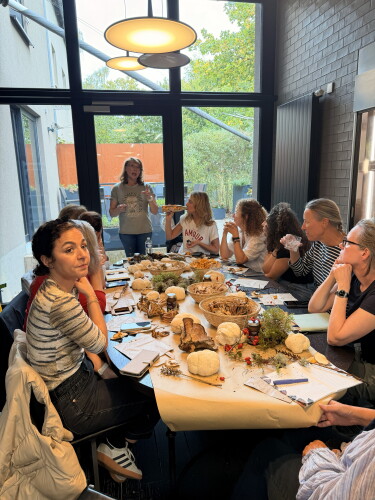
For Simoncini, introducing others to the world of mushrooms is about much more than teaching them which species are edible.
"Mushrooms are not plants. In evolutionary terms, they are closer to animals", she explains. That is one reason why she prefers to describe her guided walks as a "gentle hunt".
"We slow down. We observe. We touch. We smell. We share anecdotes, Simoncini stresses.
One of her favourite moments is when someone discovers their first mushroom. A small cap, almost hidden among the leaves, suddenly becomes the focus of everyone's attention.
"People crouch down, look more closely, and the questions begin!"
During those moments, she is reminded of her own childhood: her father watching over her from behind a tree, and her mother and grandmother leaning over their baskets.
She can still picture their calm, careful gestures: "And when I see someone leave the forest looking at the undergrowth differently, I feel I have passed on a small part of what they gave me."


