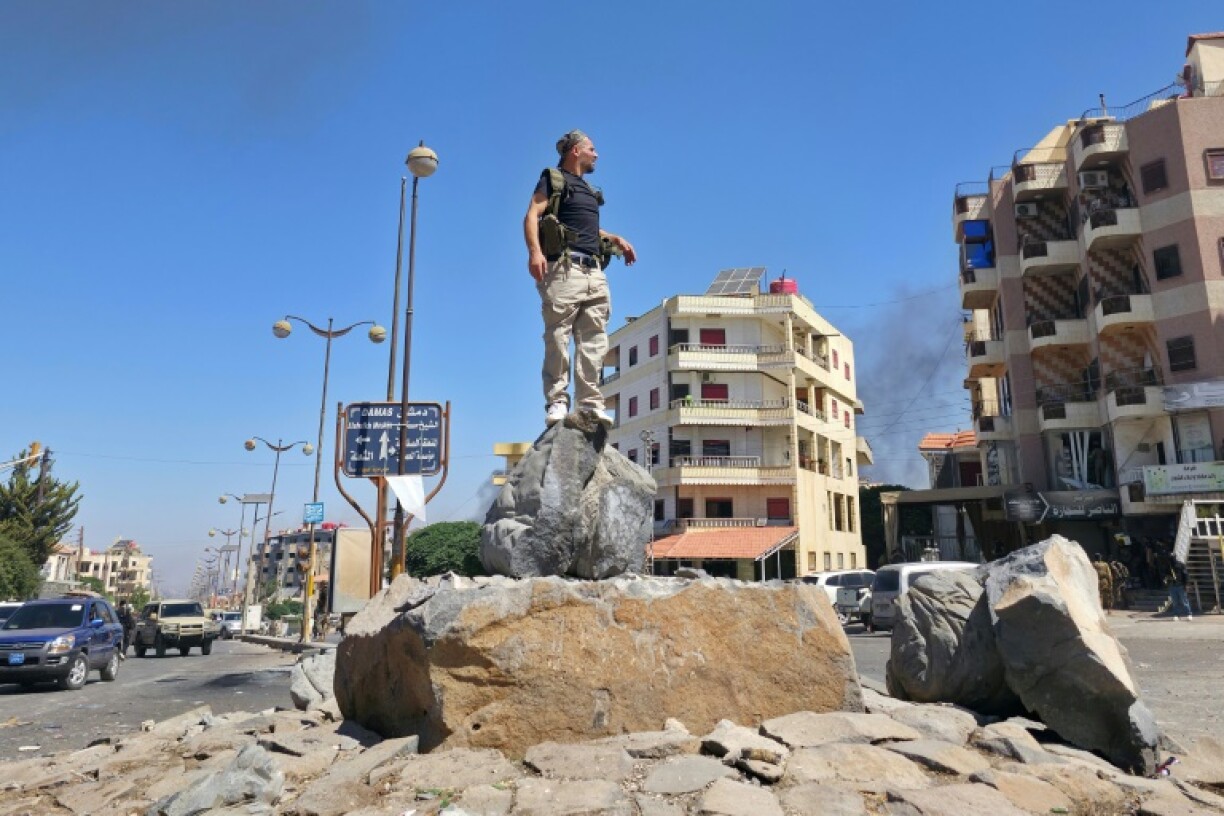
Syrian authorities were accused on Tuesday of carrying out summary executions of civilians in the predominantly Druze province of Sweida, where Israel said it had launched strikes against government forces in defence of the religious minority.
Damascus had deployed troops to the area after clashes between Druze fighters and Bedouin tribes killed more than 100 people.
Israel announced its strikes shortly after Syria's defence minister declared a ceasefire in Sweida city, which government forces entered in the morning.
Damascus slammed the Israeli strikes, warning it had a "legitimate right to defend its land and its people".
The Syrian Observatory for Human Rights said Tuesday that Syrian government forces and their allies had executed 19 people in and around Sweida.
Forces from the "defence and interior ministries carried out field executions of 12 civilians after storming the Radwan family guest house in the city of Sweida", the Observatory said.
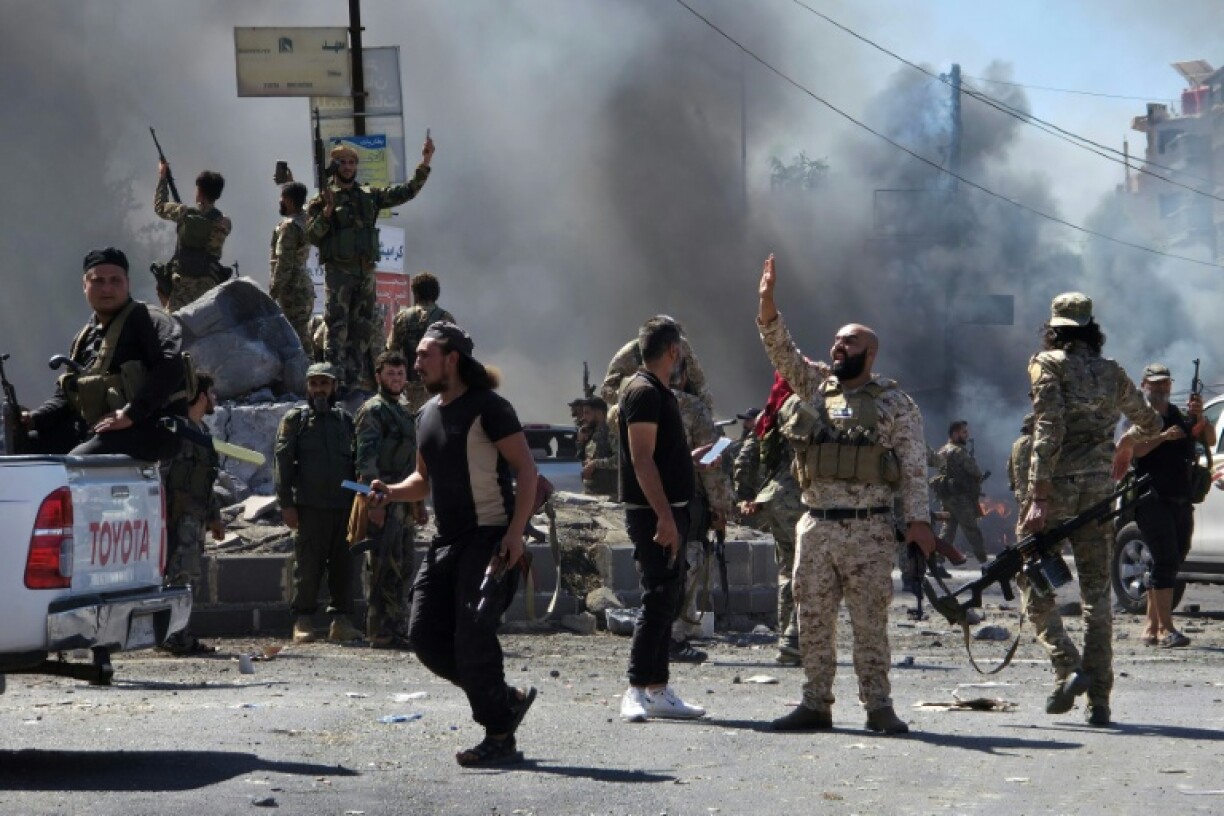
Armed groups affiliated with the government were also responsible for executing four Druze civilians at another guest house in Sweida province, as well as gunning down three siblings north of Sweida city in front of their mother, according to the monitor.
While most Druze religious leaders had said they supported the government's deployment, at least one senior figure urged armed resistance, having previously called for "international protection".
Neighbouring Israel, which has its own Druze minority, has sought to portray itself as a defender of the community, while also warning the Syrian government against maintaining any military presence south of Damascus, which Israel considers a security threat.
Prime Minister Benjamin Netanyahu and Defence Minister Israel Katz announced strikes Tuesday on "regime forces and weaponry" that they said were intended for use against the Druze.
"We are acting to prevent the Syrian regime from harming them and to ensure the demilitarisation of the area adjacent to our border with Syria," the pair said in a joint statement.
Shortly after, the Israeli military said it had begun hitting military vehicles in the area. Syrian state media also reported strikes.
Syria's Islamist-led government, which on Saturday sent an emissary to Azerbaijan for a first face-to-face meeting with an Israeli official, condemned "in the strongest terms the treacherous Israeli aggression" on Tuesday.
The attacks killed a number of security personnel, the foreign ministry said, as well as "several innocent civilians".
US special envoy Tom Barrack -- whose government is closely allied with Israel and has been trying to reboot ties with Syria -- called the violence "worrisome".
Washington was seeking "a peaceful, inclusive outcome for Druze, Bedouin tribes, the Syrian government and Israeli forces", he added.
- 'Complete ceasefire' -
Defence Minister Murhaf Abu Qasra declared just before midday (0900 GMT) Tuesday "a complete ceasefire" in Sweida city after talks with local representatives.
"We will respond only to sources of fire and deal with any targeting by outlaw groups," he added in a post on X.
Druze representatives gathered at the residence of key leader Sheikh Youssef Jarbouh to discuss implementing the ceasefire, a source close to the participants said.
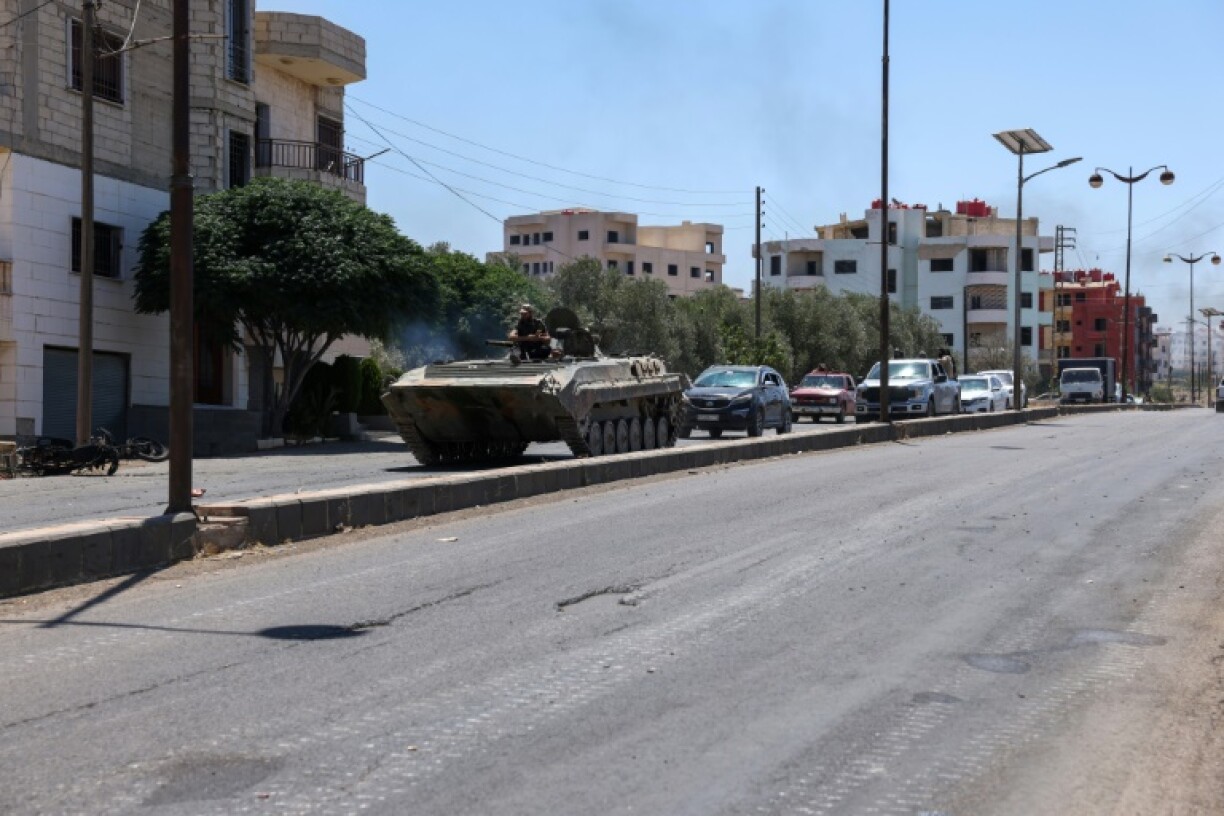
The sound of gunfire subsided after the announcement, and government troops were seen waving the Syrian flag atop a roundabout, AFP correspondents reported.
They had earlier reported clashes as government forces entered Sweida.
Though most Druze spiritual leaders had supported the deployment, the influential Sheikh Hikmat al-Hijri called in a statement for "resisting this brutal campaign by all available means".
A curfew was to be imposed on the southern city in a bid to halt the violence, which erupted between Druze and Bedouin fighters at the weekend and has since spread across Sweida province.
Government forces said they intervened to separate the two sides, but they ended up taking control of several Druze areas around Sweida, an AFP correspondent reported.
The Observatory had earlier reported 116 people killed in clashes since they erupted on Sunday -- 64 Druze, 34 government fighters and 18 Bedouin.
The defence ministry has reported 18 deaths among the ranks of the armed forces.
- 'Not against the state' -
The fighting underscores the challenges facing interim leader Ahmad al-Sharaa, whose forces ousted longtime ruler Bashar al-Assad in December after nearly 14 years of civil war.
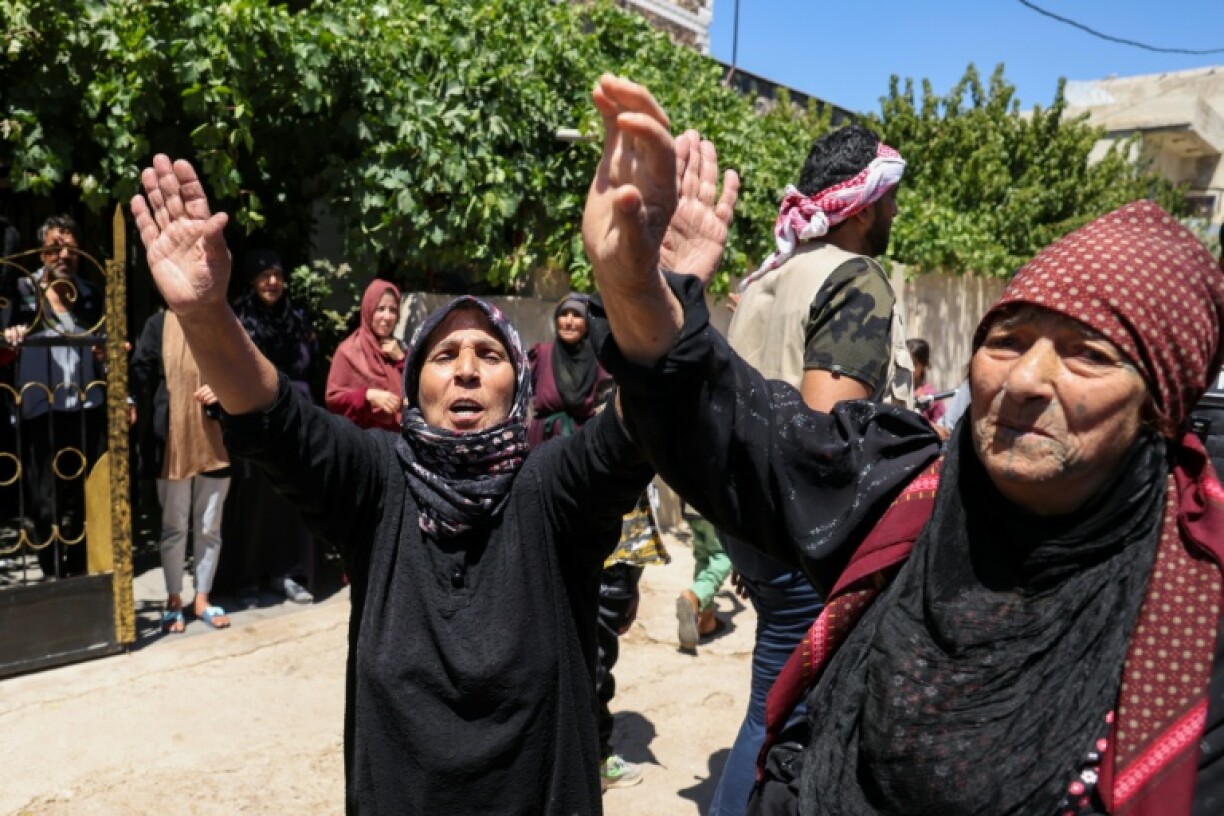
Following deadly clashes between the Druze and government forces in April and May, community leaders reached an agreement with Damascus under which Druze fighters had been providing security in the province.
Amal, a 46-year-old resident, said she feared a repeat of massacres in Syria's northwest in March that saw more than 1,700 mostly Alawite civilians killed, allegedly by groups affiliated with the government.
"We are not against the state, but we are against surrendering our weapons without a state that treats everyone the same," she said.
The violence began on Sunday when Bedouin gunmen abducted a Druze vegetable vendor on the highway to Damascus, prompting retaliatory kidnappings.
The Observatory said members of Bedouin tribes, who are Sunni Muslims, had sided with security forces during earlier confrontations with the Druze.





