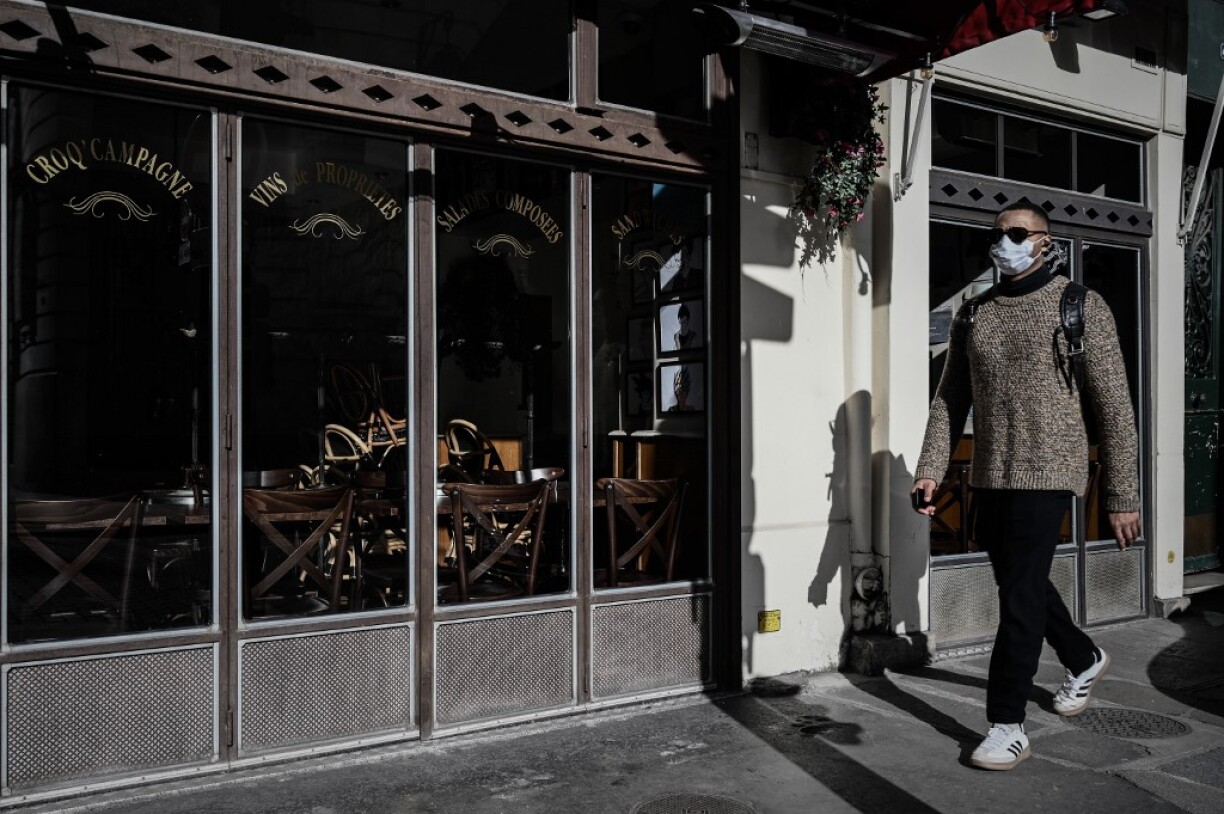
Law enforcement officials reported a total of 91,824 breaches of breach of containment since the implementation of this measure at midday last Tuesday.
The figures were confirmed by Alain Thirion, director general of civil security and crisis management, in a press conference with Professor Jérôme Salomon, Director General of Health (DGS), on Sunday.
Since Tuesday 17 March, some 1,738,907 checks have been carried out by the French police. On Sunday, police and gendarmes carried out about 375,000 checks.
Thirion explained that with the adoption of the health emergency bill, sanctions will be reinforced in the event of recurrence.
In the event of a repeat offence within 15 days of the first, the financial charge will be raised from €135 to €1,500.
In the case of four violations in thirty days, non-compliance with confinement will become an offence punishable by a fine of €3,700 and six months in prison.
The text adopted by parliamentarians also authorises municipal police to give verbal warnings to violators of the confinement rules.
On Sunday evening, France counted 674 deaths in hospitals , while 7,240 people have been hospitalised due to the coronavirus, announced Jérôme Salomon, director general of Health (DGS).
On Sunday, the Council of State refused to order a total containment, urgently requested by certain doctors, but demanded the government to review certain exemptions from displacement, in particular for reasons of health or for physical activity.
The highest administrative court considered the authorisation of individual sports practices to be too broad and requested an appropriate review.
It also asked the government to specify the degree of necessity for physical activity, and to assess the risks to public health caused by open markets, given their size and attendance numbers.
The senior magistrates of the litigation section, Jean-Denis Combrexelle, Nicolas Boulouis, and Christophe Chantepy, said a total confinement such as that requested by doctors' unions, could have serious implications for the population's general health. However the unions are allowed to appeal this decision.
The governmental decree from 16 March regarding the rules of confinement is considered too lax by the medical unions.
A total confinement, said the Council, would potentially risk serious supply disruptions and delay supplies of essential healthcare materials. It also underlined the necessity of certain essential activities such as healthcare, food production and distribution, and transport.
The doctors also asked for measures to ensure production on an industrial scale of screening tests and the screening of medical personnel.
The judges said the authorities had made arrangements with industrialists in France and abroad to increase the testing capacities as soon as possible.





