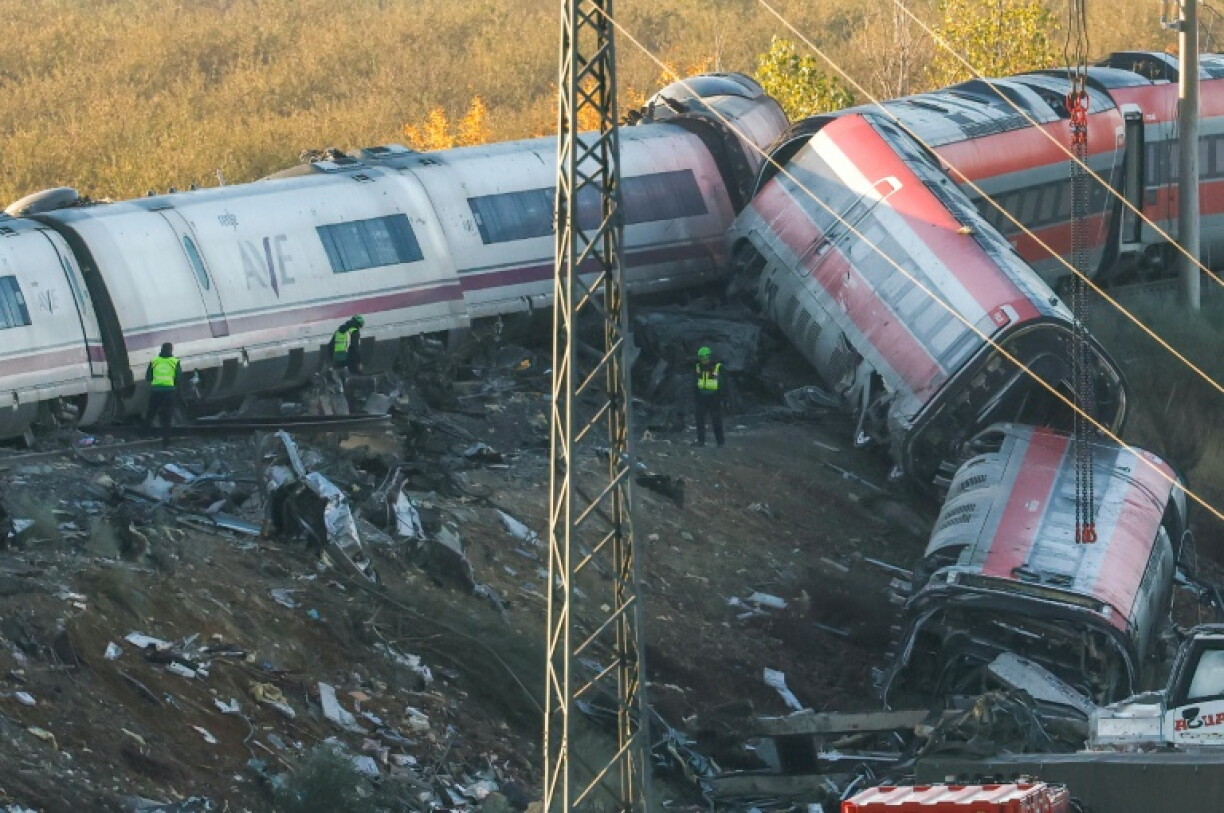
Spain's transport minister handed in his resignation on Tuesday following a train crash that killed 69 people, one of the worst railway disasters in Europe this century and a blow for Prime Minister Pedro Sanchez ahead of a snap poll this month.
Oscar Puente, who had earlier pledged to work "tirelessly" to restore confidence in the world's second-largest high-speed rail network, also said he was withdrawing from the November 29 general election.
Last week's crash, along with another disaster earlier this year, have overshadowed campaigning for the ballot, in which Sanchez is trailing in opinion polls.
"A transport minister in a country like Spain cannot remain in office after two accidents of such seriousness in less than a year, however different they may be, whether or not I bear direct responsibility," Puente told members of parliament, referring to the latest tragedy and a January crash in Andalusia that claimed 46 lives.
"I made my decision about my future in the first few minutes after the tragedy, as soon as I learned about it," he said.
"Today I am making that decision public, in the place where it is most appropriate to do so."
Puente said he was withdrawing as a candidate in the November 29 snap polls.
Hours earlier, at a press conference during which he presented measures to improve safety, the minister had said the government would "work tirelessly to achieve and regain the public's trust in high-speed rail".
The right-wing opposition, which had demanded Puente's resignation, and unions have criticised him for appearing to pin all the blame for the disaster on one control centre operator.
The accident happened when a train operated by the state-owned Renfe ploughed into the back of a stationary train belonging to the private Spanish company Iryo on Wednesday outside the village of Urda, around 130 kilometres (80 miles) south of Madrid.
The failure of an automatic safety system halted all trains on a 63-kilometre stretch of track, but a control centre nonetheless authorised the Renfe service to resume its journey.
Among the measures announced at the earlier press conference by Puente was the creation of software for control centres that would issue automatic alerts and make it easier to spot anomalies in traffic.
Puente said an AI agent would be created to oversee the system and "minimise the possibility of human error", describing the proposal as unprecedented.
In scenarios where a control centre operator took a decision while the automatic safety system was down, a second operator would have to confirm it, Puente added.
The train drivers' union Semaf, which has called strikes at Renfe for November 10 and 12, has denounced a worsening of working conditions and the use of "degraded systems".
Critics say investment in maintenance has not kept up with the increase in passenger numbers since the 2021 liberalisation of Spain's rail network, which allowed private companies to break Renfe's decades-long monopoly.
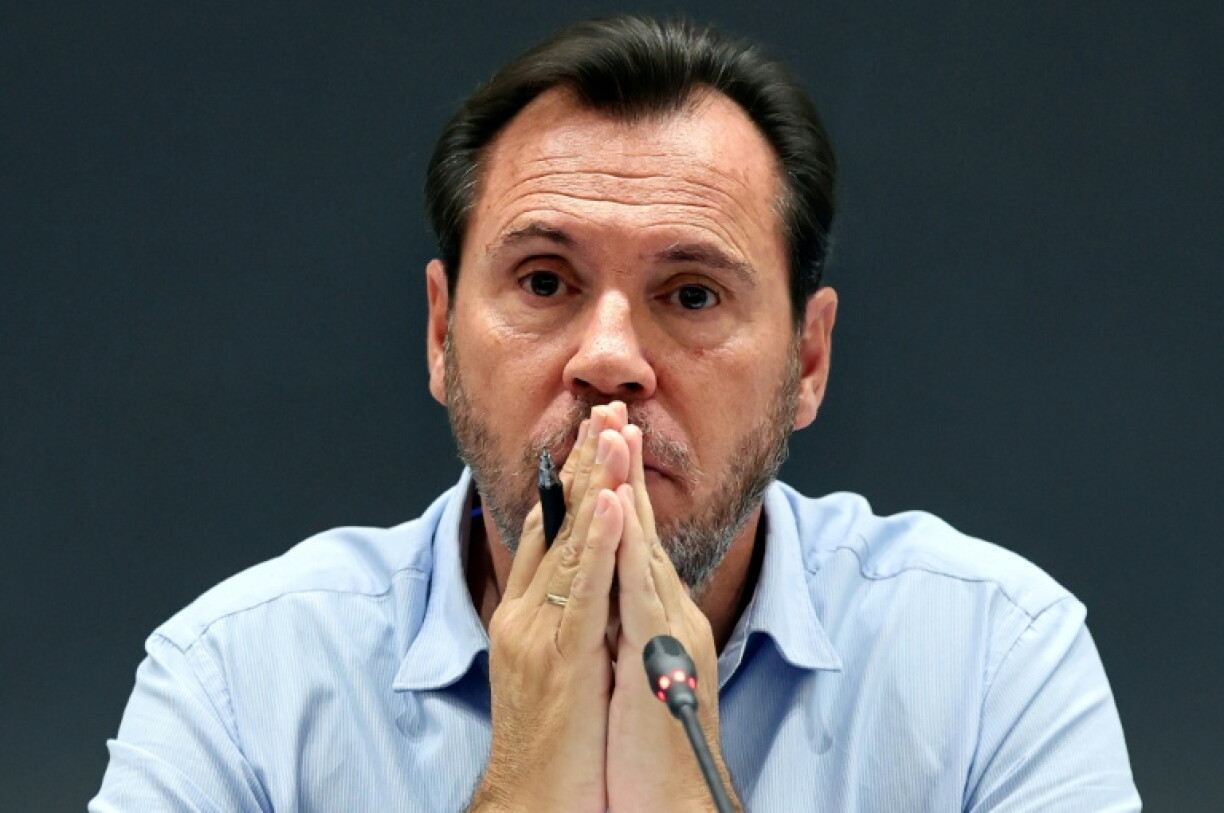
In an apparent recognition of the unions' demands, Puente said the working conditions of control centre operators would be reformed, including their breaks and monitoring their fatigue levels.
Puente also announced an aid package of 30 million euros ($33.5 million) for the families of the dead and the scores of people who were injured in last week's accident.
Another collision in the southern region of Andalusia in January killed 46 people on the same key line connecting Madrid with the city of Seville, Spain's first high-speed route when it opened in 1992.
rs-mdm/ach/bs


